The headlines are breathless. They tell you that a U.S.-Iran deal regarding the Strait of Hormuz has "unravelled." They paint a picture of bumbling diplomats, missed opportunities, and sudden diplomatic failures. This is a fairy tale for the naive.
The entire notion that there was a deal to be made, or that the current state of tension is an accident, is the single greatest piece of theater in modern geopolitics.
You aren't watching a failed negotiation. You are watching a highly profitable, perfectly functioning engine of statecraft.
To believe the "unravelling" narrative, you must first believe that the stakeholders actually want a solution. They do not. Stability in the Persian Gulf is anathema to the strategic requirements of both the Washington establishment and the Tehran regime.
The Business of Perpetual Tension
Let’s get the math right. In the world of high-stakes international relations, there is no greater currency than the "risk premium." Every time a tanker is harassed, or a drone buzzes a U.S. destroyer, the global price of oil ticks upward. This creates a predictable, manageable volatility that serves specific interest groups perfectly.
Think about the incentives. For the U.S. Navy, the Strait of Hormuz is the ultimate justification for a massive, global forward-presence budget. If the Strait were truly secure—fully autonomous, self-regulating, and free of Iranian interference—what is the justification for the Fifth Fleet’s massive footprint? They need the threat to exist to justify the expense of containing it.
Now, shift the view to Tehran. The clerical regime relies on a "Great Satan" narrative to maintain domestic cohesion. When the economy tanks, or when internal dissent rises, the IRGC needs a boogeyman. Nothing unifies a fracturing population quite like the threat of a looming American naval blockade or a strike on the nuclear program. A "deal" that normalizes relations would strip the regime of its primary tool for internal suppression.
So, when analysts talk about "missing the window" for a deal, they are fundamentally misunderstanding the room. The window was never open. It was painted on the wall.
The Myth of the Chokepoint
Common wisdom suggests that Hormuz is a fragile throat that must be protected. This is nonsense.
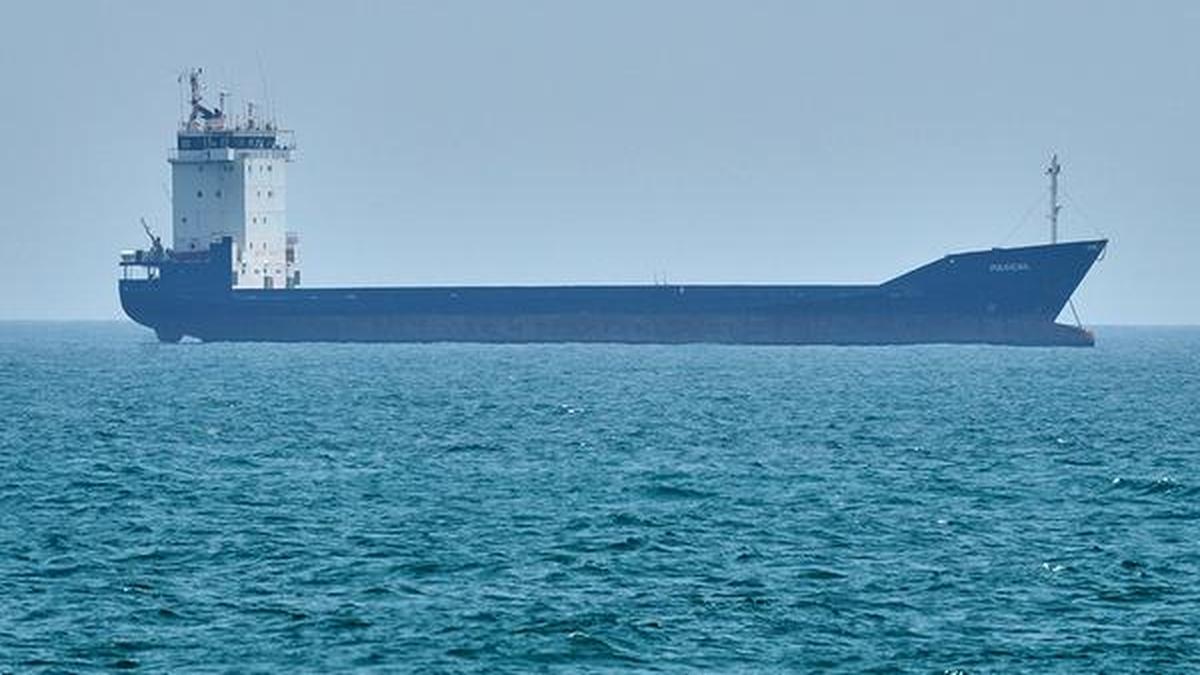
The Strait of Hormuz is not a vulnerable pipe; it is a global auction house. It is the most surveilled, militarized, and sensor-saturated body of water on the planet. If the United States truly wanted to force a permanent, ironclad guarantee of safe passage, they would have done it decades ago. The technology exists to map every movement, identify every Iranian vessel, and neutralize threats with surgical precision before a single ship was placed in danger.
They don't do it because keeping the lane "partially open but constantly threatened" is a strategic asset.
Imagine a scenario where the U.S. and Iran sign a binding, verifiable treaty. Trade flows freely. Energy prices stabilize. The "geopolitical risk" factor evaporates from the commodities market. In that world, the U.S. loses its ability to squeeze European and Asian energy security as a geopolitical weapon. Iran loses its ability to hold the global economy hostage during sanctions enforcement.
Both sides would find themselves with significantly less agency.
The Performance of Diplomacy
The diplomatic "failures" cited by the mainstream press are part of the script. The high-level meetings in Vienna or Geneva, the carefully leaked memos about "near-misses" and "stalled progress"—this is a performance for domestic audiences.
Washington needs to tell its tax-payers that they are "trying to avoid war." Tehran needs to tell its people that they are "defending sovereignty against imperial aggression." Both sides get to play the role of the responsible actor while actually doing everything possible to ensure the status quo remains unchanged.
I have sat in rooms where this dynamic is discussed with cold, clinical detachment. The frustration isn't about the lack of a deal; it's about the fear that someone might accidentally succeed in creating one. Success in these negotiations is viewed as a systemic risk. If a treaty were actually signed, the entire framework of Middle Eastern containment policy—which has kept the defense industry and regional energy policies afloat for forty years—would collapse.
Why You Are Being Played
The media feeds you this "unravelling" narrative because it is lazy. It is easier to write about a "failure" of diplomacy than to write about the success of a controlled conflict.
When you read that talks have broken down, ask yourself: Who benefits?
The oil companies love the risk premium. The defense contractors love the continued regional instability. The political establishment on both sides loves the ability to rally their bases around an external threat.
The only group that loses in this arrangement is the one paying the price at the pump and the soldiers who serve as pawns in this elaborate chess game.
The Only Way Out
If you want to understand what is actually happening in Hormuz, stop looking for a "deal." There is no agreement coming. There never was.
The conflict will continue exactly as it has for decades. There will be surges in tension, followed by cooling-off periods, followed by more surges. This is not a failure of statecraft. It is the steady-state reality of a system that profits from friction.
The only time the dynamic changes is when the underlying economic reality shifts. When the petrodollar loses its dominance, or when Iranian oil extraction becomes so irrelevant that nobody cares if it flows, then—and only then—will the tension evaporate. Until that moment, ignore the headlines about "diplomatic breakthroughs." They are designed to keep you focused on the wrong target.
The game is rigged, the players are incentivized to keep the board in chaos, and the "unravelling" you read about is just the next act in a show that has no intention of closing. Stop expecting a different outcome when the incentives are perfectly aligned to ensure this one.
The Strait remains a theater, and you are just the audience member who keeps paying for the ticket. Stop watching.