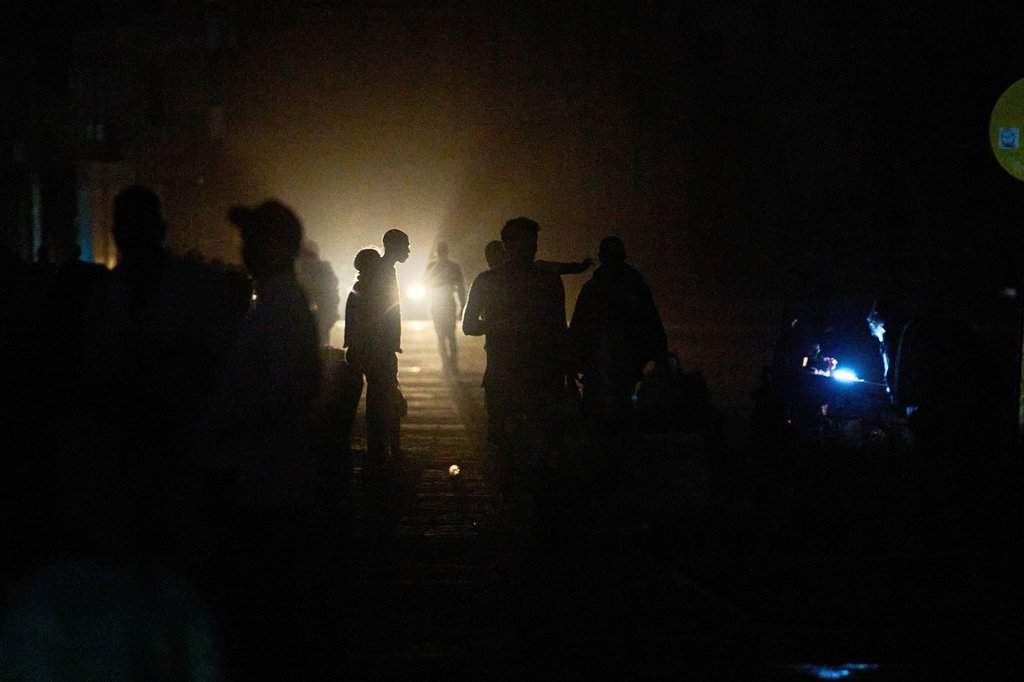
Canadian vacationers are currently clogging social media feeds with tales of woe from their latest "humanitarian" stints in Cuba. They talk about blackouts as if they discovered fire for the first time. They hand out toothbrushes and aspirin like they are dispensing holy relics. They return home, patting themselves on the back for witnessing the "resilience" of the Cuban people while lamenting the "sadness" of a grid failure.
They are missing the point. Entirely. For another view, check out: this related article.
The standard narrative—the one you just read in every major Canadian outlet—is that Cuba is a tragic victim of circumstance, and well-meaning tourists are the band-aid. That narrative is a lie. It is a comfortable, self-serving fantasy that allows Westerners to feel like saviors while ignoring the cold, hard mechanics of a failing command economy and the toxic dependency created by "humanitarian" tourism.
The Fetishization of Poverty
The most dangerous thing a Canadian traveler can bring to Havana isn't a lack of supplies; it's a savior complex. I’ve seen travelers spend $2,000 on a resort stay and then brag about giving a $5 bottle of Advil to a local chambermaid. We’ve turned the systemic collapse of an island nation into a backdrop for personal growth. Related insight regarding this has been published by Travel + Leisure.
Mainstream media outlets frame the current blackouts as a sudden crisis that "residents are tired of." This is a monumental understatement that borders on insulting. Cubans aren't "tired." They are trapped in a cycle of infrastructure decay that has been decades in the making. When a Canadian "humanitarian" arrives with a suitcase of soap, they aren't solving a problem. They are participating in a shadow economy that incentivizes the state to keep failing.
Why fix the supply chain if a steady stream of guilt-ridden North Americans will fly in the essentials for free?
The Energy Math Nobody Wants to Face
Let’s talk about the grid. The "blackouts" aren't just a series of unfortunate events or a result of a recent storm. They are a mathematical certainty.
The Cuban energy sector relies on aging thermoelectric plants that have far exceeded their operational lifespan. Most of these facilities are 40 to 50 years old. In any other nation, these would have been decommissioned decades ago. The thermal efficiency of these plants is abysmal. Using $L$ to represent the heat loss and $Q_{in}$ for the total energy input, the efficiency $\eta$ is calculated as:
$$\eta = \frac{W_{net}}{Q_{in}} = 1 - \frac{Q_{out}}{Q_{in}}$$
In Cuba, $Q_{out}$—the wasted energy—is staggering due to lack of maintenance and specialized parts. No amount of "humanitarian" goodwill from a group of Ontario retirees is going to fix a boiler that hasn't seen a genuine replacement part since the Soviet Union collapsed.
When you read that "residents are tired," you should be reading about the failure of centralized planning to reinvest in core utilities. The "help" being offered by outsiders is a drop of water in a desert of industrial neglect.
Stop Bringing Supplies Start Demanding Markets
The "People Also Ask" section of your brain is likely wondering: "Should I still bring supplies to Cuba?"
The brutal, honest answer: Only if you want to feel better about yourself.
By bypassing formal trade and relying on suitcases filled with toiletries, we are sustaining a "suitcase economy" that prevents the development of actual local retail and distribution. It is a band-aid on a gunshot wound. If you want to actually help, you stop treating the country like a charity case and start treating the people like economic actors.
- Stop the "Gifts": When you hand out free goods, you destroy the incentive for local entrepreneurs (the mipymes) to source and sell those goods. You are effectively out-competing the very people trying to build a business.
- Use the Private Sector: Only stay in casas particulares. Only eat at private paladares. Direct your hard currency away from state-run entities and into the hands of the individuals.
- Drop the Adjectives: Stop calling Cubans "resilient." It’s a coded word used to romanticize suffering. It suggests that they are somehow built to endure hardship that you wouldn't tolerate for ten minutes.
The High Cost of Free Help
I’ve watched well-meaning organizations dump thousands of dollars of "aid" into Cuban communities, only to see those items appear on the black market (the bolsa negra) 24 hours later. This isn't because the people are "bad." It’s because the system is broken. The aid becomes a currency.
The competitor's article focuses on the "feeling" of the mission. They talk about the emotional weight of seeing people in the dark. Emotion is the enemy of effective aid.
If we want to disrupt this cycle, we have to admit that the "humanitarian mission" as we know it is dead. It is a relic of the 90s that serves the ego of the donor more than the belly of the recipient. The blackouts are a symptom of a systemic organ failure. You don't treat organ failure with a hug and a box of Ziploc bags.
The Counter-Intuitive Truth
The most radical thing a Canadian could do for Cuba right now is to stop visiting as a tourist and start engaging as a sophisticated investor or a political advocate for genuine trade reform. But that’s hard. It’s much easier to pack a bag of old clothes, take a photo with a smiling local, and tell your friends at the golf club how "humbled" you were by the experience.
Humanitarian tourism is the "fast fashion" of philanthropy. It’s cheap, it’s performative, and it leaves a mess for the locals to clean up once the flight back to Toronto departs.
If you aren't willing to address the energy physics or the economic stifling that creates the need for your "mission" in the first place, stay home. The Cuban people don't need your pity; they need a functional power grid and the freedom to buy their own soap.
Stop feeding the machine that keeps them in the dark.