The smoke rising from the Persian Gulf in early 2026 isn't just the residue of Tomahawk missiles; it is the smell of a burning global financial order. By the time Brent crude kissed $120 a barrel last week, the primary victim of the Trump administration’s "Twelve-Day War" was already clear. It wasn't just the Iranian nuclear facilities at Natanz or the Revolutionary Guard’s mosquito fleet in the Strait of Hormuz. It was the absolute, unchallenged dominance of the United States dollar as the world’s singular reserve currency.
For eighty years, the dollar has functioned as the "exorbitant privilege" of the American state, allowing Washington to run massive deficits and weaponize sanctions with near-total impunity. But as the current administration pivots from "maximum pressure" to active kinetic strikes, the rest of the world has stopped watching with awe and started watching with fear. And in global finance, fear is the precursor to an exit.
The mechanism of this decay is simple but brutal. When the White House launched the largest military buildup in the Middle East since 2003, it didn't just target Iranian hardware. It shattered the predictability that investors demand from a global hegemon. Now, as President Trump floats the possibility of removing oil sanctions to "cool the market" he helped ignite, the damage to the dollar’s credibility may already be irreversible.
The Weaponization Trap
Washington has long treated the dollar as a Swiss Army knife of foreign policy. If a regime behaves badly, we cut off their access to SWIFT. If they sell oil to the wrong person, we freeze their offshore assets. This worked when the U.S. was the only game in town. It is failing now because the perceived "risk" of holding dollars is starting to outweigh the "convenience" of using them.
The current conflict has forced Tehran to perfect the "shadow fleet" and alternative payment systems that bypass New York clearinghouses entirely. More dangerously, it has provided the ultimate proof-of-concept for Beijing and Moscow. In February 2026, even before the first strikes, Iran and China were settling oil trades in renminbi. This isn't just a workaround; it is a structural leak in the bucket of American power. Once the plumbing for a non-dollar trade exists, you can’t simply turn it off with a ceasefire.
The $100 Barrel and Domestic Fallout
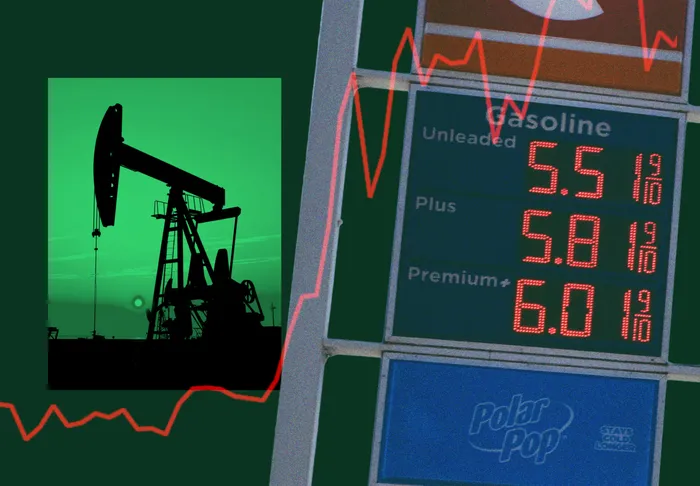
On the home front, the narrative was supposed to be "Energy Dominance." Instead, the administration is staring down the barrel of a $100 per unit reality that is eating away at the American consumer.
- Gasoline Prices: Domestic fuel prices have surged, with some analysts projecting $6 per gallon averages by the summer.
- Inflation Expectations: The Tax Foundation estimates that the combination of war-driven energy spikes and the standing 10% Section 122 tariffs will add nearly a full percentage point to global inflation.
- The Debt Spiral: With the national debt hitting $36 trillion in late 2025, the cost of financing that debt is rising alongside interest rates meant to curb war-time inflation.
The irony is thick. The administration's stated goal was to protect the dollar's status—going so far as to threaten 100% tariffs on any BRICS nation that attempted to create a dollar replacement. Yet, by creating a volatile, unpredictable geopolitical environment, the U.S. is doing more to de-dollarize the world than any Chinese central banker ever could.
The Broken Oil Hegemony
For decades, the "petrodollar" system ensured that global oil was priced in U.S. currency, creating a perpetual demand for dollars. That system is cracking. When Iran closed the Strait of Hormuz on March 2, vowing to attack any ship passing through, it didn't just stop 20 million barrels of crude. It stopped the flow of dollar-denominated contracts.
Markets hate uncertainty, but they hate being trapped even more. The "flight to safety" that usually pushes the dollar up during a crisis is becoming a short-term tactical move rather than a long-term vote of confidence. Investors are buying dollars because they have to, not because they want to. The "convenience yield" of U.S. Treasuries—the extra value investors place on them because they are the most liquid asset on earth—is in a notable decline.
The Strategy Vacuum
Critics across the aisle and within the military establishment describe the current campaign as a "war without a strategy." If the goal was regime change, the killing of high-level officials and the death of Supreme Leader Khamenei have only led to an opaque interim committee and more regional instability. If the goal was to stop the nuclear program, the Department of Defense’s own estimate says it has only been set back by two years—a high price for a global economic recession.
The administration’s sudden signal of de-escalation on March 10, with Trump predicting the war would resolve "very soon," sent markets into a tailspin of relief. Oil prices slid 10% in a single day. But for the global treasurer, the takeaway isn't that the crisis is over. It’s that the world’s reserve currency is now hitched to the erratic whims of a single leader’s social media posts and "gut feelings."
Financial hegemony is built on the bedrock of being the "adult in the room." It requires the world to believe that, no matter how bad things get, the American legal and financial system will remain a stable, predictable neutral ground. When you turn that neutral ground into a battlefield, the guests start looking for the exit.
The U.S. Navy can clear the mines out of the Strait of Hormuz in a matter of weeks. Clearing the doubts out of the minds of global central bankers will take decades. The dollar isn't going to die tomorrow, but the "Twelve-Day War" has ensured that it will never again be the only name on the ledger. We are witnessing the birth of a fragmented, multipolar financial order where the U.S. is just another player, albeit one with a very large, very expensive, and very loud military.
Would you like me to analyze the specific impact of the 100% tariff threat on BRICS nations' currency reserves?