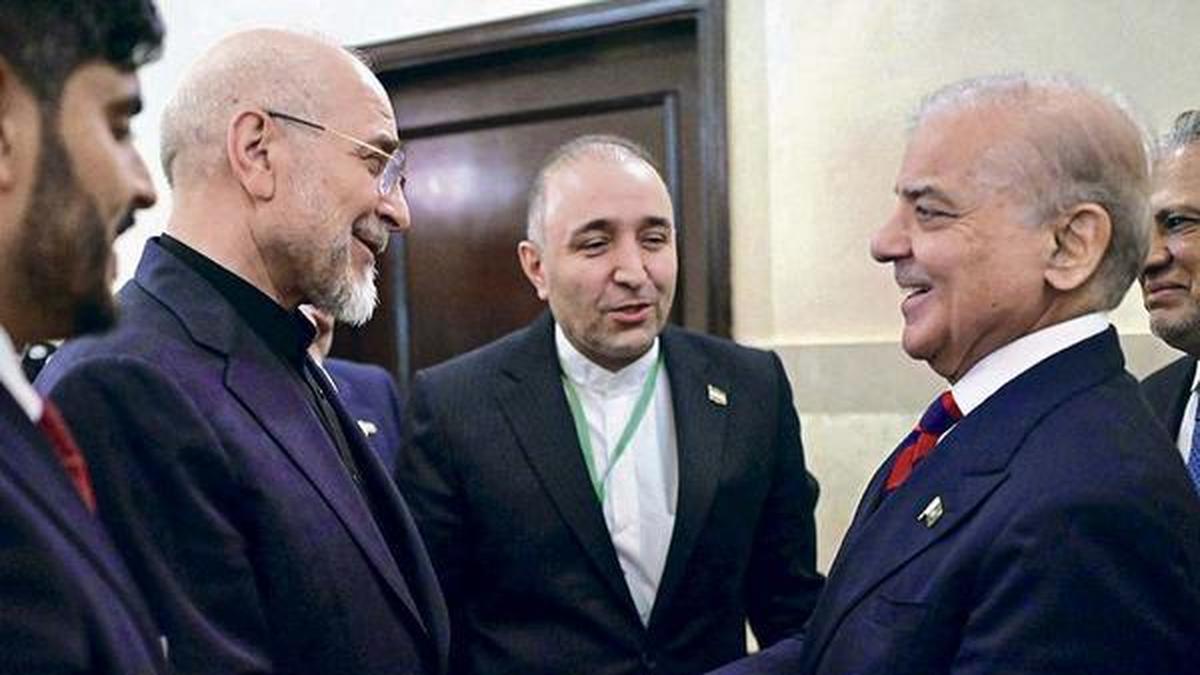
The second round of face-to-face negotiations between the United States and Iran is slated to begin in Islamabad as early as next week, but the diplomat’s veneer of "progress" masks a terrifying reality on the ground. Despite a two-week ceasefire currently holding by a thread until April 21, the first marathon session of 21 hours between Vice President J.D. Vance and Iranian Speaker Mohammad-Bagher Ghalibaf ended in a spectacular deadlock. Washington is demanding the impossible: a 20-year total freeze on Iranian nuclear enrichment and the immediate, unconditional reopening of the Strait of Hormuz. Tehran, meanwhile, is digging in, offering only a "several-year" pause while demanding war reparations and the lifting of a naval blockade that has effectively throttled the global oil supply.
This isn't just a diplomatic spat. It is the final gasp of traditional statecraft before a regional conflict turns into a global economic heart attack. Learn more on a similar subject: this related article.
The Architecture of a Stalemate
The first round in Islamabad was less a negotiation and more a mutual delivery of ultimatums. When J.D. Vance walked out of the room after nearly a full day of talks, his assessment was blunt: the Iranians had "chosen the pursuit of a nuclear weapon over peace." That rhetoric serves a domestic political purpose, but it ignores the strategic corner Iran has been backed into.
For the Iranian delegation, the Strait of Hormuz is the only card left to play. Since the conflict erupted in February 2026 following joint U.S.-Israeli strikes, Iran has turned the world’s most vital maritime chokepoint into a private toll road. Only ships that pay "tolls" to Tehran are permitted passage. President Trump’s response—a total naval blockade on any vessel paying these fees—has created a "closed for all" scenario. Further analysis by Associated Press delves into similar perspectives on this issue.
The upcoming second round of talks is tasked with resolving this "open for all, or open for none" paradox. If the Strait doesn't open by the end of the ceasefire, the U.S. has already signaled it will pivot from "defensive" strikes to a sustained campaign against Iranian energy infrastructure.
The Pakistan Factor
Islamabad is an unlikely theater for this high-stakes drama, but Prime Minister Shehbaz Sharif has successfully positioned Pakistan as the only bridge left standing. By leveraging a Strategic Mutual Defence Agreement with Saudi Arabia while maintaining a 900-kilometer border with Iran, Pakistan is performing a dangerous balancing act.
The Pakistani proposal, a 45-day two-phased truce, is currently the only document on the table that both sides haven't flatly rejected.
- Phase 1: An immediate extension of the ceasefire and a cessation of all "secondary" strikes in Lebanon and Iraq.
- Phase 2: The reopening of the Strait within 20 days in exchange for a partial lifting of the U.S. naval blockade.
However, the internal pressure on Islamabad is mounting. The death of Supreme Leader Khamenei earlier this year triggered massive protests within Pakistan's own borders. The Pakistani military, under Field Marshal Asim Munir, is reportedly wary that if these talks fail, the spillover of a full-scale U.S.-Iran war will destabilize the country's fragile economy, which is already reeling from 90% of its oil imports being disrupted.
The Nuclear Red Line
The Wall Street Journal reports that the U.S. "softened" its stance by asking for a 20-year enrichment halt. In the world of non-proliferation, 20 years is an eternity; for Iran, it is a surrender of sovereign identity. The gap between "20 years" and "several years" isn't a numerical disagreement—it’s a fundamental dispute over whether the Islamic Republic is allowed to exist as a nuclear-capable state.
Adding fuel to the fire is intelligence suggesting the People's Republic of China is preparing to deliver man-portable air-defense systems (MANPADS) to Tehran. This suggests that while the U.S. talks peace in Islamabad, its rivals are preparing for a long-term insurgency or a more sophisticated defense against the very "limited military strikes" the White House is currently debating.
The Economic Brink
Global markets are currently pricing in the failure of these talks. If the second round collapses next week, the ceasefire expires on April 21. At that point, the "Operation Muhafiz-ul-Bahr" (Protector of the Sea) launched by the Pakistan Navy to escort its own tankers will become a footnote in a much larger naval confrontation.
Trump’s calculation is that the loss of oil revenue will force Tehran to its knees. But this ignores the history of the Iranian regime's resilience under "Maximum Pressure." They have shown a consistent willingness to endure economic ruin if it means maintaining their strategic deterrent. The real question is whether the global economy can survive $200-a-barrel oil while Washington waits for Tehran to blink.
Why These Talks Are Different
Unlike the 2015 JCPOA negotiations, which were handled by career diplomats in luxury hotels in Vienna, the Islamabad talks are being conducted by the principals themselves in a literal war zone. The presence of Jared Kushner and Steve Witkoff in the U.S. delegation indicates that this is a "deal-making" mission, not a diplomatic one. They are looking for a grand bargain that covers everything from war reparations to the control of the Strait.
The Iranians, led by Ghalibaf and Foreign Minister Abbas Araqchi, are treating these sessions as "sacred jihad." Their language is intentionally confrontational, designed to show a domestic audience that they are not being bullied by the "Great Satan." This performative hostility makes the actual business of compromise nearly impossible.
The tragedy of the Islamabad talks is that both sides are right about the risks. The U.S. cannot allow Iran to weaponize the world’s energy supply. Iran cannot allow its nuclear program—the only thing it believes prevents a regime-change invasion—to be dismantled for nothing more than a temporary reprieve.
As the delegations prepare to return to the Serena Hotel in Islamabad, the window for a peaceful resolution is closing. If next week does not produce a signed framework, the April 21 deadline will likely mark the transition from a contained conflict to a general war that neither side can afford, yet neither side knows how to avoid.