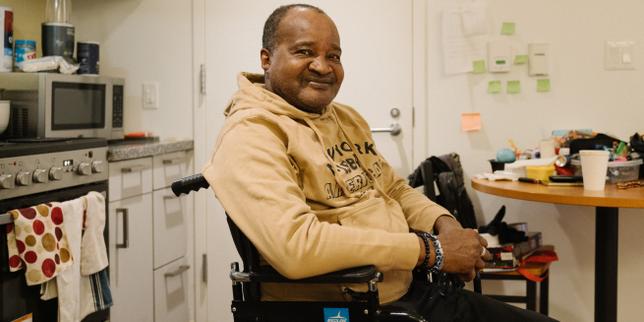
The fastest-growing segment of the American homeless population is not the stereotypical runaway or the person struggling with chronic substance abuse. It is the grandmother who worked forty years as a bookkeeper. It is the retired mechanic whose pension was swallowed by a corporate bankruptcy. In cities across the United States, the safety net has not just frayed; it has vanished for a generation that was promised a "golden age" of retirement. This is a structural collapse driven by the lethal intersection of stagnant Social Security benefits and a predatory housing market that views elderly fixed incomes as low-hanging fruit.
While non-governmental organizations (NGOs) and charities are stepping in to provide innovative housing solutions—ranging from shared "senior roommates" programs to converted motels—these efforts are essentially trying to plug a dam break with a handful of corks. The crisis is fueled by a simple, brutal math. The average Social Security check for a retired worker is approximately $1,900 a month. In major metropolitan areas, the median rent for a one-bedroom apartment now exceeds $1,500. When you factor in the skyrocketing costs of Medicare premiums, supplemental insurance, and prescription drugs, the remainder is a negative number. For an alternative look, read: this related article.
The Math of Displacement
The path to the street for a 75-year-old is often short and devoid of bureaucratic friction. It usually begins with a "no-fault" eviction or a sudden rent hike that exceeds the annual Cost of Living Adjustment (COLA) provided by the government. In 2024, the COLA was 3.2 percent. In the same period, rents in several Sun Belt cities—primary destinations for retirees—jumped by double digits.
When a senior loses their housing, they don't just lose a roof. They lose the proximity to their doctors, their pharmacy, and their social support networks. This is a death sentence in slow motion. Research from the University of California, San Francisco (UCSF) indicates that seniors who experience homelessness for the first time in their 50s or 60s develop geriatric conditions—such as cognitive decline, visual impairment, and incontinence—at rates twenty years ahead of their housed peers. They are aging prematurely under the weight of the pavement. Further reporting regarding this has been shared by Reuters.
Why Charity Can Only Do So Much
A prominent NGO in the Southwest recently made headlines for a program that matches homeless seniors with homeowners who have a spare bedroom. It’s a heartwarming narrative. It’s also a desperate admission of systemic failure. Relying on the altruism of individual homeowners to solve a demographic crisis is like asking neighbors to carry buckets of water to fight a forest fire.
The logistical hurdles are immense. Many seniors require ADA-compliant housing—ramps, grab bars, and wide doorways. The existing housing stock in the U.S. is notoriously inaccessible. Only about 4 percent of American homes are even minimally accessible for people with mobility issues. When an NGO finds a "bed" for a senior, it is often in a facility or a home that isn't actually safe for their physical limitations. This leads to falls, hospitalizations, and a rapid return to the shelter system once the medical bills pile up.
Furthermore, the "Housing First" model, which has seen success with younger populations, often ignores the specialized needs of the elderly. A 20-year-old needs a job and stability. An 80-year-old needs integrated healthcare, nutritional support, and medication management. You cannot simply hand a key to an octogenarian and expect them to thrive without a heavy layer of social services that the current funding models do not cover.
The Silver Tsunami Meets the Housing Shortage
We are currently witnessing the peak of the "Silver Tsunami," with 10,000 Baby Boomers turning 65 every single day. This demographic shift was predictable decades ago, yet the policy response has been non-existent. The federal government’s primary tool for low-income housing, the Section 8 voucher, has a waitlist that spans years, sometimes decades. In Los Angeles or New York, a senior applying for housing assistance today might be 90 years old before their name reaches the top of the list.
The private sector has meanwhile pivoted toward "luxury senior living." These are gated communities with pickleball courts and bistro dining, costing upwards of $6,000 a month. There is virtually no profit incentive for developers to build "deeply affordable" senior housing. Without massive federal subsidies or tax credits that actually mandate low-income units, the market will continue to ignore the poorest 20 percent of the aging population.
The Hidden Cost to the Taxpayer
Ignoring this crisis is not a cost-saving measure. It is an expensive delusion. A senior living on the street is a frequent flyer in the emergency room. A single ER visit for a fall or a respiratory infection costs the taxpayer more than a month’s rent in a stable apartment. When we allow seniors to drift into homelessness, we are effectively choosing the most expensive, least efficient way to manage their decline.
Medical respite care—beds specifically for homeless people who are too sick for a shelter but not sick enough for a hospital—is becoming the new "nursing home" for the destitute. It is a grim, utilitarian end for people who spent their lives paying into a system they believed would protect them.
The Myth of the Family Safety Net
There is a persistent cultural myth that the "family" will step in where the state fails. This ignores the reality of the modern American economy. The children of these seniors—Gen X and Millennials—are often "sandwich generation" casualties. They are struggling with their own debt, rising childcare costs, and stagnant wages. They do not have the spare room or the financial surplus to care for an aging parent who needs professional medical supervision.
When the family unit cannot hold, and the state turns a blind eye, the NGO is the only thing left. But these organizations are stretched to the breaking point. They are competing for the same pool of donor dollars while the number of clients grows exponentially.
A New Model or a Managed Catastrophe
True reform requires more than just "providing a roof." It requires a fundamental decoupling of housing from market-rate speculation for those over a certain age. We need to look at models like the "Commoning" of housing seen in parts of Europe, where land is held in trusts specifically for the elderly, ensuring that rent can never exceed a fixed percentage of a pension.
We must also address the "benefits cliff." Currently, if a senior receives a tiny bump in their pension, they might suddenly become ineligible for food stamps or heating assistance. This "all or nothing" approach to social welfare pushes people into the abyss over a difference of fifty dollars.
The current trend of converting derelict motels into senior housing is a step in the right direction, but it must be coupled with on-site clinical care. A motel room without a nurse is just a smaller, more isolated version of the problem. We are seeing some success with "intentional communities" where younger people receive subsidized rent in exchange for assisting senior residents with daily tasks, creating a multi-generational feedback loop.
However, these are boutique solutions for a mass-market tragedy. Until the federal government treats senior homelessness as a national security issue—which it is, given the threat to social cohesion and the drain on the healthcare system—the numbers will continue to climb.
If you want to see the future of the American middle class, look at the parking lots of big-box retailers at 3:00 AM. You will see late-model SUVs and minivans, neatly kept, with sunshades in the windows. Inside are people who did everything "right," now sleeping in the front seat because their Social Security check couldn't keep pace with a landlord's spreadsheet.
Check the local zoning laws in your municipality to see how many "Accessory Dwelling Units" (ADUs) or "granny flats" are actually permitted on residential lots. The fastest way to create thousands of units of senior housing is to remove the bureaucratic red tape that prevents families from building small, safe living spaces on their own property.