The humidity in Bangkok doesn't just sit on your skin. It possesses you. By 2:00 PM, the air has the consistency of warm soup, and the simple act of breathing feels like a manual labor task.
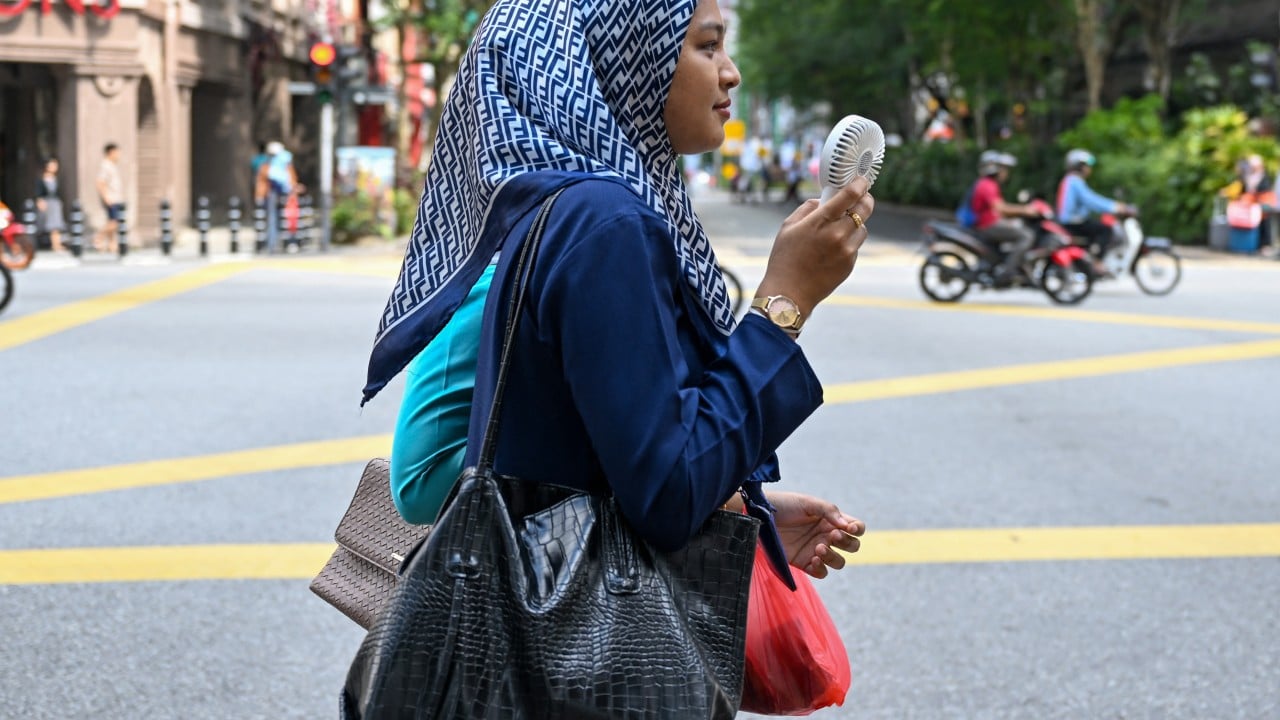
Kanya sits at her small desk in a concrete apartment block in the Din Daeng district. She is a freelance graphic designer, which is a polite way of saying she survives on deadlines and caffeine. Beside her, a plastic fan whirrs at maximum speed, but it’s a losing battle. The fan isn't cooling the air; it is merely redistributing the heat, pushing 38°C (100°F) gusts against her face.
She stares at the air conditioning unit mounted on the wall. It is an older model, a beige box that hums with a slight rattle. To Kanya, that box isn’t just an appliance. It’s a financial predator. She knows that if she clicks the remote, she’s making a choice between physical comfort and the ability to pay her full rent at the end of the month.
Across Southeast Asia, tens of millions of people are currently staring at that same plastic remote. They are the frontline of a quiet, atmospheric war.
The Mathematics of a Meltdown
Southeast Asia is currently trapped in a feedback loop that defies simple weather reporting. It isn't just "hot." It is a structural crisis.
Meteorologists point to a confluence of factors: the tail end of a particularly stubborn El Niño, the intensifying effects of human-induced climate change, and the "urban heat island" effect where concrete jungles like Jakarta and Manila trap radiation long after the sun sets. But the real story is found in the power grid.
When the mercury climbs, the demand for electricity doesn't just rise. It spikes.
Consider the physics. As the outside temperature moves from 30°C to 40°C, an air conditioner has to work significantly harder to pump heat out of a room. It consumes more kilowatts per minute just to maintain the status quo. In Vietnam, during the peak of recent heatwaves, the national utility provider, EVN, reported that electricity consumption hit record highs, straining the infrastructure to its absolute limit.
This creates a terrifying symmetry. The hotter it gets, the more we use the grid. The more we use the grid, the more we rely on the very power plants—often coal or gas-fired—that contribute to the warming in the first place. It is a snake eating its own tail.
The Ghost in the Grid
The "energy shock" mentioned in dry financial reports sounds like a stock market fluctuation. In reality, it is the sound of a transformer exploding in a suburb of Hanoi because it couldn't handle the load.
Energy security in this region is a house of cards. Many Southeast Asian nations rely on hydropower. In a standard year, the monsoon rains fill the reservoirs, and the falling water turns the turbines. It’s clean, it’s consistent, and it’s cheap.
But heatwaves are often preceded by droughts.
When the rains fail, the water levels in the dams drop. Suddenly, the "green" energy that Laos or Vietnam counted on vanishes. To keep the lights on—and more importantly, to keep the factories running—governments have to scramble. They turn to the global spot market to buy Liquified Natural Gas (LNG) or coal.
This is where the "shock" hits.
Global energy prices aren't set by a village in Northern Thailand. They are set by geopolitical tensions in the Middle East and war in Eastern Europe. When a heatwave occurs, a country like Thailand has to pay a "heat premium" to import more energy. This isn't just a number on a spreadsheet; it’s a line item on every citizen's utility bill.
The invisible fire of the heatwave is fueled by the very money people like Kanya are trying to save.
The Inequality of Degrees
Heat is the great separator.
The wealthy in the luxury high-rises of Singapore don’t feel the heatwave. They have high-efficiency, multi-split air conditioners that consume a fraction of the power used by Kanya's old box. They have insulation. They have the financial buffer to pay for a 50% increase in their power bill without skipping a meal.
For the middle class, the "energy shock" is a trade-off.
It is the family in Kuala Lumpur that decides to only run the AC in one room, and they all sleep together on the floor. It is the small shop owner in Ho Chi Minh City who turns off the lights and works in the dark to keep the refrigerators running. These are the human calculations made in the shadows of a warming world.
Wait. There is a deeper layer.
The heatwave is also a tax on productivity. When the temperature climbs above 35°C, cognitive function begins to degrade. Errors in code increase. Manual labor slows. Construction sites become death traps. The heat doesn't just cost money; it steals time.
The Grinding Gears of Change
Governments across the region are facing a choice: keep the lights on today or save the planet tomorrow.
In Indonesia, the push to retire coal-fired power plants is hitting a wall of reality. When the grid is screaming for more power, no politician wants to be the one who shut down a functioning plant. Instead, they are doubling down on "energy security," which often means more fossil fuels in the short term.
In Vietnam, the government has been forced to mandate rolling blackouts in some industrial zones. This is the ultimate "energy shock." When the factories lose power, the global supply chain for electronics and textiles stutters. A heatwave in Southeast Asia can literally mean that a laptop or a pair of sneakers becomes more expensive in New York or London.
The world is interconnected by a thin copper wire.
The Cooling Paradox
Is there an exit?
Renewable energy is the obvious answer. Solar power is particularly well-suited for heatwaves, as the sun is usually out in full force when demand is highest. But the infrastructure for storing that power—the massive batteries needed to keep things cool after sunset—is still too expensive for many developing nations.
We are living through a period of "maladaptation." We are solving the problem of heat by using tools that create more heat. The more we cool ourselves, the more we cook the planet.
Kanya finally reaches for the remote. The heat has won. She can’t focus on her design work anymore, and the deadline is looming. She hears the beep of the unit, the groan of the compressor, and the first puff of cool air.
It feels like salvation.
But as she looks at the meter outside her window, spinning faster and faster, she knows she is just borrowing comfort from her own future. The cool air is real, but the debt is growing. The heatwave will eventually break, but the energy shock is here to stay.
She sits back down at her computer, the cool air hitting her neck, and starts to work, knowing she has exactly four hours before the cost of the electricity she’s using exceeds the profit of the job she’s finishing.
This is the new math of the tropics.
The sun is no longer a friend. It is an auditor, and it is coming for every cent we have.