The Biden administration has quietly authorized the sale and delivery of Iranian oil previously seized and held in floating storage on the high seas. While Washington frames this as a bureaucratic clearing of the decks, the timing suggests a desperate attempt to stabilize global energy prices as conflict in the Middle East threatens to spiral. The official narrative from Tehran remains a flat denial of any maritime surplus, creating a surreal geopolitical standoff where the U.S. is selling a product the supposed owner claims does not exist. This is not merely a legal footnote in the history of sanctions. It is a high-stakes liquid chess move designed to bleed Iranian revenue while preventing a spike at the American gas pump.
The Mechanics of Seizure and Liquid Liquidation
When the U.S. Department of Justice moves against Iranian tankers, it does not simply stop a ship and turn it around. Federal agents coordinate with international maritime authorities to divert vessels to friendly ports or hold them in neutral waters. This oil sits in a legal limbo for months, sometimes years. The decision to "authorize the sale" of this specific inventory indicates that the legal hurdles of forfeiture have been cleared, allowing the U.S. Treasury to liquidate the assets.
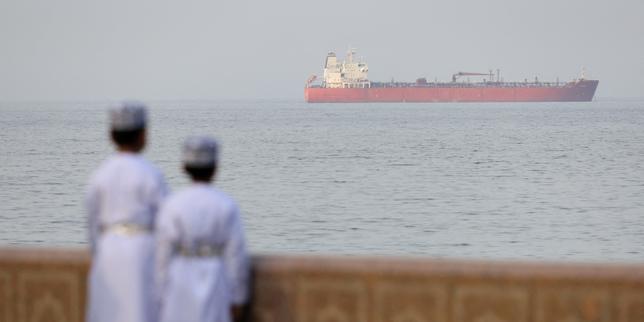
The logistical reality of this process remains obscured by design. For years, the U.S. has targeted the "Ghost Fleet"—a collection of aging tankers that use deceptive practices like turning off their AIS (Automatic Identification System) transponders to move sanctioned crude. When these ships are caught, the oil becomes a liability. It is expensive to store. It is dangerous to keep on deteriorating hulls. By releasing this oil into the market now, the U.S. is essentially using Iran's own resource to undermine the very price volatility that usually benefits oil-exporting adversaries during wartime.
Why Tehran Denies the Surplus
Tehran’s insistence that it has "no surplus at sea" is a necessary piece of political theater. To admit to a surplus is to admit that sanctions are working—that they have more oil than they can sell. If the Iranian Ministry of Petroleum acknowledges that millions of barrels are sitting idle in the Persian Gulf or near Singapore, it signals weakness to its remaining buyers, primarily independent refineries in China.
By denying the existence of the oil, Iran also maintains a legal loophole. If they don't own it, they don't have to account for its loss. It allows them to maintain the fiction that every drop they produce is successfully reaching a destination. Meanwhile, satellite imagery and shipping data tell a different story. Analysts have tracked dozens of VLCCs (Very Large Crude Carriers) acting as floating warehouses. These ships are the pressure relief valves for an economy that produces more than it can legally export.
The Price of Stability
The global oil market reacts to perception as much as it reacts to supply. With the Middle East on edge, the threat of a closure at the Strait of Hormuz is the "black swan" event every trader fears. By injecting seized Iranian crude back into the stream, the U.S. creates a small but significant psychological buffer. It is a signal to the markets that there is "extra" oil available, even if it comes from a controversial source.
We are seeing a shift in how sanctions are used as a tool of economic warfare. In previous decades, the goal was total containment—zero barrels out. Today, the strategy is more nuanced. The U.S. wants the oil to flow to keep prices down, but it wants to ensure the money doesn't go back to the Iranian Revolutionary Guard Corps (IRGC). Selling seized oil is the ultimate expression of this policy. The oil enters the global supply, but the proceeds are funneled into the U.S. Victims of State Sponsored Terrorism Fund.
The Risks of Aging Infrastructure
Many of the vessels holding this seized oil are "sub-standard." They are often over 20 years old, lacking the rigorous maintenance schedules required by major shipping lines. When the U.S. authorizes the sale of this oil, they aren't just moving a commodity; they are managing an environmental ticking time bomb. Transferring oil from a seized "ghost" ship to a legitimate tanker is a delicate operation often performed in open water.
A spill during one of these transfers would be a diplomatic disaster. It would give Iran the moral high ground to claim that U.S. "piracy" is destroying the marine environment. This risk is why the Department of Justice often moves slowly, but the current urgency of the energy market has clearly shortened the fuse. The administration has calculated that the risk of a spill is lower than the risk of $100-a-barrel oil during an election cycle.
The China Connection
The elephant in the room is China. For years, Beijing has been the primary destination for the Iranian "dark" trade. By seizing and selling this oil, the U.S. is directly competing with the black-market routes that feed Chinese "teapots" (independent refineries).
When the U.S. liquidates seized crude, it typically sells it at a transparent market price. This forces black market traders to lower their prices even further to stay competitive. It is a race to the bottom that benefits the consumer but starves the sanctioned regime of the margins they need to keep their shadow banking systems afloat.
The Legal Framework of Maritime Forfeiture
The legal basis for these seizures is usually tied to terrorism financing. Under the International Emergency Economic Powers Act (IEEPA), the U.S. can claim that the oil is the "property" of a terrorist organization if it can be linked to the IRGC. Once that link is established in a D.C. court, the oil effectively becomes the property of the U.S. government.
The process is remarkably efficient once it gets moving:
- Identification: Intelligence and satellite data flag a vessel engaging in "spoofing" or suspicious ship-to-ship transfers.
- Interception: Maritime authorities or commercial partners under U.S. contract secure the vessel.
- Forfeiture: A civil forfeiture complaint is filed, asserting the oil is the proceeds of crime.
- Liquidation: The U.S. Marshals Service or a designated contractor sells the cargo to a legitimate buyer.
Geopolitical Blowback and the Strait of Hormuz
Every time the U.S. seizes a ship, the risk of Iranian retaliation in the Strait of Hormuz increases. We have seen a "tit-for-tat" pattern where Iran seizes a commercial tanker in the Gulf in response to a U.S. seizure in the Mediterranean or the Atlantic. This authorization for sale is a bold statement that Washington will not be intimidated by these "tanker wars."
However, this isn't a perfect system. Iran has become incredibly adept at "flag hopping"—constantly changing the country of registration for its ships to evade detection. They use shell companies in jurisdictions with lax oversight to hide the true ownership of the cargo. The U.S. is essentially playing a game of whack-a-mole where the stakes are measured in millions of barrels.
The Economic Paradox
There is an inherent contradiction in U.S. policy. The administration is maintaining strict sanctions on Iranian oil production while simultaneously facilitating the sale of Iranian oil into the market. It is a paradox born of necessity. The world needs the oil, but the U.S. cannot allow the current Iranian leadership to be the ones who get paid for it.
This move also puts pressure on other OPEC+ members. If the U.S. can effectively manage "seized supply" as a sort of secondary strategic reserve, it gains a tiny bit more leverage in negotiations with Riyadh or Abu Dhabi. It shows that the U.S. has ways of finding oil even when traditional taps are being tightened.
The Future of Energy Enforcement
The era of simple sanctions is over. We have entered a period of "active enforcement" where the U.S. government acts as a participant in the market it is trying to regulate. This authorization to sell Iranian oil is the clearest sign yet that the White House views the "Ghost Fleet" not just as a legal problem, but as a resource to be harvested.
The strategy hinges on the ability to keep catching these ships. As Iran's methods become more sophisticated, using AI-driven route planning and deeper layers of shell companies, the U.S. will have to invest more in maritime surveillance. The "war" is no longer fought just with naval blockades, but with data scientists and forensic accountants tracking the flow of every barrel from the wellhead to the refinery.
Iran's denial of the surplus is a hollow defense against the reality of satellite photography and the cold math of global trade. The oil is there, it is moving, and now, it is being sold by the very power that Iran claims has no right to touch it. This isn't just about revenue; it's about who controls the narrative of the global energy supply.
Monitor the Baltic Exchange and tanker tracking data over the next thirty days to see which specific hulls are offloading. That is where the real story of this "invisible" oil will be told.