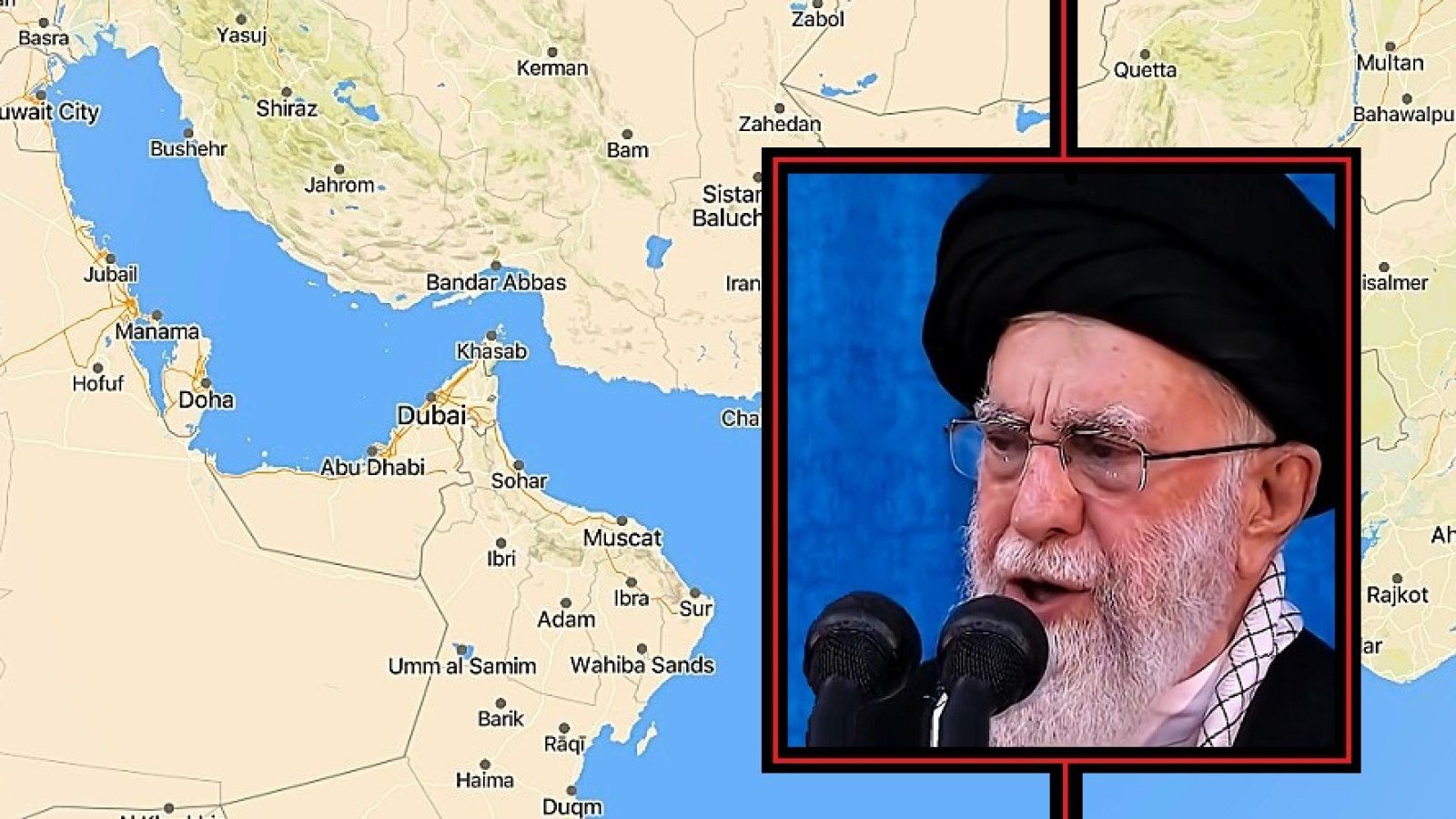
The United Arab Emirates has effectively become the world’s most active laboratory for high-intensity missile defense. Since the onset of the current West Asia conflict, the federation’s air defense systems have intercepted 341 ballistic missiles and more than 1,700 unmanned aerial vehicles (UAVs). These figures do not represent mere statistics in a military ledger. They signal a radical shift in how middle powers maintain sovereignty when caught between regional fires. While the sheer volume of successful intercepts suggests a fortress-like security, the reality on the ground is far more complex and significantly more expensive than the public narrative suggests.
Abu Dhabi has invested billions into a multi-layered defense architecture that is currently working overtime. The backbone of this system relies on a blend of American-made hardware and locally integrated intelligence. However, the success of intercepting 2,000-plus incoming threats raises a grueling question. How long can any nation, regardless of its wealth, sustain an attrition war where the interceptor costs ten times more than the target?
The Mechanics of the Multi Layered Shield
The UAE does not rely on a single "silver bullet" to keep its skies clear. Instead, it operates a sophisticated hierarchy of systems designed to catch different threats at different altitudes. At the top tier sits the Terminal High Altitude Area Defense (THAAD). This is the heavy hitter, designed to smash ballistic missiles as they re-enter the atmosphere. Below that, the Patriot PAC-3 handles medium-range threats, while shorter-range systems like the Pantsir-S1 and the South Korean M-SAM (Cheongung II) manage the swarm of low-flying drones.
The technical challenge of managing 1,700 UAVs is distinct from stopping a ballistic missile. A ballistic missile follows a predictable, high-speed arc. It is a physics problem. A drone swarm is a software problem. These "suicide drones" are slow, low-flying, and often made of materials that provide a minimal radar cross-section. They are designed to overwhelm sensors by sheer numbers. The fact that the UAE has neutralized over 1,700 of these units indicates an incredibly high level of sensor fusion—the ability of different radar systems to talk to each other in real-time to distinguish a bird from a loitering munition.
The Mathematics of Attrition
Despite the operational success, the financial optics are brutal. A single interceptor missile for the Patriot system can cost between $3 million and $4 million. A THAAD interceptor is even more expensive, often cited around $12 million per shot. In contrast, the Iranian-designed drones frequently used by regional proxies can be manufactured for as little as $20,000 to $50,000.
When you do the math on 341 ballistic missile intercepts, you are looking at a defensive expenditure that could easily exceed $2 billion just in "expendables"—the missiles fired to stop the missiles coming in. This does not account for the maintenance of radar arrays, the salaries of specialized operators, or the opportunity cost of redirected national funds. The UAE is winning the kinetic battle, but it is fighting a defensive war that is fundamentally asymmetrical in economic terms.
Why the UAE Became the Primary Target
The Emirates has long positioned itself as a "Little Sparta," a highly capable military force that punches well above its weight class. This reputation, combined with its role as a global logistics and financial hub, makes it a high-value target for those seeking to destabilize the status quo in West Asia. By targeting the UAE, adversaries aren't just trying to cause physical damage; they are trying to puncture the aura of safety that attracts foreign investment and tourism.
The uptick in drone and missile activity is a direct response to the UAE’s strategic positioning. Even as it draws back from direct involvement in some regional theaters, its infrastructure remains critical for global trade. The Port of Jebel Ali and the international airports in Dubai and Abu Dhabi are the crown jewels of the Gulf economy. If a single $30,000 drone makes it through the multi-billion dollar shield and hits a terminal at DXB, the economic ripples would be felt globally. This makes every one of those 1,700 intercepts a high-stakes gamble.
The Overlooked Human Element
While the hardware gets the headlines, the human bottleneck is the real vulnerability. Operating a THAAD or Patriot battery isn't like playing a video game. It requires constant alertness and the ability to make split-second decisions under immense pressure. The UAE has spent years training its personnel, moving away from a reliance on foreign contractors to domestic operators.
This localization of expertise is vital. In a sustained conflict, you cannot wait for a technician from a defense prime in the United States to fly in and fix a software glitch. The UAE’s ability to maintain a high intercept rate over a prolonged period suggests they have achieved a level of operational maturity that few other nations in the region can claim.
The Shift Toward Directed Energy
Because of the cost-per-intercept problem, the UAE is quietly pivoting toward new technologies that don't require expensive missiles. This is where Directed Energy Weapons (DEWs), specifically high-energy lasers, come into play. A laser doesn't run out of ammunition as long as it has power. The cost per "shot" drops from millions of dollars to the price of the electricity used to generate the beam.
The federation is heavily investing in the development of domestic defense capabilities through entities like EDGE Group. They are no longer content just buying off-the-shelf tech from the West. They are looking for ways to build autonomous systems and counter-drone technology that can neutralize threats at a fraction of the current cost. This isn't just about defense; it is about industrial survival. If they can solve the drone swarm problem cheaply, they become an indispensable technology exporter to the rest of the world.
Geopolitical Friction and the US Relationship
The reliance on American systems like THAAD and Patriot creates a complex political tether. Every time the UAE fires an interceptor, it eventually needs to buy a replacement from the United States. This gives Washington significant leverage over Abu Dhabi's foreign policy. If relations sour, the "re-up" on critical defense components can be delayed or blocked by Congress.
This dependency is why we see the UAE diversifying its suppliers. The purchase of the South Korean M-SAM system was a clear signal that Abu Dhabi will not be held hostage by a single supplier's political whims. They are building a "best of breed" defense network that pulls from the US, Europe, and Asia. This diversification makes the system harder to maintain because of integration hurdles, but it provides a strategic safety net that a single-source military lacks.
The Intelligence Gap
No air defense system is perfect. The 100 percent intercept rate is a myth often perpetuated by PR departments. In reality, "intercepted" can mean many things. It can mean the missile was vaporized in mid-air, or it could mean it was knocked off course to land in an unpopulated area.
The real secret to the UAE’s success isn't just the missiles; it is the Pre-Emptive Intelligence. You cannot stop 1,700 drones if you don't know they are coming. The UAE has built one of the most sophisticated signals intelligence (SIGINT) networks in the world. By monitoring launch sites and communications channels far beyond their borders, they gain the precious minutes needed to spin up their defenses. This proactive stance is the difference between a successful intercept and a national tragedy.
The Social Psychology of the Shield
There is a hidden cost to living under an invisible dome. For the residents of Dubai and Abu Dhabi, life continues with an eerie sense of normalcy. Malls are full, and construction continues. This is the ultimate goal of the air defense network: to keep the "threat" as an abstract concept.
However, this creates a bubble of perceived invincibility. If that bubble ever bursts—if the 342nd missile or the 1,701st drone succeeds—the psychological impact on the nation’s brand will be disproportionately high. The government isn't just defending airspace; it is defending a reputation for stability that is the foundation of its entire economic model.
The Future of the Conflict
As the conflict in West Asia shows no signs of an immediate resolution, the UAE's air defense strategy must evolve from "emergency response" to "sustainable posture." This means moving beyond the reactive firing of expensive interceptors.
We are likely to see an increase in Electronic Warfare (EW). Instead of blowing a drone out of the sky, the UAE is perfecting the art of "soft kills"—jamming the GPS or command signals of an incoming UAV so that it simply falls into the sea or turns back toward its launcher. This is the quietest and most effective way to win the attrition war. It leaves no debris, costs almost nothing per use, and provides no cinematic footage for an adversary's propaganda.
The statistics released regarding the 341 missiles and 1,700 drones are a testament to technical excellence, but they are also a warning. They reveal a region in a state of constant, low-grade kinetic friction. The UAE has proven it can catch the punches, but the real test will be whether it can change the nature of the fight so it no longer has to.
A nation cannot indefinitely spend its way to safety. The next phase of Emirati defense will not be measured by how many missiles they shoot down, but by how many they can prevent from ever being launched. This requires a shift from purely military solutions to a sophisticated blend of cyber-warfare, economic pressure, and regional diplomacy. The shield is holding for now, but the pressure on it is rising every day.
Ask yourself what happens when the next generation of drones arrives—cheaper, faster, and smarter. The UAE is betting its future that its tech-first approach can stay one step ahead of the curve. It is a high-stakes race where the finish line is constantly moving. For the rest of the world, the UAE is the frontline of a new kind of warfare where the air is never truly empty and the cost of peace is counted in the millions of dollars per minute.