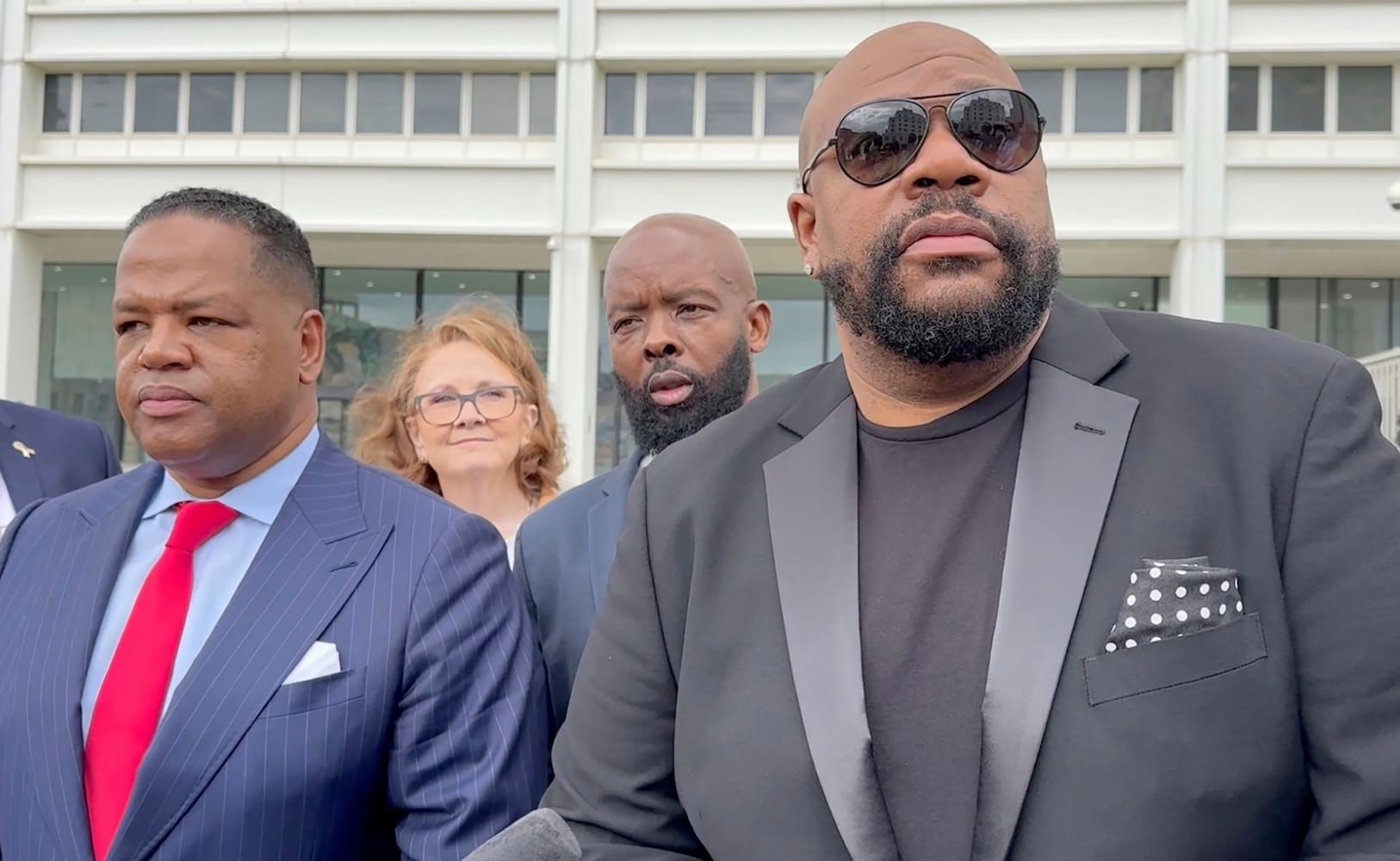
The settlement between the estate of Isaac Hayes and the Donald Trump campaign regarding the unauthorized use of "Hold On, I’m Comin’" represents a definitive shift in how intellectual property (IP) litigation functions within the political vertical. While the media focuses on the $150,000 price tag and the 133 instances of alleged infringement, the actual significance lies in the breakdown of the ASCAP/BMI "Political Use" exclusion and the failure of campaign operational risk management.
This case serves as a blueprint for the structural decay of the "blanket license" defense. For decades, campaigns operated under the assumption that a general venue license covered all performance risks. The Hayes settlement confirms that the legal landscape has pivoted from simple licensing to a multi-layered liability model involving the Right of Publicity, the Lanham Act (false endorsement), and specific "opt-out" mechanisms now standard in performing rights organization (PRO) contracts.
The Triad of Liability in Political Performance
To understand why a settlement was the only logical exit for the Trump campaign, one must deconstruct the three distinct legal layers that create a "liability trap" for modern political events.
- The Copyright Layer (Section 106): This is the baseline. It covers the right to perform the work publicly. While most venues have licenses, ASCAP and BMI have introduced "Political Use Licenses" that allow songwriters to opt-out of specific campaigns. Once an artist sends a formal Cease and Desist (C&D), the "good faith" defense for using a blanket license evaporates.
- The Lanham Act Layer (False Endorsement): Under 15 U.S.C. § 1125(a), a plaintiff argues that the use of a song in a highly charged political context creates a "likelihood of confusion." The estate argues that the audience—and the public—will falsely believe Isaac Hayes (or his heirs) endorses the candidate.
- The Right of Publicity Layer: This is a state-law claim. It treats a creator's voice, style, and persona as a commercial asset. When a campaign uses a signature song to build brand equity or "hype" a crowd, they are misappropriating the commercial value of the artist's identity without compensation.
The Hayes estate leveraged all three. By documenting 133 separate uses, they transformed a single point of friction into a systematic pattern of infringement, which drastically increases the probability of a "willful" designation in court. Under 17 U.S.C. § 504, willful infringement can trigger statutory damages of up to $150,000 per work. The campaign’s exposure was mathematically catastrophic if the case reached a jury.
The Cost Function of Repeated Infringement
A settlement of $150,000 for 133 alleged uses averages to approximately $1,127 per performance. This is a "precedent-setting" bargain for a campaign, but a warning shot for political entities. The cost function of this settlement is driven by three primary variables:
- Variable A: The Statutory Ceiling: The potential for a $150,000-per-incident award.
- Variable B: The Pre-Existing Notice: The estate claimed they issued multiple warnings. This is the "knowledge" threshold. Continued use after a C&D is almost impossible to defend as "innocent infringement."
- Variable C: The Brand Dilution Factor: For an estate like Isaac Hayes's, the value of the "soul" brand is its universal appeal. Associating it with a divisive political figure, regardless of the figure's identity, creates a long-term "dilution" of the license value for commercials, movies, and other neutral media.
The Trump campaign's "settlement-as-arbitrage" strategy is visible here. By paying a flat fee, they avoid the discovery process, which would likely have revealed internal memos or emails acknowledging the risk of using the track. This prevents a "punitive damages" multiplier, which would have been based on the campaign's total budget rather than the value of the song.
Strategic Deficiencies in Campaign IP Management
The recurring nature of these lawsuits—from the Rolling Stones to Neil Young and now Isaac Hayes—points to a structural failure in political campaign operations. Most campaigns treat music as "background" when it should be treated as "endorsed content."
The "Operational Blind Spot" in current political strategy is the reliance on the Public Performance Right (PPR). While a campaign might have a license for a stadium, they often lack the Synchronization License (sync) for social media clips or televised broadcasts of the event. When a campaign posts a video of a rally on X (formerly Twitter) or YouTube, they are no longer just "performing" the song; they are "synchronizing" it with visual imagery.
A PPR does not cover sync. This means that for every one of the 133 uses that ended up on a campaign social media account, a separate, more expensive infringement occurred. The Hayes estate likely targeted this specific gap in the campaign's legal armor.
The Mechanistic Shift in Performing Rights Organizations (PROs)
ASCAP and BMI have updated their "Political Campaign Licenses" to provide a formal "Opt-Out" mechanism for artists. This is the most significant change in music law for the 21st century.
If an artist like Isaac Hayes (via his heirs) notifies the PRO that they do not want their music used in a political context, the PRO must notify the campaign. At that point, the campaign’s blanket license is modified to exclude that specific song. This creates a "black box" for campaign event planners. They cannot simply rely on the venue's license anymore; they must cross-reference their setlist against the PRO's "Political Exclusion List."
The breakdown of the Trump-Hayes dispute suggests that the campaign's advanced operations team either failed to audit their setlist against the updated PRO exclusions or intentionally ignored them. The settlement serves as a "market correction" for this type of operational negligence.
Quantifying the Settlement's Impact on Estate Valuation
From the perspective of an IP analyst, the Hayes estate’s aggressive stance is a play for "Asset Protection." If an estate allows its most famous work to be used for free in a high-profile political context, they risk losing the "exclusivity" that drives high-value sync deals for films and commercials.
- Loss of Negotiating Leverage: If a brand like Nike sees a song used for free in 133 political rallies, they will argue that the song’s "cultural premium" has been eroded.
- Estate Duty of Care: Heirs have a fiduciary duty to maximize the value of the catalog. Ignoring "naked infringement" (unauthorized use without payment or credit) is a breach of that duty.
The $150,000 settlement is not just "cash in hand." It is a "market signal" to other political entities: the Hayes catalog is protected, and the cost of unauthorized use is now publicly quantified.
Predictive Modeling for Future Political IP Conflict
The Hayes settlement will trigger a "compliance-first" era for the 2026 and 2028 election cycles. Campaigns will likely adopt one of two structural changes to avoid the "133-incident liability" trap:
- The "Pre-Cleared Only" Playlist: Legal teams will mandate that only "royalty-free" or "stock" music be used for warm-up and walk-on sequences. This eliminates the "personality" of the rally but removes 100% of the IP risk.
- The "Direct License" Model: High-budget campaigns will move away from PRO blanket licenses and negotiate "direct performance licenses" with friendly artists. This allows the campaign to own the rights for both the live performance and the subsequent social media "sync" use.
The Hayes estate's victory is the end of the "apologize later" era of political music use. The mechanism of "willful infringement" is too well-defined, and the cost of settlement is now a line item that donors will eventually question. For campaigns, the new mandate is simple: IP due diligence is as critical as polling data.
Campaigns must now integrate a "Digital Rights Management" (DRM) layer into their event planning. This requires a dedicated IP compliance officer who audits every piece of media—from the walk-on music to the background tracks in 15-second TikTok clips. The failure to do so results in a "cascading liability" where every single rally becomes a separate, quantifiable legal vulnerability.
The final strategic move for any entity managing a high-profile public brand is to treat "Public Performance" as a high-risk commercial activity. The era of assuming a venue's license provides total immunity is over. Every public use of a copyrighted work must be audited against current PRO exclusion lists, and a "Stop-Use" protocol must be established for any artist who issues a public or private objection. Failure to implement this specific operational barrier creates an uncapped liability that can be exploited by any estate looking to protect its commercial legacy.
Recommendation: Establish a "Negative Rights Registry" for all public-facing events. Cross-reference all "Political Use" opt-outs with ASCAP, BMI, and SESAC before any playlist is finalized. If a song is utilized, capture a time-stamped "License Verification Report" to preclude any claims of willful infringement in future litigation. This is the only way to shift the burden of proof back onto the plaintiff and cap potential damages at the "innocent" statutory minimum.