Donald Trump promised a "wall of steel" that would crush the Iranian economy and force Tehran to the negotiating table. He wasn't kidding about the pressure. Between 2018 and 2021, the U.S. hammered Iran with over 1,500 separate sanctions, targeting everything from oil exports to the Supreme Leader’s inner circle. It was supposed to be a total blackout. Most analysts thought the Iranian regime would buckle under the weight of a crippled rial and empty coffers.
They were wrong.
Iran didn't just survive the maximum pressure campaign; they built an entire shadow economy to bypass it. Recent reports from international media outlets and maritime tracking firms show that Iran’s oil exports reached a six-year high in 2024 and continue to hold steady into 2026. The wall of steel has more holes than a screen door. If you think sanctions are a magic wand that stops "bad actors" in their tracks, you’re looking at an outdated playbook.
The ghost fleet and the art of the ship to ship transfer
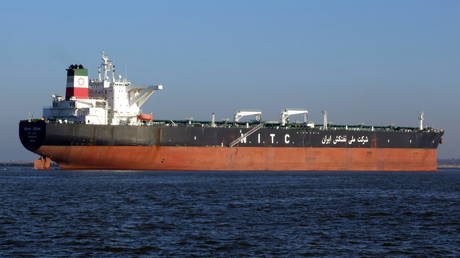
The primary way Iran keeps its oil flowing is through a sophisticated network of "ghost ships." These are aging tankers, often owned by shell companies in jurisdictions like the Marshall Islands or Panama, that operate entirely off the grid. They don't use standard insurance. They don't broadcast their locations.
When an Iranian tanker leaves Kharg Island, it doesn't just sail to a port. It meets a middleman in the middle of the ocean. They call this a ship-to-ship (STS) transfer. Basically, the Iranian vessel hooks up to a "clean" tanker and pumps its cargo over. During this process, they turn off their AIS (Automatic Identification System) transponders. It’s a literal dark swap. By the time that oil reaches a refinery in China, the paperwork says it originated from Malaysia or Oman.
You might wonder why nobody stops them. It's not that the U.S. Navy doesn't see them. It's that the sheer volume of these transfers makes whack-a-mole enforcement nearly impossible without a total naval blockade, which is an act of war. Iran has mastered the logistics of being invisible while moving millions of barrels of crude every single day.
China is the silent partner keeping the lights on
We need to talk about the elephant in the room. Sanctions only work if everyone agrees to play along. China never signed up for the "wall of steel." For Beijing, Iranian oil is a bargain. Because Iran is sanctioned, they have to sell their crude at a massive discount—sometimes $10 to $15 below the global Brent price.
Chinese "teapot" refineries—small, independent operations in provinces like Shandong—are the biggest buyers. These refineries don't have U.S. exposure. They don't use the dollar. They don't have bank accounts in New York that the Treasury Department can freeze. They pay in yuan or through barter systems. This creates a closed loop that Washington can't touch.
The rise of the non-dollar economy
Iran’s survival isn't just about oil. It’s about the financial plumbing. They’ve moved away from the SWIFT banking system entirely for their most sensitive transactions. Instead, they use a network of "exchange houses" in cities like Dubai, Istanbul, and Hong Kong.
These aren't your typical banks. It’s a decentralized system where money is moved through Hawala—an informal value transfer system based on trust and local ledgers. You give a guy in Tehran 100 million rials, and his partner in Dubai hands over the equivalent in dirhams to a supplier. No money actually crosses the border. No digital trail exists for a U.S. regulator to find. It’s old-school, it’s messy, and it’s remarkably effective.
Why the wall of steel actually backfired
There’s a strong argument that Trump’s maximum pressure actually made Iran more resilient. When you back a regime into a corner, they don't just give up. They innovate. Iran has spent the last decade building a "Resistance Economy."
- They diversified their trade partners. Instead of looking West, they looked East and North. Trade with Russia and Central Asian neighbors has spiked.
- They developed domestic industries. Because they couldn't import high-tech parts, they started making their own. Their drone program is a prime example of this. They took off-the-shelf civilian components and turned them into world-class military hardware that's now being used in global conflicts.
- They incentivized smuggling. When the state can't provide, the black market fills the gap. This has created a class of "sanctions profiteers" within the IRGC (Islamic Revolutionary Guard Corps) who now have a massive financial interest in keeping the sanctions in place. They’re getting rich off the misery.
What Washington gets wrong about Iranian leverage
The U.S. often thinks that economic pain leads to political change. That's rarely the case in authoritarian states. In Iran, the pain of sanctions is felt by the middle class and the poor. The people at the top—the ones making the decisions—are doing just fine. They control the smuggling routes. They control the ghost fleet.
Honestly, the wall of steel did more to destroy the Iranian pro-democracy movement than it did to stop the nuclear program. By crashing the rial, the U.S. made every Iranian citizen dependent on the state for subsidies. It’s hard to protest for freedom when you’re spending six hours a day in a line for subsidized chicken.
The 2026 reality check
As we sit here in 2026, Iran is producing more oil than it was before the U.S. pulled out of the JCPOA (the nuclear deal). They have enough enriched uranium for multiple weapons if they choose to go that route. The "wall" was supposed to prevent this exact scenario.
If you’re a business owner or an investor, the takeaway is clear. Geographic borders and financial regulations are becoming porous. The rise of a multipolar world means that a U.S. Treasury designation doesn't carry the weight it did in 2005. Countries like Iran, Russia, and North Korea are sharing notes. They’re building a parallel global economy that functions entirely outside the reach of the U.S. dollar.
Stop waiting for sanctions to "work" in the traditional sense. They are a tool of attrition, not a solution. The media focus on the "wall of steel" misses the point. The wall exists, but Iran just built a tunnel underneath it, and China provided the lighting.
The next step for global policy isn't adding more names to a blocked-persons list. It’s figuring out how to engage with a world where the U.S. financial system is no longer the only game in town. You can't block the sun with a sieve, and you can't stop a global oil market with a set of PDF documents from Washington.