Iran and Russia aren't just playing nice for the cameras anymore. They're building a survival pact. While the West watches for the next headline out of the White House, Tehran and Moscow are quietly cementing a partnership that aims to rewrite how power works in the Middle East and beyond. Abbas Araghchi, Iran’s Foreign Minister, recently made it clear that Iran has no intention of backing down from its stance against superpowers, even as rumors of back-channel talks with Donald Trump's team swirl.
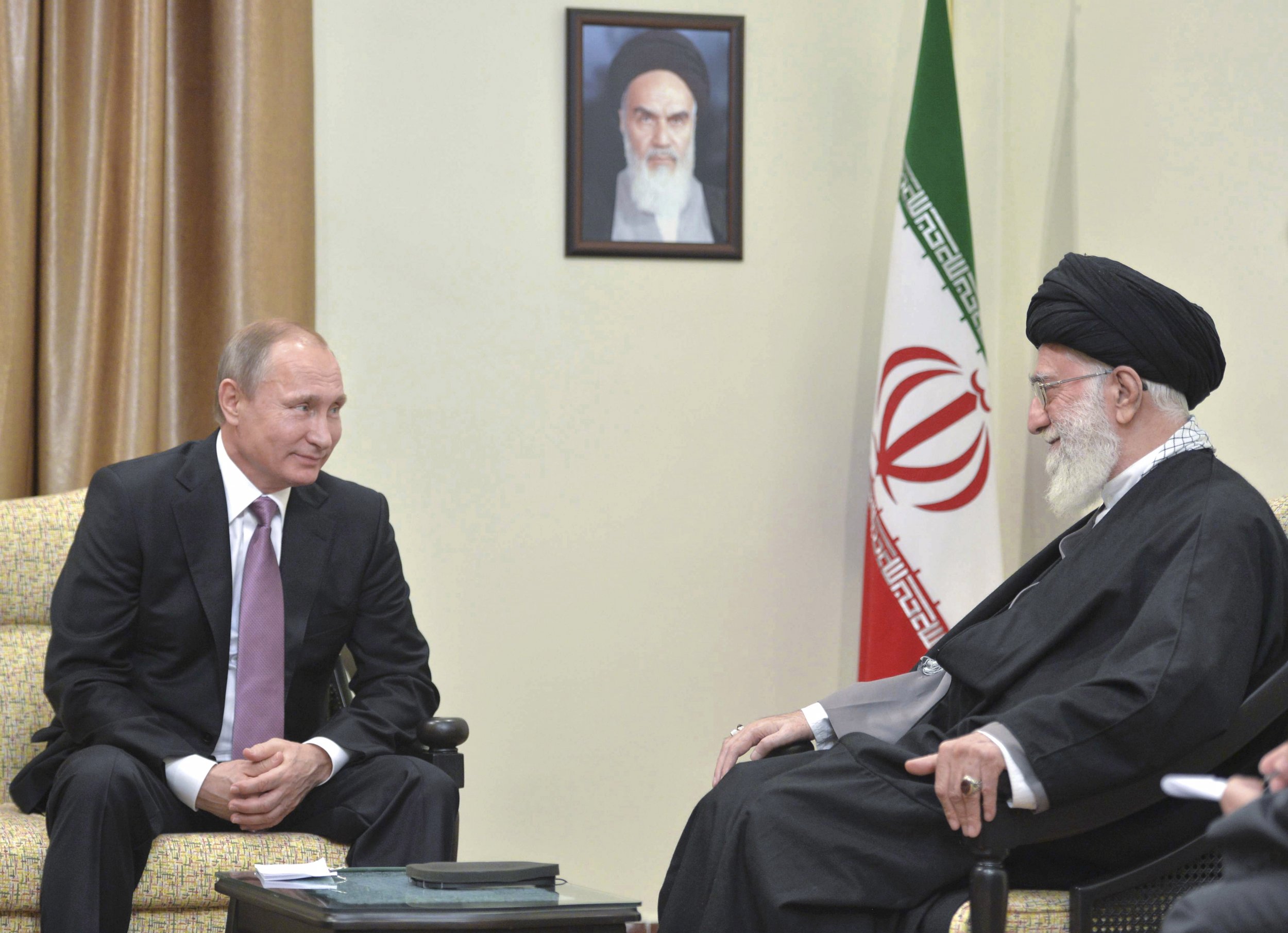
This isn't just about weapon sales or oil prices. It’s about two nations that have been backed into a corner by sanctions and are now finding that they’re stronger when they stand together. Vladimir Putin's recent meeting with Iranian officials proves that Moscow isn't just a fair-weather friend. They're in this for the long haul. Learn more on a connected issue: this related article.
Araghchi claims Trump wanted a seat at the table
Abbas Araghchi isn't one to mince words. He recently highlighted that during Donald Trump’s previous term, there was a clear push from Washington to get Iran to the negotiating table. According to Araghchi, the "Maximum Pressure" campaign was a failure because it didn't result in the total Iranian surrender the U.S. expected. Instead, he argues it forced Iran to become more self-reliant and more aggressive in its regional strategy.
The timing of these statements is vital. With the 2024 U.S. election cycles still fresh in everyone’s mind and the global political climate shifting, Iran is signal-boosting its resilience. Araghchi’s narrative is simple. If you want to talk to us, you have to respect us. He’s telling the world that Iran stood up to a superpower and didn't blink. That kind of rhetoric plays well at home, but it also sends a message to other nations watching from the sidelines. Further journalism by The New York Times delves into comparable views on this issue.
Putin remains the ultimate wildcard for Tehran
While Iran talks tough against the U.S., it’s leaning hard into Russia. Vladimir Putin has reaffirmed his support for Iran at a time when both countries are increasingly isolated from Western markets. This isn't a one-way street. Russia needs Iranian drone technology and tactical cooperation in Syria, while Iran needs Russian diplomatic cover at the UN and help with its nuclear energy program.
The bond between Putin and the Iranian leadership has grown beyond mere convenience. They're now sharing intelligence and coordinating economic moves to bypass the SWIFT banking system. It’s a messy, complicated friendship. It works because both sides have a common enemy. Putin’s recent reassurances aren't just polite diplomatese. They're a signal to the Pentagon that any move against Iran will be met with a Russian response, even if that response is just more hardware and tech transfers.
The reality of the North-South Transport Corridor
You can't talk about this alliance without mentioning the International North-South Transport Corridor (INSTC). This is a massive infrastructure project designed to link India to Russia via Iran. It bypasses the Suez Canal entirely. For Putin, this is a lifeline. For Iran, it's a way to become the central hub of Eurasian trade.
- Sanction proofing. Both countries want a trade route that the U.S. Navy can't easily shut down.
- Economic Diversification. Russia is looking for new markets for its grain and energy.
- Regional Influence. By controlling this corridor, Iran makes itself indispensable to its neighbors.
Military cooperation is the real glue
It's no secret that Iranian Shahed drones have been a factor in the conflict in Ukraine. In exchange, Iran is eyeing Russian Su-35 fighter jets and S-400 missile defense systems. This trade-off changes the balance of power in the Persian Gulf. If Iran gets its hands on advanced Russian aviation, the "Maximum Pressure" tactics of the past become much riskier for the West to execute.
Why the West keeps getting Iran wrong
Policy experts in D.C. often talk about Iran as if it’s a monolith. They assume that more sanctions will eventually lead to a popular uprising or a change in heart from the Supreme Leader. That hasn't happened. Instead, the pressure has pushed the Iranian Revolutionary Guard Corps (IRGC) deeper into the economy and closer to Moscow.
Araghchi’s comments about Trump seeking talks suggest that even the most hardline U.S. administrations eventually realize that isolation has its limits. If you don't talk, you don't have any leverage. But if you talk from a position of perceived weakness, Iran won't listen. They've spent decades learning how to survive under duress. They aren't going to give up their nuclear ambitions or their regional proxies just because a new President enters the Oval Office.
The China factor in the background
While Russia and Iran are the ones making the most noise, China is the silent partner. Beijing provides the cash that keeps the lights on in Tehran by buying discounted oil. This creates a triple-axis of nations that are tired of the U.S. dollar's dominance.
When Putin meets with Iranian officials, they're likely discussing how to use the BRICS framework to further distance themselves from Western influence. It’s a slow process, but it’s happening. They aren't trying to beat the U.S. at its own game. They're trying to build a different game entirely.
What this means for regional stability
The emboldened stance of Araghchi, backed by Putin’s support, means the Middle East is entering a very volatile phase. Iran feels it has the backing of a nuclear superpower. This makes them less likely to compromise on their "Forward Defense" policy, which involves supporting groups like Hezbollah and the Houthis.
For Israel and Saudi Arabia, this is a nightmare scenario. They see a revitalized Iran that is no longer afraid of U.S. intervention because they have Moscow in their corner. The old rules of deterrence are breaking down. We're seeing a shift where local conflicts could easily escalate into much larger, multi-national confrontations.
How to track these developments
If you're trying to stay ahead of this, don't just watch the official press releases. Look at the shipping data in the Caspian Sea. Look at the frequency of cargo flights between Tehran and Moscow. Those are the real indicators of how deep this partnership goes.
- Watch the Su-35 delivery. If those jets actually land in Iran, it’s a game-over moment for the current regional air superiority.
- Follow the BRICS summits. See how much Iran and Russia push for a common currency or a new payment system.
- Monitor the Caucasus. Russia and Iran have competing and overlapping interests in Armenia and Azerbaijan. This is where the friction in their friendship will show up first.
The alliance between Iran and Russia is a response to a world that tried to shut them out. They've decided that if they can't be part of the global order, they'll just start their own. Araghchi’s bravado isn't just for show. It’s backed by Russian steel and Chinese gold. The West needs a new playbook because the old one isn't just failing—it’s backfiring.
Keep your eyes on the joint military exercises scheduled for later this year. Those drills will tell you more about their tactical readiness than any speech in the UN General Assembly ever could. The partnership is real, it's growing, and it's not going away anytime soon.