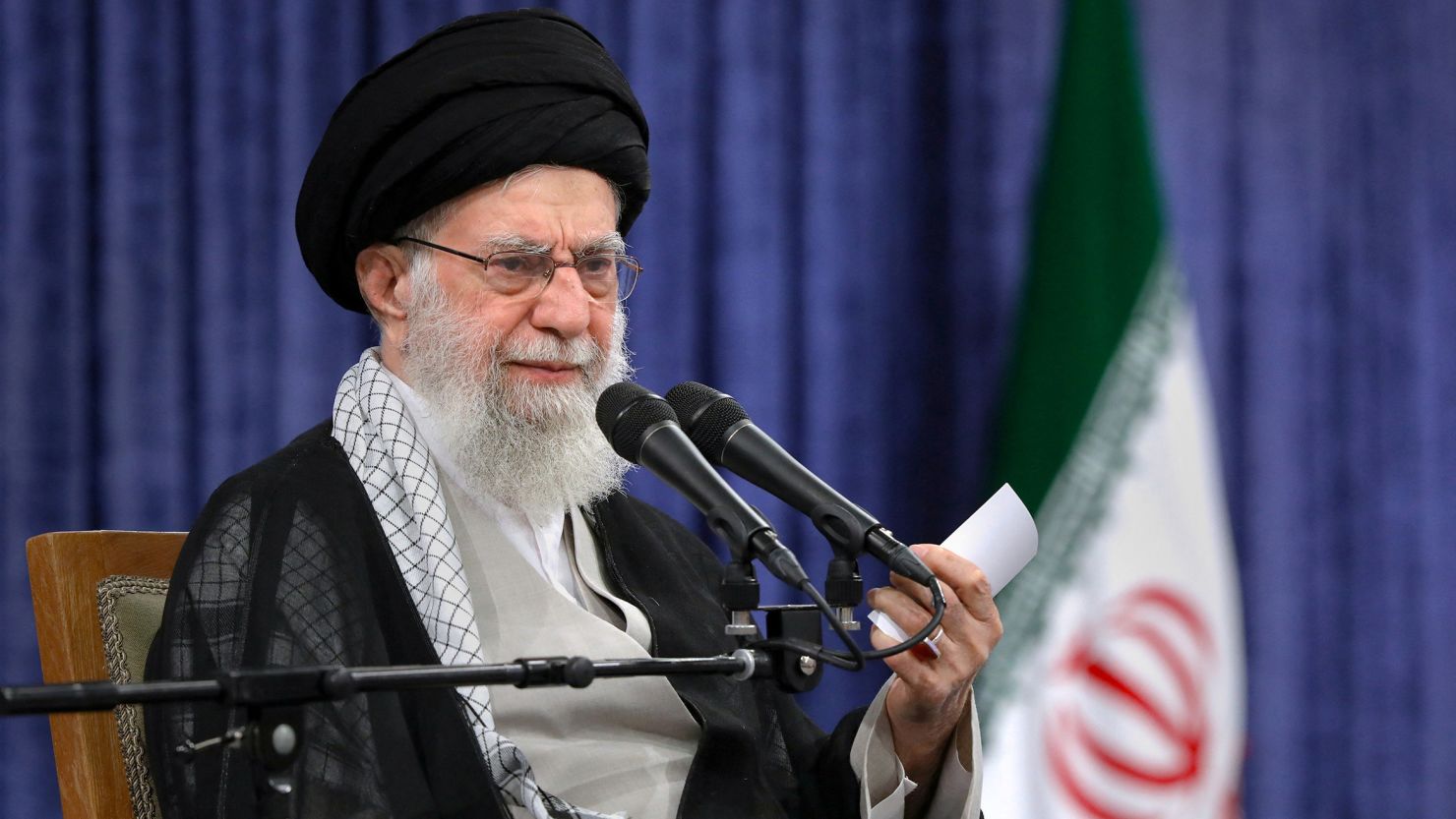
Ali Khamenei just drew a line in the sand that the world can't afford to ignore. Iran's Supreme Leader isn't just making noise anymore. He’s explicitly promising that his country won't let any "criminal aggressor" walk away without a scratch after recent escalations. This isn't your standard diplomatic posturing. It’s a declaration of a new reality in the Middle East where Tehran feels it’s already won the psychological war, regardless of what the physical battlefield looks like right now.
You've seen the headlines about missiles and drones. But the real story is the rhetoric coming out of Tehran. Khamenei’s recent statements signal a massive shift in how Iran views its own "Strategic Patience." That old policy is dead. In its place is a much more aggressive stance that views every strike against Iranian interests as an invitation for a direct, sovereign response. He’s calling it a victory. Critics call it a gamble. I think it’s something else entirely: a calculated move to rewrite the rules of engagement with Israel and the West.
Why the criminal aggressor label matters now
When Khamenei uses words like "criminal aggressor," he’s not just venting. He’s building a legal and moral framework for his domestic audience and regional proxies. By framing the opposition as a criminal entity, he justifies any level of retaliation as "punishment" rather than "war." It’s a subtle but vital distinction. Punishment implies authority. It implies that Iran is the one holding the gavel.
He’s betting that the international community is too tired or too fractured to challenge this narrative. Look at the recent strikes on Iranian diplomatic facilities. For years, Iran took those hits on the chin, preferring to use its "Axis of Resistance" to do the dirty work. Not anymore. The Supreme Leader is basically saying that the days of hiding behind proxies are over when the stakes get this high. He’s putting his own skin in the game, and he wants you to know it.
The victory claim is about perception not just ballistics
You might wonder how someone can declare victory when their infrastructure is under constant threat. It’s about the optics of defiance. In the eyes of the Iranian leadership, the mere act of launching a direct strike from Iranian soil against a major power is the win. They don't care if 90% of the projectiles get intercepted. They care that they flew.
This is a classic "asymmetric" mindset. If you’re the smaller player and you manage to make the giant bleed—or even just flinch—you’ve changed the power dynamic. Khamenei is leaning hard into this. He’s telling his people that the "Zionist regime" is fragile. He’s claiming that the invincible shield has been pierced. Whether that’s technically true is almost irrelevant to the political outcome he’s chasing. He’s shoring up support at home and signaling to allies in Lebanon, Yemen, and Iraq that Tehran is still the undisputed leader of the anti-West movement.
Breaking down the stern warning to the West
The warning wasn't just for Israel. It was a loud, clear message to Washington. Khamenei is essentially daring the U.S. to get involved or, better yet, to stay out of the way. He knows that an election year in America makes the White House allergic to a new regional war. He’s exploiting that hesitation.
He’s also playing on the internal divisions within Western governments. He sees the protests in London, Paris, and D.C. He sees the diplomatic friction between the U.S. and its Middle Eastern allies. His "stern warning" is designed to widen those cracks. It’s a way of saying: "If you back this aggressor, you’ll share the punishment." It’s high-stakes poker, and he thinks he’s got the better hand because he’s willing to lose more than we are.
What this means for regional stability
Let's be real. Stability is a pipe dream in the current climate. What we’re looking at now is "managed instability." Khamenei’s stance ensures that the shadow war is now a very public one. We should expect more direct exchanges. We should expect the "punishment" he talks about to take forms we haven't seen before—maybe cyber attacks on critical infrastructure or more aggressive maritime interdictions.
The danger is the "red line" problem. When both sides keep drawing new lines, eventually someone steps over one by accident. Khamenei’s rhetoric leaves him very little room to back down without looking weak. If he promises punishment and doesn't deliver, he loses face with the hardliners in the IRGC. If he delivers too much, he risks a full-scale invasion that could end his regime. He’s walking a tightrope over a volcano.
The internal Iranian audience is the real target
Don't forget that Khamenei is talking to his own people first. Iran has been rocked by internal dissent, economic sanctions, and a sense of exhaustion. By declaring a "victory" over a foreign "criminal," he’s trying to pivot the national conversation. He wants the focus off the rial’s value and back on national pride.
It’s a tried-and-true tactic. Externalize the enemy to internalize the loyalty. He’s using the threat of war to justify tighter control at home. He’s framing dissent as treason during a time of national "punishment" of aggressors. If you’re not with the Supreme Leader in his victory, you’re with the criminals. It’s a brutal, effective logic for a regime survivalist.
Moving past the headlines
If you want to understand where this goes next, stop looking at the missile counts and start looking at the diplomatic backchannels. Khamenei’s public "stern warning" is often paired with private messages sent through intermediaries like Oman or Switzerland. He wants the world to think he’s ready for the end, but he’s actually looking for a new "equilibrium" where Iran is respected as a regional heavyweight that can’t be touched.
Stay skeptical of "total victory" claims from any side. Victory in this context is just surviving to fight another day while making your opponent look tired. Khamenei has mastered this. He’s managed to turn a series of tactical escalations into a grand narrative of moral triumph. Whether that narrative holds up under the weight of actual war is the big question for 2026.
Keep a close eye on the IRGC’s next moves in the Strait of Hormuz. Watch for how the Iranian media portrays any "punishment" they carry out. They’ll likely overstate the damage to maintain the "victory" illusion. You should also monitor the rhetoric coming out of the Iranian foreign ministry—they’re the ones who have to clean up the mess after the Supreme Leader drops his rhetorical bombs. The gap between what they say and what Khamenei says tells you exactly how much internal debate is actually happening in Tehran. Get ready for a long, tense standoff where the words are just as dangerous as the weapons. If you’re following this, don't just watch the news; watch the shifts in the "Axis of Resistance" funding and logistics, as that's where the real "punishment" usually starts.


