Twenty-one hours of air-conditioned bickering in Islamabad didn't "fail."
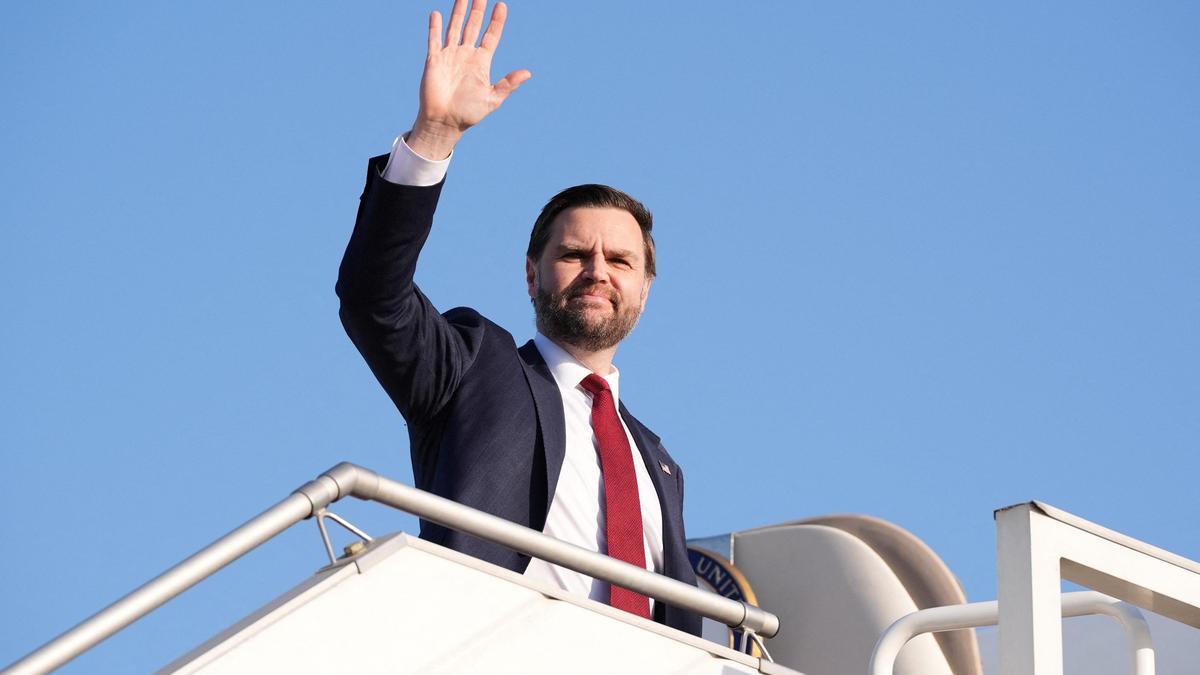
The mainstream press is currently mourning a missed opportunity for a grand U.S.-Iran bargain. They are obsessed with the image of JD Vance boarding a plane without a signed napkin to show for it. They call it a breakdown. I call it a masterclass in strategic friction.
If you think a signature on a piece of paper in Pakistan was going to magically stabilize the Strait of Hormuz or stop the proxy wars in the Levant, you haven't been paying attention for the last forty years. Agreements between these two powers aren't peace treaties; they are temporary ceasefires that usually fund the next round of escalations.
The "failure" in Islamabad is actually a victory for realism. It proves that the era of the "Grand Bargain"—that shiny, hollow dream of the late 20th century—is dead. And good riddance.
The Myth of the Missed Deadline
The media loves a countdown. They treat diplomatic summits like the final two minutes of a playoff game. "Twenty-one hours and no deal!"
So what?
In the world of high-stakes geopolitics, speed is the enemy of stability. When diplomats rush to meet an arbitrary deadline set by news cycles, they make concessions that bite back three years later. We saw it with the JCPOA. We saw it with the various iterations of the "reset" buttons.
The fact that Vance walked away shows a refusal to buy into the sunk-cost fallacy. Most politicians would have stayed for hour twenty-two just to get a meaningless joint statement that says "both sides agreed to keep talking." That kind of fluff creates a false sense of security for global markets. It leads to bad investment decisions in energy and shipping because people assume the risk has evaporated.
By walking away, the U.S. sent a clear, unvarnished signal: The current terms are garbage.
The Islamabad Illusion
Why Pakistan? The pundits say it was about a neutral ground.
That’s a superficial reading. The choice of Islamabad was a deliberate stress test of regional influence. By meeting there, the U.S. forced Iran to negotiate under the shadow of a nuclear-armed neighbor that has its own complicated dance with Beijing.
The failure to reach an agreement isn't a sign of American weakness. It’s a sign that the U.S. is no longer willing to subsidize Iranian regional hegemony in exchange for a temporary pause in enrichment. For decades, the "lazy consensus" among the D.C. elite was that we could buy Iranian good behavior. We tried it. It cost billions. It resulted in a more sophisticated drone program and a broader network of militias.
If you are a CEO or a risk manager, the Islamabad "failure" is the most honest data point you’ve received all year. It tells you that the geopolitical risk premium is real, it’s staying, and you need to hedge accordingly. No more pretending that a diplomatic "breakthrough" is going to lower your insurance premiums in the Red Sea.
Why the Market Wants the Friction
Let’s talk about what happens when these talks "succeed."
Usually, a deal involves the unfreezing of assets. Historically, that capital doesn't go into Iranian infrastructure or public health. It goes into the IRGC’s R&D department. It flows into the supply chains for Shahed drones.
By failing to reach a deal, the U.S. effectively kept the financial screws tight without firing a shot. A "failed" negotiation is just an extension of the existing sanctions regime, but with the added benefit of having looked the opponent in the eye and told them "no."
The contrarian truth? A bad deal is infinitely more dangerous than no deal. A bad deal creates a blind spot. No deal keeps everyone’s eyes wide open.
Dismantling the "People Also Ask" Nonsense
Is the world less safe because Vance left Pakistan?
No. The world is safer when the boundaries of a conflict are clearly defined. Ambiguity is where wars start. If Iran knows exactly where the U.S. stands—and that the U.S. isn't desperate enough to sign a weak agreement—they have to recalculate their aggression.
Does this mean war is inevitable?
That’s the binary logic of the amateur. Diplomacy isn't a light switch; it’s a rheostat. Walking away from a bad negotiation is a diplomatic move in itself. It is a communication of value. War happens when one side miscalculates the other's resolve. Vance just made sure there was no miscalculation.
Did Pakistan fail as a mediator?
Pakistan didn't fail because Pakistan wasn't the point. They provided the room. The two strongest egos in the room couldn't find a middle ground because the middle ground currently doesn't exist. Pretending it does is how you get catastrophic policy failures.
The Strategy of the Empty Chair
There is an immense power in being the one to leave the table first.
In every negotiation I’ve ever been a part of—from corporate M&A to high-level tech licensing—the person who can walk away is the person with the leverage. For years, the U.S. acted like the party that needed the deal more. We behaved like a desperate buyer at an auction.
Islamabad flipped the script.
By departing after 21 hours, Vance signaled that the U.S. has alternatives. We have the shale capacity. We have the AUKUS alliances. We have the tech-driven defensive posture. Iran, on the other hand, has a crumbling economy and an aging leadership.
The "status quo" that the media is so afraid of is actually a slow-motion victory for the West. We don't need to "fix" the Iran situation with a signature. We need to out-compete, out-produce, and out-wait them.
The Hidden Cost of "Success"
Imagine a scenario where they actually signed something.
The headlines would have been glowing. Oil prices would have dipped for forty-eight hours. Then, six months later, we would find the loophole. We would discover the clandestine facility. We would see the "humanitarian aid" being repurposed for ballistic missile guidance systems.
The "success" of a deal creates a political imperative to ignore violations. No administration wants to admit the deal they just signed is being shredded. So they look the other way. They "foster" (to use a word I hate) a culture of denial.
Without a deal, there is no denial. There is only the cold, hard reality of containment.
Stop Asking for Peace, Start Asking for Clarity
The obsession with "peace talks" is a distraction from the reality of global competition. We aren't in a post-Cold War world where everyone eventually joins the WTO and plays by the rules. We are in a world of persistent, low-grade conflict and systemic rivalry.
The Islamabad talks provided clarity.
They showed that the gap between a revolutionary theocracy and a populist-leaning superpower is currently unbridgeable. That is useful information. It’s better than a lie.
Investors shouldn't be looking for the "next moves" in diplomacy. They should be looking at the hardening of trade blocs. They should be looking at how "failed" talks accelerate the move toward localized manufacturing and energy independence.
The breakdown in Pakistan isn't a tragedy. It’s a reality check.
If you’re still waiting for a "pivotal" moment where the world’s problems are solved by a handshake in a five-star hotel, you’re the mark. The real work happens in the silence after the plane takes off.
Stop mourning the deal that didn't happen and start preparing for the world that actually exists.