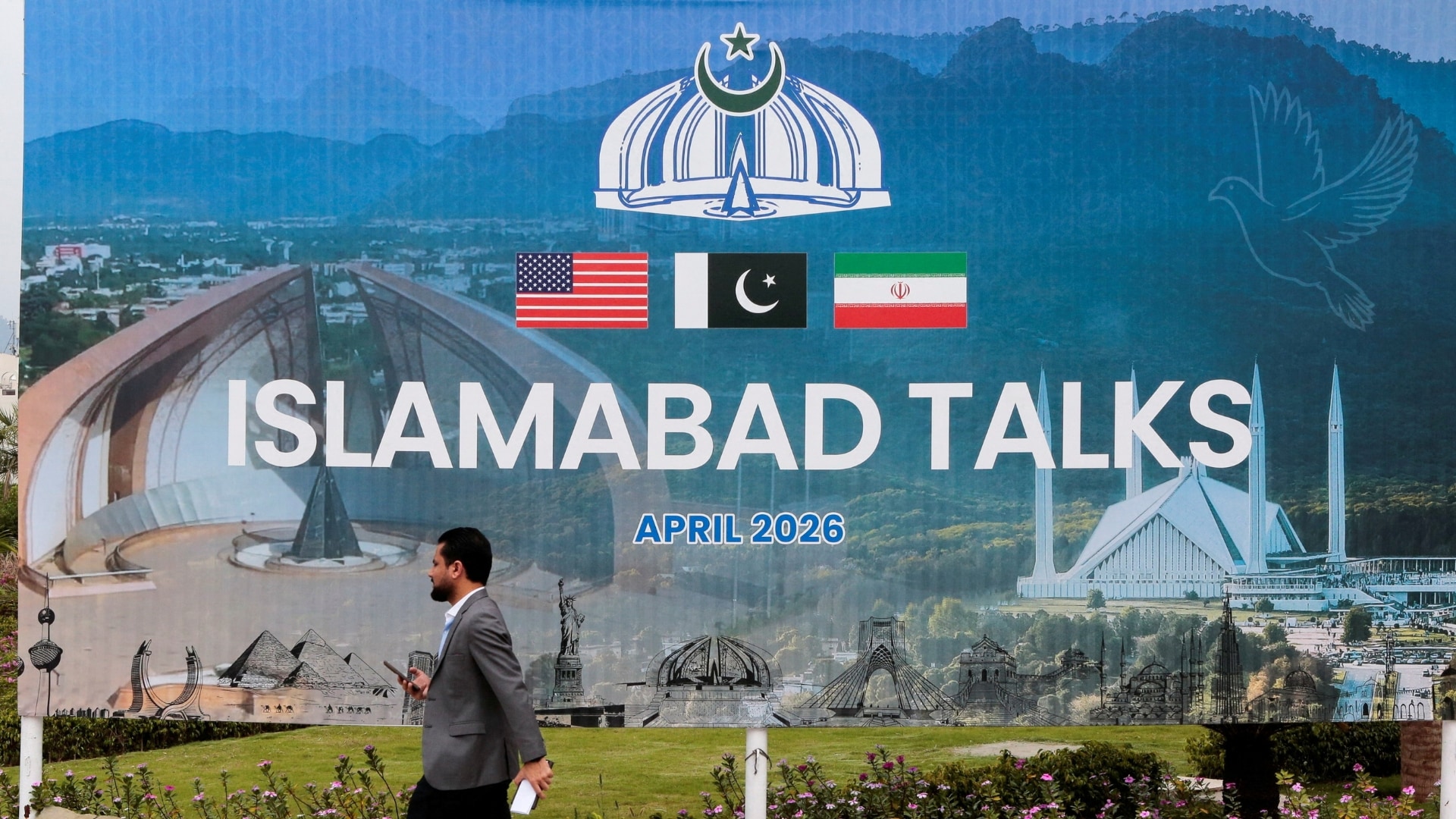
Diplomacy is often nothing more than a high-stakes performance of polite lying. When the press screams about "failed agreements" or "stalemates" in Islamabad, they are looking at the scoreboard through a foggy lens. The recent departure of JD Vance from Pakistan without a signed ceasefire agreement isn't a diplomatic breakdown. It is a strategic clarification.
Mainstream media loves the narrative of the "ineffectual envoy." They want you to believe that a plane leaving the tarmac without a signed piece of parchment is a loss for regional stability. It’s the opposite. In the brutal logic of Realpolitik, a premature agreement is a death sentence. By leaving without a deal, the United States has signaled that the era of "peace at any cost"—usually paid in American subsidies and hollow promises—is officially over. If you liked this article, you might want to check out: this related article.
The Myth of the Necessary Ceasefire
The "lazy consensus" among pundits is that any pause in kinetic activity is inherently good. This is a fundamental misunderstanding of how power functions in the Middle East and South Asia. A ceasefire that does not address the underlying structural imbalances between Tehran and its neighbors is just a re-arming period.
When Pakistan urges for a ceasefire to remain, they aren't doing it out of pure humanitarianism. They are doing it because their internal economic levers are brittle. They need quiet to manage a devaluing currency and a restive population. But quiet isn't peace. Quiet is just the sound of a fuse burning in a vacuum. For another look on this development, check out the recent update from Reuters.
Vance’s refusal to sign off on a lukewarm "agreement" stops the cycle of temporary fixes. If you’ve ever managed a failing project, you know that the worst thing you can do is patch a leaking pipe with duct tape when the entire foundation is shifting. You let it leak. You let the stakeholders feel the wet floor. Only then do they agree to the expensive, permanent fix.
Iran’s Defiance is a Calculated Asset
We are told Iran is "staying defiant" as if it’s a temper tantrum. It isn't. It’s a market signal. Iran understands that in the current global energy and security architecture, their defiance raises the "risk premium" for everyone else. They aren't being stubborn; they are price-setting.
Western analysts often fail to grasp that Tehran’s hardline stance is a response to the perceived weakness of previous diplomatic models. For decades, the West offered carrots that Iran didn't want and threatened sticks it didn't fear. Vance’s departure signals a pivot toward a "Value-Based Diplomacy" where the U.S. stops bidding against itself.
Imagine a scenario where the U.S. continues to chase Iran for a deal. Every mile the envoy travels, the price of Iranian cooperation goes up. By walking away, Vance resets the valuation. He is essentially saying, "The price of our involvement is higher than the value of your defiance." It’s a classic negotiation tactic that the State Department has forgotten how to use because they are too addicted to the optics of a handshake.
The Pakistani Pivot No One Noticed
Pakistan’s role here is being misread as a mediator. They aren't mediating; they are hedging. Islamabad is currently caught in a vice between Chinese infrastructure debt and the need for American security cooperation. When they "urge" for a ceasefire, they are signaling to Beijing that they are trying to keep the CPEC (China-Pakistan Economic Corridor) routes safe, while simultaneously signaling to Washington that they are the only "adults" in the room.
But Vance didn't buy the act. The refusal to align with Islamabad’s "urge" for a ceasefire is an implicit critique of Pakistan's double-dealing. For too long, Islamabad has used regional instability as a revenue stream. They get aid to "fight" the very instability they sometimes allow to simmer. By leaving without an agreement, the U.S. is effectively saying: "Your house is on fire. Stop asking us for a discount on the water."
Why "No Deal" is the Superior Outcome for Markets
Global markets hate uncertainty, but they hate false certainty even more. A signed ceasefire that everyone knows will be broken in six weeks creates a volatility spike that ruins long-term investment. A "No Deal" scenario, while initially jarring, provides a baseline of reality.
Investors can price in a "cold" conflict. They cannot price in a "fake" peace. If you are looking at defense stocks, energy futures, or regional logistics, Vance’s empty-handed return is actually a stabilizing force. It defines the boundaries of the conflict. We now know exactly where the U.S. stands: they will not subsidize a status quo that favors Iranian expansionism or Pakistani ambiguity.
The Technocratic Failure of Traditional Diplomacy
The reason this looks like a failure to the average observer is that we have been conditioned to value process over outcomes. We have a "Diplomatic-Industrial Complex" that views meetings as the product. It’s a bureaucratic trap.
In the tech world, we call this "shipping a broken MVP (Minimum Viable Product)." Most ceasefires in this region are exactly that—broken products shipped just to meet a deadline. Vance, coming from a background that understands capital efficiency and actual results, refused to ship.
- Traditional Diplomacy: Get everyone in a room, sign a vague statement, hold a press conference, wait for the first IED to go off, repeat.
- Disruptive Diplomacy: Set non-negotiable benchmarks, walk away when they aren't met, and let the regional players deal with the natural consequences of their own intransigence.
This isn't "isolationism." It’s "intentional friction."
The Brutal Truth About Regional Stability
Stop asking when the ceasefire will happen. That is the wrong question. The right question is: "Why are we so afraid of the natural rebalancing of power?"
The Middle East and South Asia are currently undergoing a massive correction. The artificial borders and security guarantees of the 20th century are dissolving. You cannot stop a tectonic shift with a signed piece of paper from a visiting Vice President.
The most "pro-peace" thing a superpower can do is stop preventing the inevitable. If Iran and its neighbors are headed for a confrontation, delaying it only ensures that the eventual explosion will be larger, more expensive, and more lethal. Vance’s exit is an admission of this reality. It is a refusal to put an American finger in a collapsing dam.
Actionable Intel for the Realistic Observer
If you are trying to navigate this landscape, whether for business or policy, you need to change your metrics:
- Ignore the "Peace Talks" Headlines: They are noise. Look at troop movements and currency fluctuations in the Rial and Rupee.
- Watch the Energy Corridors: If Vance didn't get a deal, look for China to attempt to fill the vacuum. If they can't, then you know the situation is truly untenable.
- Bet on Resilience, Not Resolution: Don't wait for "peace" to move. Build your systems to withstand a decade of high-level tension.
The belief that every conflict has a diplomatic solution is a Western luxury. Sometimes, the only way forward is through the fire. Vance just signaled that the U.S. is done playing the role of the fire extinguisher for people who keep playing with matches.
The plane is in the air. The seats are empty. The status quo is shattered. Good.