The press loves a comeback story. They see a 200-year-old Belgian industrialist group buying up French armored vehicle manufacturers and they scream "Renaissance." They see the acquisition of Arquus from Volvo and call it a masterstroke of European consolidation. They see the name John Cockerill and think of steel, heritage, and a rising titan in the defense sector.
They are looking at the wrong map. If you liked this post, you might want to read: this related article.
The mainstream narrative suggests that John Cockerill’s aggressive expansion is the blueprint for a sovereign European defense industry. It isn’t. It’s a frantic attempt to find scale in a market that no longer rewards traditional heavy metal. While the pundits cheer for the birth of a new "champion," they ignore the brutal reality: building a bigger target doesn’t make you a better hunter.
The Scale Trap
The common wisdom in the defense industry is that size equals survival. By absorbing Arquus, John Cockerill effectively doubles its footprint. The logic? More engineers, more factories, and a "complete" catalog ranging from light 4x4s to heavy turret systems. For another look on this story, see the latest update from Reuters Business.
This is the industrial equivalent of trying to fight a swarm of bees with a bigger hammer.
The conflict in Ukraine hasn't just changed the tactical manual; it has shredded the procurement playbook. We are witnessing the democratization of lethality. A $500 drone with a strapped-on RPG-7 warhead is consistently trading up against multi-million dollar armored platforms. In this environment, "mounting power" through traditional vehicle manufacturing isn't an evolution. It’s an anchor.
When you acquire a legacy manufacturer like Arquus, you aren’t just buying intellectual property. You are buying high fixed costs, unionized labor structures, and production lines optimized for a type of warfare that is rapidly becoming a relic. True defense innovation today is happening in software-defined sensing, electronic warfare, and autonomous systems. John Cockerill is doubling down on steel and rubber at a time when the world is moving toward silicon and signal.
The Illusion of European Sovereignty
The Belgian-French marriage is being touted as a win for European strategic autonomy. It sounds great in a Brussels press release. In practice, it’s a mess of conflicting national interests and "juste retour" politics that will likely throttle the company’s agility.
Let’s be blunt: there is no such thing as a "European" defense market. There is a collection of fragmented national fiefdoms. When John Cockerill buys Arquus, it doesn't suddenly gain a unified market. It gains the headache of satisfying the French DGA (Direction générale de l'armement) while maintaining its standing with the Belgian Ministry of Defense.
I have watched companies burn through billions trying to harmonize cross-border acquisitions in this sector. You end up with redundant R&D departments because neither nation wants to lose its "sovereign" capability. You get political interference in export licenses. If John Cockerill wants to sell a vehicle to a Middle Eastern client, they now have to navigate the moral and political whims of two different capitals instead of one. That isn't "mounting power." It’s multiplying bureaucracy.
The Turret Obsession
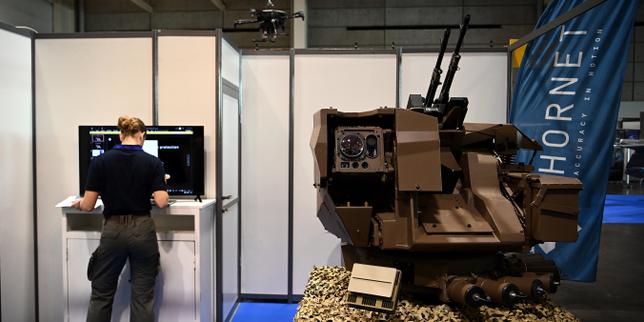
John Cockerill’s crown jewel is its turret technology. The 3000 series is a marvel of mechanical engineering. It’s precise. It’s powerful. It’s also a legacy solution to a modern problem.
The industry insists that the future of the infantry fighting vehicle (IFV) is a high-pressure gun on a mobile chassis. But look at the data coming out of modern peer-to-peer skirmishes. Passive protection—thick armor—is failing. Active Protection Systems (APS) are the only things keeping crews alive, and those systems are increasingly platform-agnostic.
By tying their identity so closely to the physical turret and the vehicle hull, Cockerill is missing the "pod-ization" of defense. The future isn't a proprietary vehicle; it’s a modular capability that can be bolted onto any autonomous ground vehicle (UGV).
Imagine a scenario where the "tank" as we know it is replaced by five or six specialized, unmanned platforms. One carries the sensor suite, one carries the electronic jamming gear, and one carries the kinetic effector—the gun. In that world, Cockerill’s massive investment in integrated, manned vehicle manufacturing looks like a bet on the horse and buggy right as the Model T is rolling off the line.
The Export Mirage
The competitor’s fluff piece mentions Cockerill’s "international reach." This is code for "we are desperate for export contracts because European budgets are too small to sustain us."
The problem? The export market is becoming a bloodbath. You are no longer just competing against BAE Systems or General Dynamics. You are competing against Hanwha from South Korea, which can produce high-quality K9 howitzers and Redback IFVs at a speed and price point that Europeans can’t touch. You are competing against Turkey’s Baykar, which has proven that "good enough" and "cheap" beats "perfect" and "over-engineered" every single time.
John Cockerill is trying to play a high-end game with a mid-market industrial base. They are caught in the "squeezed middle." They lack the massive R&D budgets of the American primes and the low-cost manufacturing advantages of the rising Eastern powers.
Digital Ghosting
If you look at the hiring trends of the world’s most effective defense firms—Anduril, Palantir, or even the revamped Rheinmetall—they are hiring software architects and AI specialists.
John Cockerill is still primarily hiring mechanical engineers and welders.
The "digital twin" and "predictive maintenance" buzzwords found in their brochures are often just thin veneers over traditional hardware. True defense power in 2026 is found in the "kill web"—the ability to link disparate sensors and shooters in real-time. If your vehicle doesn't have an open-architecture software stack that can receive an OTA (Over-The-Air) update to counter a new drone frequency mid-battle, you have sold your customer a multi-million dollar coffin.
The Risk Nobody Admits
The move to acquire Arquus is a massive debt-fueled gamble. In a high-interest-rate environment, the cost of servicing the capital required for such an acquisition is non-trivial. The group is betting that the "peace dividend" is dead and that European defense spending will continue to climb indefinitely.
That’s a dangerous assumption.
Defense spending is cyclical. Governments are currently riding a wave of panic-buying triggered by the invasion of Ukraine. But as national deficits balloon and social programs feel the squeeze, that "unlimited" defense budget will face scrutiny. When the correction happens, the companies with the largest physical footprints and the most employees will be the first to bleed. John Cockerill is bulking up at the top of the cycle.
Stop Building Better Tanks
The question isn't how John Cockerill can become a bigger vehicle manufacturer. The question is why they want to be a vehicle manufacturer at all.
If I were sitting in the boardroom in Seraing, I would be divesting from the heavy chassis business and pivoting entirely into "agnostic lethality." Stop trying to build the truck. Build the brain that makes the truck smart. Build the precision effector that can be mounted on a Toyota Hilux or a robot dog.
The value in the defense value chain is migrating away from the "platform" and toward the "payload."
John Cockerill’s leadership is being praised for their "visionary" expansion. In reality, they are playing a 20th-century game in a 21st-century arena. They are focused on mass, when the world has moved to velocity. They are focused on integration, when the world has moved to modularity.
The group isn't mounting power. It’s gathering mass. In physics, the more mass you have, the harder it is to change direction. And in modern warfare, the inability to change direction is fatal.
Stop celebrating the "Belgian Giant." Start worrying about its inertia.