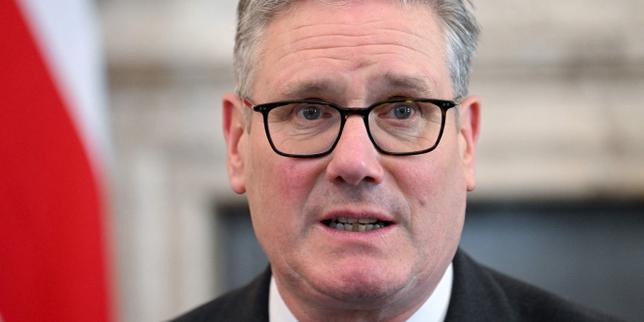
Keir Starmer is clearly furious. Usually, the Prime Minister keeps a tight lid on his emotions, but the recent fallout regarding Peter Mandelson’s appointment as the UK Ambassador to the United States has cracked that composed exterior. Starmer has gone on record calling the lack of full disclosure regarding Mandelson’s past "impardonable." It’s a strong word for a man who chooses his vocabulary like a lawyer prepping a closing argument. The core of the issue isn't just about what happened years ago, it’s about the vetting process that failed the person sitting at the very top of the British government.
You have to wonder how this slipped through the cracks. In the high-stakes world of international diplomacy, especially when dealing with a volatile or transitionary Washington D.C., your representative needs to be bulletproof. Mandelson, a titan of the New Labour era, has always been a "marmite" figure—people either love his strategic brilliance or loathe his history of controversies. By choosing him, Starmer was banking on experience. Instead, he’s now defending his own administration's due diligence.
The Vetting Failure that Shook Number 10
When a Prime Minister appoints an ambassador, they rely on a massive machinery of civil servants and security cleared advisors to flag red flags. Starmer’s frustration stems from a feeling of being blindsided. He’s essentially saying that the "full picture" of Mandelson’s past associations and previous business dealings wasn't laid out on his desk before the ink dried on the appointment. It makes the government look disorganized. It makes Starmer look vulnerable.
Politics is often about optics as much as policy. If the Prime Minister didn't know the full story, it suggests a breakdown in communication between the Cabinet Office and the PM’s inner circle. This isn't just a minor oversight. We’re talking about the most prestigious diplomatic post the UK has to offer. The "impardonable" nature of this information gap implies that had Starmer known everything, the decision might have been different. Or, at the very least, the rollout would have been handled with a lot more caution.
Why the US Ambassadorship is a Minefield Right Now
The timing couldn't be worse. The UK is trying to navigate a complex relationship with a US administration that is increasingly focused on domestic protectionism and shifting global alliances. We need an ambassador who can walk into the Oval Office and be taken seriously without the baggage of a domestic scandal trailing behind them like a heavy cloak.
Mandelson’s resume is undeniably impressive. He was a key architect of the 1997 Labour landslide and has served in various high-level European and domestic roles. But he’s also had to resign from the cabinet twice in the past. That’s the kind of history that opposition researchers in the US love to dig up. If Starmer feels he wasn't briefed on the "totality" of Mandelson's background, he’s effectively admitting that the UK’s flank is exposed in Washington.
The Problem with Political Appointments
There’s always a tension between choosing a career diplomat and a political "big beast." Career diplomats are safe. They know the protocols, they’ve spent decades in the Foreign Office, and they rarely make headlines. Political appointees like Mandelson are brought in for their weight and their direct line to the Prime Minister.
The risk is exactly what we’re seeing now. Their lives have been lived in the public eye, often under intense scrutiny, and they bring their own sets of allies and enemies. Starmer’s "impardonable" comment highlights the danger of bypassing the traditional, more rigorous diplomatic career path in favor of a high-profile name.
The Fallout Within the Labour Party
Inside the party, this has reopened old wounds. The "left" of the party never liked the return of the Blair-era figures. To them, Mandelson represents a version of Labour they want to move past. When Starmer brought him back into the fold for such a prestigious role, it was a signal that the adults were back in the room. Now, that signal is muffled by claims of incomplete briefings.
It’s a mess. Honestly, it’s a distraction Starmer doesn't need while he’s trying to fix the economy and deal with domestic crises. Every day the media spends talking about what Starmer didn't know about Mandelson is a day they aren't talking about the government’s legislative agenda.
What This Means for Future Vetting
Expect the vetting process to become grueling. If Starmer is this angry, heads will likely roll in the departments responsible for background checks. No PM likes feeling like they were left out on a limb. From now on, any high-level appointment will likely undergo a level of scrutiny that borders on the forensic.
The government needs to prove it has a grip on its own processes. You can't lead a country effectively if you can't even vet your own ambassadors properly. It’s a basic requirement of governance.
Moving Forward Without the Baggage
Starmer has to decide if he sticks by his man or if the "impardonable" lack of information makes Mandelson’s position untenable. In the world of diplomacy, once your own boss expresses doubt about the circumstances of your hiring, your authority is diminished. The US State Department watches these things closely. They want to know they are talking to someone who has the total, unwavering confidence of their head of government.
The Prime Minister’s next steps are crucial. He needs to close this chapter quickly. Whether that means a "full and frank" disclosure to the public or a quiet reassessment of the role, the current state of limbo is damaging.
The lesson here is simple. Don't take shortcuts on the paperwork. Even if you think you know someone because they’ve been in your party for forty years, the formal vetting process exists for a reason. Starmer learned that the hard way, and he clearly doesn't intend to let it happen again. The focus now turns to whether the "Lord of Darkness" can survive a Prime Minister who feels let down by the very system meant to protect him. If you're following the UK’s influence on the global stage, keep your eyes on how Washington reacts to this internal British drama. They don't like uncertainty, and right now, that's exactly what this appointment is providing. It's time to tighten the ship and ensure that the next time a name is put forward, the file on the desk is actually complete.



