The fluorescent lights in the newsroom don't hum anymore. They used to, or maybe that’s just a trick of memory, a nostalgic filter applied to a time when news moved at the speed of a physical ticker-tape. Today, the silence is heavy. It’s the sound of millions of data points migrating across the globe in less time than it takes a reporter to blink.
In Berlin, at the headquarters of the Deutsche Presse-Agentur (dpa), the stakes aren't just about being first. They are about being real. We are entering the agentic age, a period where AI agents—not just simple bots, but autonomous systems capable of reasoning and taking action—are becoming the primary consumers of information. If that sounds like science fiction, look at your phone. It’s already happening.
The dpa is the backbone of German information. For decades, it followed a simple, linear path: an event happens, a reporter writes it, a wire service sends it, and a newspaper prints it. But that line has shattered into a billion pieces.
The Ghost in the Feed
Consider a hypothetical developer named Elias. He isn't building a website; he’s building a "life assistant" AI. This agent is designed to scan the world’s news and execute decisions for its user. If a strike is announced at a major airport, the agent doesn't just show a notification. It cancels the flight, books a train, and notifies the hotel—all in three seconds.
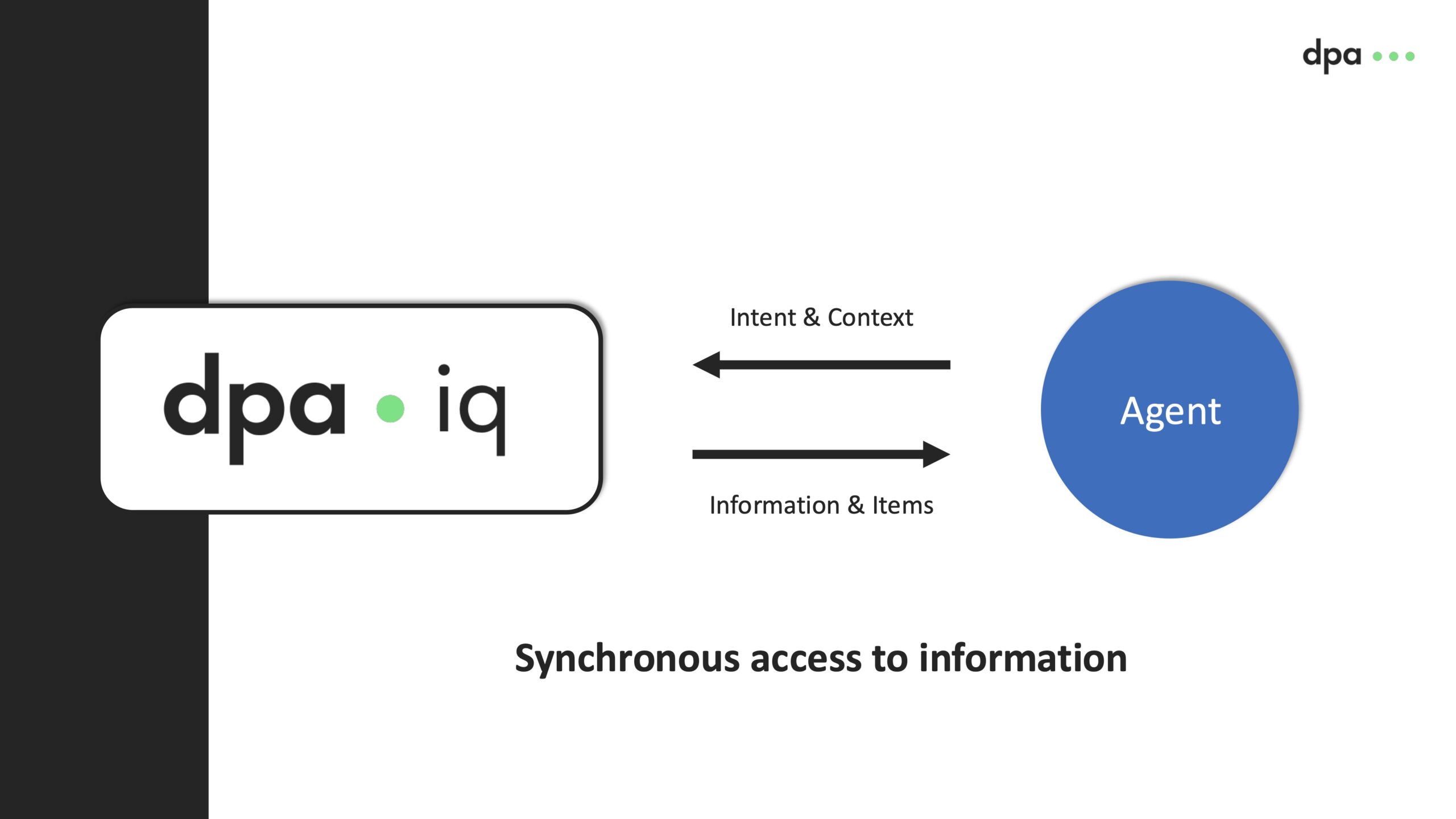
For Elias, the dpa's traditional text feed is useless. His AI agent can’t "read" a 500-word prose piece with the nuance of a human. It needs structured data. It needs "atomic" news.
This is where the reinvention begins. The dpa is moving away from the concept of the "article" as the final product. Instead, they are decomposing news into its smallest possible units of truth. A date. A location. A name. A verified event.
By treating news as a structured database rather than a collection of stories, they are feeding the machines that now run our lives. But there is a terrifying friction in this transition. If we strip away the narrative to satisfy the algorithm, do we lose the soul of the event?
The Burden of Being Right
The dpa has always been the "quiet" giant. You rarely see their byline on social media, yet they provide the verified oxygen that every major German outlet breathes. In an age of synthetic media and deepfakes, their role has shifted from being a fast messenger to being a firewall.
The danger of the agentic age is the "hallucination loop." When AI agents scrape the web to find facts, they often ingest garbage and spit out polished lies. If an autonomous trading bot picks up a fake report about a CEO’s death, markets crash before a human editor can even pick up a pen.
To counter this, the dpa is doubling down on a concept that feels almost ancient: physical verification. They are positioning themselves as the ultimate "Source of Truth" in a world where truth is becoming a luxury good. They aren't just distributing news; they are issuing certificates of reality.
They are implementing metadata standards that allow an AI agent to see not just the text, but the pedigree of the information. Where did this come from? Who saw it? Is the image verified by a human eye? This is the "agentic" part of the distribution—building a news wire that talks to other machines in a language of trust.
The Architecture of a Fact
Imagine the newsroom as a factory. In the old days, the factory produced finished cars—complete stories. Today, the dpa is producing the high-grade steel, the precision sensors, and the fuel.
They are utilizing a "modular" content strategy. A single report on a government policy change is now broken down into:
- The raw data for financial bots.
- The summary for smart speakers.
- The deep-dive analysis for human readers.
- The visual assets for automated video generation.
This isn't about replacing journalists with robots. It’s about freeing journalists from the drudgery of reformatting. Why should a human spend twenty minutes shortening a story for a mobile app when an AI can do it, provided the human has verified the core facts first?
The shift is psychological. Journalists at the dpa are becoming "Data Architects." They are learning that their value doesn't just lie in their prose, but in their ability to verify a data point so accurately that a machine can safely act upon it.
The Invisible Stakes
Why should you care if a German wire service changes its API or its tagging system?
Because the information you receive is increasingly filtered through a layer of silicon. When you ask a digital assistant for the news, you aren't getting the most important story; you are getting the story that was easiest for the assistant to parse.
If the world’s most trusted news agencies don't adapt to the agentic age, the vacuum will be filled by whoever is the loudest and the most machine-readable. Usually, that’s the people with an agenda.
The dpa’s move to reinvent distribution is a defensive maneuver for democracy itself. By making high-quality, verified news the easiest thing for an AI to find and understand, they are ensuring that the "agentic" future isn't built on a foundation of sand.
The Human at the End of the Wire
Back in the Berlin office, there is still a person. Let’s call her Clara. She’s been a desk editor for twenty years. Her job used to be about grammar and flow. Now, it’s about "Entity Tagging" and "Verification Protocols."
She feels the weight of it. Every time she hits "send" on a verified tag, she knows she is feeding a global network of autonomous systems. If she makes a mistake, it doesn't just result in a correction in tomorrow’s paper. It results in a cascade of errors across thousands of apps, bots, and services.
The pressure is immense. But so is the pride.
Clara is the reason the machine knows what is true. She is the human pulse in the wire. The dpa is betting everything on the idea that in a world of infinite, AI-generated noise, the most valuable commodity will be a single, verified fact, delivered in a format that a computer can't misunderstand.
We often talk about "the future of news" as something that will happen to us. We think of it as a change in how we scroll or what we watch. We forget that the most important changes are happening in the dark, in the code, and in the ways our digital proxies understand our world.
The dpa isn't just changing how they send news. They are changing what news is. They are moving from a world of stories to a world of verified actions. It is a cold, clinical, and highly technical transition. And yet, it is perhaps the most human thing they have ever done. They are holding the line. They are making sure that when the machines start making decisions for us, they are at least doing it based on the truth.
The ticker-tape is gone. The hum of the lights is silent. But the pulse is still there, beating underneath the code, waiting for the world to wake up and read what happened.