Emmanuel Macron wants you to stay calm. He’s spent the last few days hammering home a single point. France isn't running out of fuel. There's no shortage. The tankers are moving, the refineries are operating, and the strategic reserves are sitting exactly where they should be. But we've seen this movie before. Every time a strike looms or a social media rumor gains traction, people rush to the pumps with jerrycans in hand. That panic creates the very problem the government is trying to prevent.
The math is simple. If everyone fills up their tank at the same time, the distribution network snaps. It’s not a lack of gasoline in the country. It’s a logistical bottleneck. Tanker trucks can only drive so fast. Stations only have so much underground storage. When a week's worth of demand hits in six hours, the "Out of Service" signs go up. Macron’s message isn't just political posturing. It’s a plea for collective common sense.
The reality of French fuel stocks
France maintains a massive safety net. The country holds strategic petroleum reserves equivalent to 90 days of average daily net imports. That's a huge buffer. These reserves aren't just for show. They're specifically designed to weather geopolitical shocks or major industrial disputes. When the President says there's no risk of a dry spell, he's looking at these numbers.
The current tension usually stems from strikes at refineries or port blockades. Even then, the impact is rarely immediate. It takes days for a production halt to trickle down to your local station. Most of the "shortages" reported by drivers are actually just localized delays. One station might run out of SP95 because everyone in that neighborhood panicked after seeing a TikTok video. Two miles down the road, another station is completely full.
Government data usually backs this up. In previous "crises," only a small percentage of stations across the territory reported being fully out of fuel. Most of the time, they were just missing one type of diesel or premium gasoline. If you look at the Ministry of Transition's dashboard during these periods, the map is almost always green. The red dots are outliers, not the rule.
Why we panic anyway
Psychology plays a bigger role than economics here. Fuel is a visceral necessity. It represents freedom and the ability to work. When you hear that refineries might stop, your brain treats it like a threat to your survival. You head to the Total or Leclerc station "just in case."
The problem is the feedback loop. You see a line at the pump. You think, "They must know something I don't." You get in line. The person driving past sees both of you and joins the queue. Within an hour, a perfectly normal gas station looks like a disaster zone. This behavior is what Macron is fighting against. He knows he can manage the supply chain. He can't easily manage millions of anxious drivers.
Social media makes this worse. A single photo of a covered pump handle can go viral in minutes. It doesn't matter if that pump was just broken or if the station was waiting for a truck that arrived ten minutes later. The image stays in your mind. We're living in an age where perception creates its own reality. If everyone believes there's a shortage, they act like it, and then—boom—you have a shortage.
How the supply chain actually works
Fuel doesn't just appear. It's a complex dance of pipelines and trucks. Most fuel in France moves through the Trapil pipeline system. It connects refineries and maritime terminals to massive storage depots spread across the country. From these depots, thousands of trucks carry the product to individual stations.
When a strike hits a refinery, it's a headache, but it’s not a cardiac arrest. The depots are usually full. They can keep supplying the trucks for a long time. The government also has the power to "requisition" workers. This means they can legally force essential staff back to work to ensure fuel leaves the depots. It's a heavy-handed move, and it's controversial, but it's a tool the state uses to keep the country moving.
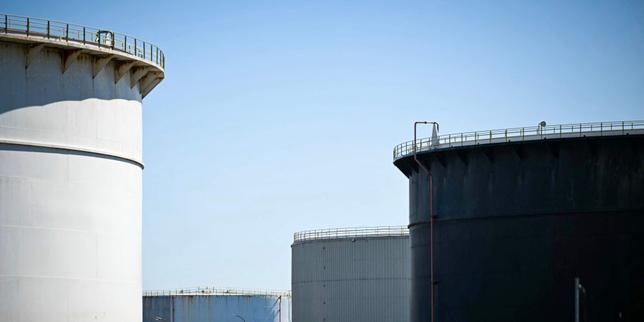
If you're worried, look at the port of Marseille or the terminals in Le Havre. These are the entry points. As long as ships are unloading, the country is breathing. The bottle is full; we’re just talking about how fast the water comes out of the neck.
Don't be that person with the jerrycan
Hoarding fuel is dangerous and selfish. Storing large amounts of gasoline in your garage is a fire hazard. It's also unnecessary. When people start filling up extra containers, they drain the system twice as fast. It’s the equivalent of a bank run. If everyone tries to withdraw their cash at once, the bank fails, even if it’s perfectly solvent.
If you actually need gas, go get it. But if you’re at half a tank and you’re rushing to the pump because of a news snippet, you’re part of the problem. Modern cars are efficient. Most of us can go several days on a partial tank. By the time you actually need a refill, the temporary local delivery delay will likely be resolved.
What to check instead of the news
Stop refreshing Twitter for "penurie carburant" tags. Instead, use the official government tools. The site "prix-carburants.gouv.fr" is updated regularly. It shows prices, but it also shows availability. If a station is truly out of fuel, it's reflected there.
- Check your actual usage. Do you really need to fill up today?
- Look at map-based apps that track real-time availability.
- Ignore the "my cousin heard that the refineries are closing forever" messages.
Macron's reassurance isn't just a political shield. It's a call for calm in a system that relies on steady, predictable demand. The infrastructure is solid. The reserves are deep. The only thing that can truly stop you from getting to work tomorrow is the guy in front of you filling five plastic jugs he doesn't need.
Keep your driving habits normal. Use the available apps to find the best prices. Avoid the peak-hour rush at the stations near major highways. The system works when we let it. If you see a line, keep driving. There's almost certainly a quiet, full station ten minutes away. Trust the logistics, not the rumors.