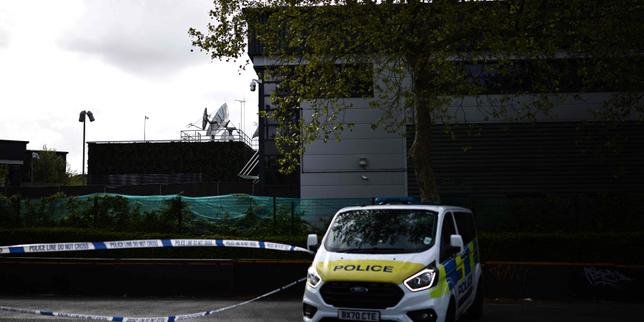
The British press is currently obsessed with a narrative of "resilience." Following the charging of three men for a suspected arson plot against the London studios of Iran International, the headlines are churning out the same tired scripts. They speak of a victory for counter-terrorism, a firm stance against foreign intimidation, and the unwavering safety of the UK's "free press."
They are wrong. They are missing the structural reality of how proxy warfare actually operates on European soil.
While the Metropolitan Police celebrate these arrests under the National Security Act 2023, they are essentially playing a high-stakes game of Whac-A-Mole while the hammer is being held by a ghost. Charging three individuals—Cheyvele Wallace, Callum Broan, and a third accomplice—might provide a temporary sense of justice, but it exposes a massive, systemic failure in how Western democracies perceive modern state-sponsored aggression. We aren't dealing with a crime wave. We are witnessing the outsourcing of geopolitical violence to the domestic gig economy.
The Illusion of the Mastermind
The standard reporting suggests these three men were the "threat." This is a fundamental misunderstanding of the modern intelligence tradecraft. In the old days, a state actor would send a trained operative with a diplomat's passport to do their dirty work. Today, why bother? You go to the dark web or use local criminal networks. You hire people who have no ideological skin in the game.
The "lazy consensus" assumes that by catching the foot soldiers, you deter the general. In reality, the state actors behind these plots view these individuals as disposable assets—about as valuable as a used SIM card. When the Met Police trumpets these charges, they are celebrating the capture of the delivery drivers, while the restaurant sending the poison remains open for business and completely untouched by UK law.
The National Security Act was supposed to change this. It introduced new tools to target foreign interference. But look at the charges: they are specific, localized, and largely reactive. We are treating a symptom of a systemic infection as if it were a localized scrape.
Why Iran International is the Perfect Target
Media outlets are quick to frame this as an attack on "Journalism" with a capital J. That’s a noble sentiment, but it’s tactically naive. Iran International isn't just a newsroom; in the eyes of Tehran, it is a strategic weapon of the Saudi-linked opposition. This isn't a debate about the First Amendment or British "values." This is a hot war being fought with cameras and satellites, and London has become the primary battlefield because our legal framework still treats state-level aggression like a series of disconnected street crimes.
I’ve seen intelligence budgets for domestic protection balloon by millions, yet the security remains performative. You can put all the concrete bollards you want outside a studio in West London; it won't stop a regime that is willing to wait six months to find a new set of local losers willing to throw a Molotov cocktail for a few thousand pounds.
The Failure of Deterrence
Let’s dismantle the "People Also Ask" obsession: Does the UK's National Security Act make journalists safer?
The brutal answer is no. If anything, it makes the theater of safety more expensive. The Act focuses on the "act" of interference, but it fails to address the "intent" of the sponsoring state in a way that carries actual consequences.
Imagine a scenario where a foreign power wants to silence a dissident. They don't need a successful fire. They just need the attempt. The headlines, the police cordons, the staff's fear, and the massive increase in insurance premiums do the work for them. Every time a "plot" is foiled and splashed across the front pages, the foreign actor wins a psychological victory. They prove they can touch you, even in the heart of London. They prove that the British state can only protect you after the plan is already in motion.
The Real Cost of Neutrality
We like to pretend London is a safe haven for global voices. The reality is that London is a "permissive environment" for global grudges. By allowing these entities to operate here without providing the kind of military-grade intelligence umbrella they require, the UK is essentially inviting the world's most dangerous regimes to conduct "low-intensity" operations on our streets.
The British government is caught in a trap of its own making. It wants the prestige of being a global hub for media and free speech, but it refuses to acknowledge that hosting these outlets comes with a combat requirement. You cannot host a proxy war and then act surprised when bullets (or firebombs) start flying.
The Actionable Truth
If we actually wanted to stop these "incidents," the strategy would look radically different:
- Direct Attribution Penalties: Instead of just charging the "three men" involved, there should be an immediate, automatic diplomatic or economic sanction triggered against the sponsoring state the moment the link is established.
- Private Security Integration: The Met cannot be everywhere. There needs to be a legal framework that allows high-risk media outlets to operate with a level of autonomy and state-vetted private defense that currently doesn't exist in the UK.
- End the Gig-Worker Prosecution Focus: We need to stop treating these local criminals as the primary target. The law needs to pivot toward those who facilitate the financial transfers. Follow the money, not the matches.
The current approach is a vanity project for the Home Office. It looks good on a press release, but it does nothing to alter the risk calculus of a regime 3,000 miles away. As long as we treat these events as "crimes" rather than "acts of war by other means," we are just waiting for the next group of recruits to step up to the plate.
Stop pretending the legal system is a shield. It's just a scoreboard, and right now, the other side is winning because they know we're afraid to play the actual game.
Don't celebrate the arrest. Question why the door was open in the first place.