The war never really ends when the plane touches down. For thousands of men and women returning from the dust of distant battlefields, the combat merely shifts. It moves from the open air into the claustrophobic, dimly lit corridors of the mind. This is the reality of Post-Traumatic Stress Disorder (PTSD)—a ghost that eats the present to fuel a recurring past.
Consider Elias. He is a hypothetical composite of the dozens of veterans I have interviewed over the years, but his pain is documented in every medical archive from the VA. Elias sits in a suburban living room in Ohio, yet his nervous system is still scanning a ridgeline in Helmand Province. A car backfires outside, and his adrenaline spikes as if a mortar just landed in his flowerbed. For a decade, the standard of care for men like Elias has been a chemical cocktail of SSRIs and benzodiazepines. These drugs don't fix the ghost; they just numb the host so he stops screaming. For a deeper dive into similar topics, we suggest: this related article.
Then, the political landscape shifted in a way few saw coming.
The Breaking of the Regulatory Dam
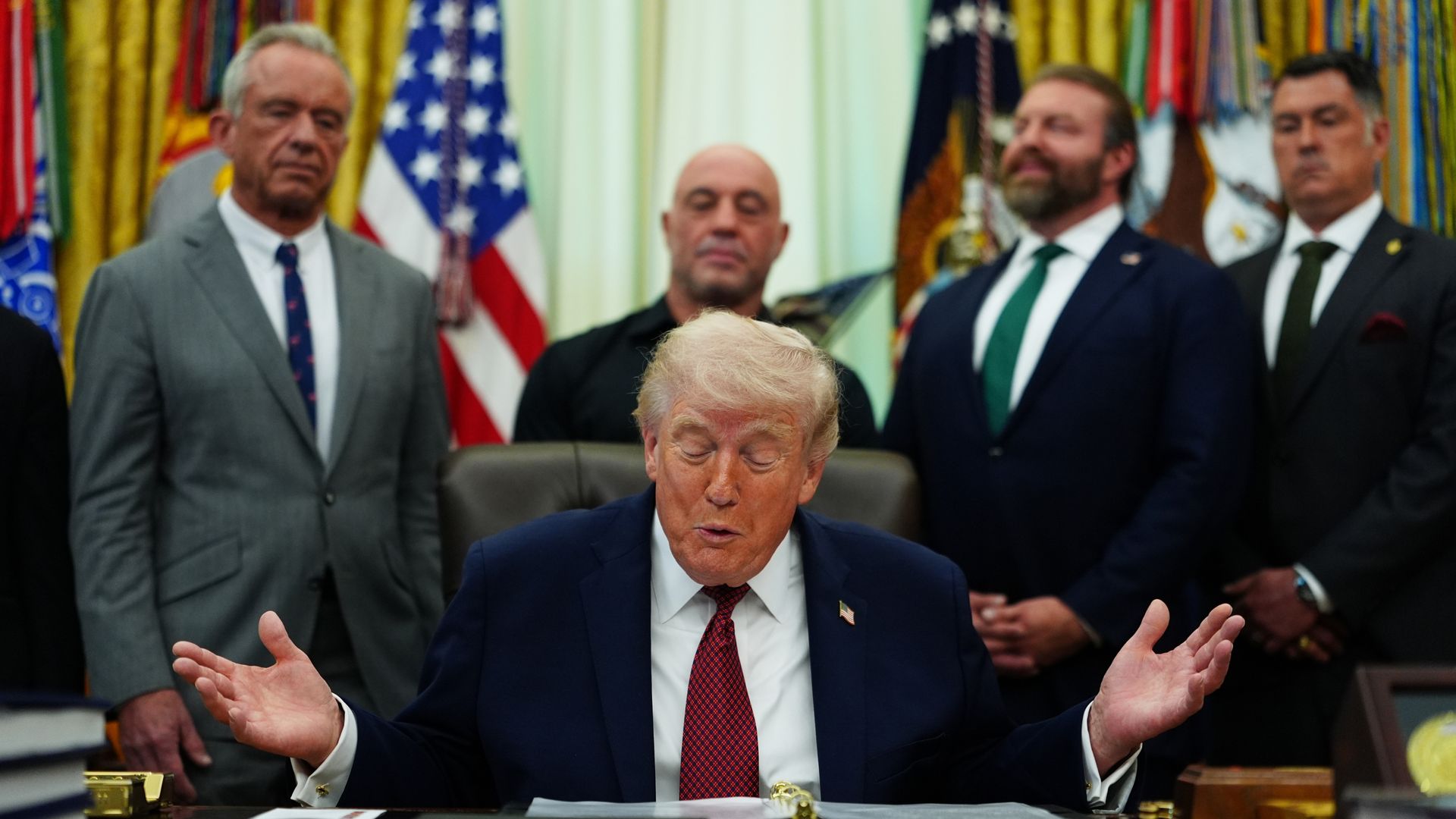
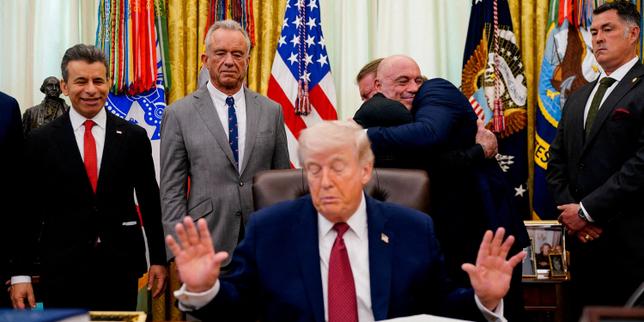
In a move that caught both the medical establishment and the political left off guard, Donald Trump signed executive actions aimed at slashing the bureaucratic red tape surrounding psychedelic-assisted therapies. Specifically, the focus fell on substances like psilocybin (the active ingredient in "magic mushrooms") and MDMA. For additional context on the matter, in-depth coverage can be read at Mayo Clinic.
For years, these compounds were buried under the "Schedule I" label—a legal tombstone that declares a substance has no medical value and a high potential for abuse. It was a classification born more of the Nixon-era culture wars than clinical data. But the data eventually became too loud to ignore.
The science suggests that while traditional antidepressants work like a slow-acting dimmer switch, psychedelics work like a hard reboot of the entire operating system. Under the supervision of a therapist, these substances allow a veteran to revisit their trauma without the paralyzing fear response. They can look at the ghost, talk to it, and finally, ask it to leave.
The Human Cost of the Waiting Room
The logic behind the deregulation is rooted in a grim arithmetic. We lose roughly twenty veterans a day to suicide. That is a battalion every month. When you are staring at those numbers, the "precautionary principle" that governs the FDA starts to feel like a death sentence.
Critics often point to the risks of "bad trips" or the potential for psychological instability. These are valid concerns. A mind under the influence of 25 milligrams of psilocybin is a vulnerable thing. However, the risk of a controlled, therapeutic session must be weighed against the 100% risk of a veteran living in a state of permanent neurological siege.
The executive shift didn't just hand out pills; it cleared the path for the Department of Veterans Affairs to become a hub for this research. It shifted the burden of proof. Instead of scientists begging for the right to study these molecules, the government began asking why they weren't being studied faster.
A Chemical Bridge to the Soul
To understand why this matters, you have to understand what happens to a brain on trauma. Imagine your mind is a snowy hill. Every time you have a thought, it’s like a sled going down that hill. Over time, deep grooves form. If your thoughts are dominated by fear and hyper-vigilance, the sled gets stuck in those ruts. You can’t steer. You just go down the same dark path, every single time.
Psychedelics act like a fresh snowfall.
They fill in the ruts. For a few hours, the brain enters a state of hyper-plasticity. The amygdala—the brain’s alarm system—is quieted, while the prefrontal cortex and the hippocampus begin communicating in ways they haven't in years. In this state, a veteran can process a memory that was previously too radioactive to touch.
The stories coming out of the early clinical trials sound like miracles, though the researchers are careful not to use that word. They talk about "sustained remission." They talk about "clinically significant reductions in PCL-5 scores." But if you ask the veterans, they use different language. They say things like, "I felt like I could finally breathe," or "I saw my daughter’s face for the first time without a veil of static."
The Political Irony
There is a profound irony in Donald Trump being the one to kick down this particular door. For decades, the advocacy for psychedelic medicine was the domain of the counterculture—the "turn on, tune in, drop out" crowd. Yet, the bridge that finally brought these substances into the mainstream was built on the bedrock of "America First" and the sacred status of the veteran in conservative circles.
By framing the issue as a matter of veteran health and "Right to Try," the administration bypassed the traditional drug-war optics. It wasn't about legalization for recreation; it was about the survival of the warrior class. This shift moved the needle more in four years than decades of activism had managed. It turned a hippie pipe dream into a bipartisan mission.
The Shadows in the Lab
Of course, the path isn't paved with gold. There is a legitimate fear that the rush to deregulate will lead to a "Wild West" of psychedelic clinics. Not every practitioner is a trained shaman or a board-certified psychiatrist. There are questions about long-term effects on heart valves from certain compounds, and there is the ever-present danger of commercialization stripping the "sacred" or human element out of the therapy.
If a veteran goes into a sterile room, is handed a pill by a technician in a lab coat, and is left alone with their demons, the result could be catastrophic. The medicine is only half the equation. The other half is the "integration"—the difficult, messy work of talking through the experience and weaving the insights into a new way of living.
We are currently in the middle of a massive, uncoordinated experiment. We are trying to see if we can use ancient tools to fix modern wounds.
The Return of the Light
Back in that suburban living room in Ohio, Elias isn't thinking about executive orders or FDA schedules. He’s thinking about the fact that for the first time in a decade, he went to the grocery store without checking every exit for an IED.
He participated in one of the expanded access programs made possible by this regulatory shift. He spent six hours on a couch with two therapists and a dose of MDMA. He says it wasn't a party. He says it was the hardest work he’s ever done. He cried for three of those six hours. He revisited a night in 2009 that he had spent ten years trying to drown in bourbon.
But when he came out the other side, the memory had lost its teeth. It was just a memory again. It wasn't the present.
The fog is lifting. Not for everyone, and not all at once. But the door is open, and for a population that has spent too long in the dark, even a sliver of light is enough to start the walk home.
The ghost hasn't left the house entirely, but Elias has stopped feeding it. He is learning to sit in the quiet. He is learning that the war is over, and he is allowed to survive it.