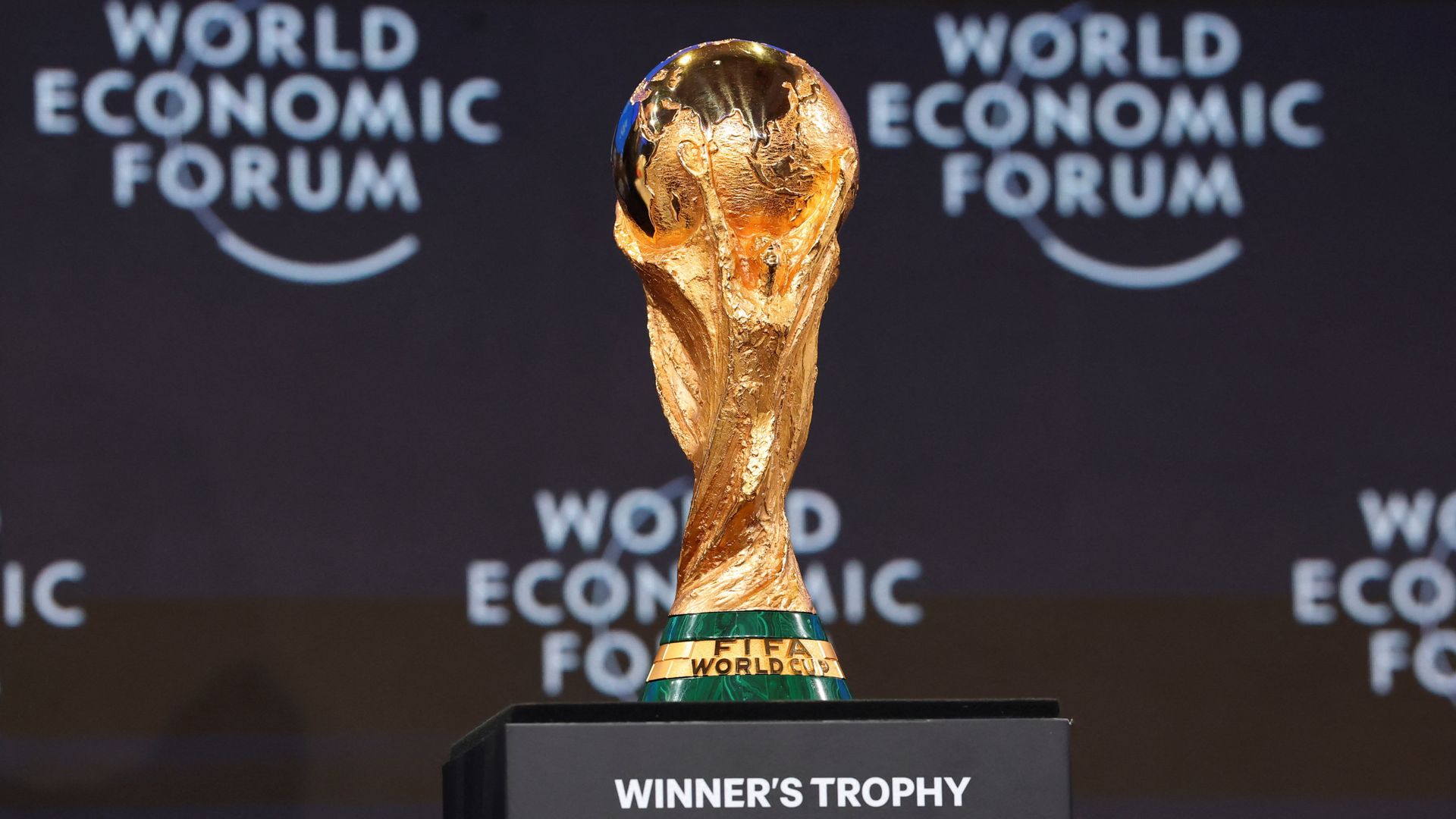
The hand-wringing has started. Critics are looking at Los Angeles—a city that eats spectacle for breakfast—and claiming the 2026 World Cup is "struggling to find its place in the sun." They point to a lack of visible fever, the fragmented nature of the local market, and the supposed "indifference" of a city distracted by Hollywood and the Lakers.
They are looking at the wrong map. For a different perspective, check out: this related article.
The lazy consensus is that a host city must transform into a kitschy, soccer-themed theme park to be considered a success. If there aren't massive countdown clocks on every corner and murals of FIFA officials in Santa Monica, the narrative suggests the city is failing the "moment."
This isn't a failure of engagement. It’s a masterclass in urban resilience. Los Angeles isn't struggling to accommodate the World Cup; it’s forcing the World Cup to adapt to a global titan that doesn't actually need it. Related coverage on the subject has been published by NBC Sports.
The Myth of the "Unified City"
Traditional sports journalism loves the trope of the unified host city. They want a neat, tidy narrative where everyone from Compton to Malibu drops what they’re doing to paint their faces.
L.A. doesn’t work that way. It’s a city of 88 incorporated municipalities and a dozen distinct cultural "planets." Expecting a singular "buzz" in Los Angeles is like expecting a singular weather pattern for the entire state of California.
The World Cup isn't a civic holiday here. It’s a high-yield logistical event.
The media mistake L.A.'s lack of performative excitement for a lack of preparedness. I’ve seen cities bankrupt themselves trying to "ignite passion" for a four-week tournament. They build white-elephant stadiums and "fan zones" that turn into ghost towns the moment the final whistle blows. Los Angeles is doing the opposite. By treating the World Cup as just another Tuesday in the entertainment capital of the world, it protects its bottom line.
SoFi Stadium and the Fallacy of the "Soccer Soul"
Much has been made about the friction between FIFA and SoFi Stadium. The "purists" moan that the stadium wasn't built exclusively with soccer pitch dimensions in mind. They argue that the modifications required for 2026 are a sign of a "lack of respect" for the beautiful game.
Let’s be real. FIFA needs SoFi Stadium more than Stan Kroenke needs FIFA.
SoFi is the most advanced architectural achievement in modern sports. It was built to generate revenue 365 days a year from concerts, NFL games, and corporate summits. The idea that a city should warp its billion-dollar infrastructure to satisfy the temporary whims of a Swiss-based non-profit is a relic of 20th-century thinking.
When people ask, "Will L.A. be ready?" they usually mean "Will L.A. bow down?"
The answer is a resounding no. And that’s exactly why the 2026 edition in Los Angeles will be the only one that actually makes sense from a business perspective. We are watching the death of the "Host City Subsidy" model. Los Angeles is the first host in history with enough leverage to tell the organizers to take it or leave it.
The Infrastructure Trap
The "People Also Ask" sections of the internet are filled with concerns about L.A. traffic and the lack of a "walkable" World Cup experience.
This is a flawed premise.
People don't come to Southern California for a walkable European village experience. They come for the sprawling, multi-nodal intensity of it. Attempting to "fix" L.A.’s transit for a one-month event is a fool’s errand that has led other cities into decades of debt.
Instead of building temporary light rails to nowhere, the city is sticking to its long-term "Twenty-eight by '28" initiative for the Olympics. The World Cup is a stress test, not the end goal. If you’re a tourist expecting a seamless, car-free journey from the Rose Bowl to SoFi, you’ve bought the wrong ticket. Los Angeles isn't hiding its flaws; it’s charging you a premium to experience them.
The Cultural Miscalculation
Critics claim soccer "struggles for a place" in a city dominated by the Dodgers and LeBron James. This ignores the reality that Los Angeles is already the soccer capital of North America.
- LAFC has redefined the MLS experience with a European-style atmosphere that isn't manufactured—it’s organic.
- The Galaxy carry a legacy of star power that predates the current trend of "soccer-specific" branding.
- The Sunday Leagues in Whittier Narrows and Griffith Park see more passion and higher stakes than half the matches that will take place in the group stages.
The "sun" the World Cup is allegedly struggling to find is already occupied by a soccer culture that doesn't care about FIFA’s branding guidelines. The locals aren't waiting for 2026 to start loving the sport. They’re busy playing it.
The mistake is assuming that "fan engagement" equals "merchandise sales." The people of L.A. don't need a mascot to tell them soccer matters. They live it in a way that is far more authentic—and far more cynical—than the corporate version being sold by sponsors.
Stop Trying to "Fix" the Experience
If you’re an organizer, a brand, or a developer, here is the unconventional truth: Do not try to compete with the city.
Most brands will spend millions trying to create "immersive experiences" that will be ignored because they are competing with the Getty, the beach, and Hollywood. The move isn't to add more noise to the L.A. landscape. The move is to provide utility within the chaos.
The biggest opportunity in 2026 isn't "fandom." It’s "logistics as a service."
- How do you move 100,000 people from a fan fest in Downtown to a match in Inglewood without them losing their minds?
- How do you provide high-end hospitality in a city where "high-end" is the baseline?
Everything else is just expensive wallpaper.
The Cost of "Success"
There is a dark side to the contrarian view. By refusing to cater to the tournament, Los Angeles risks a fractured, "cold" atmosphere for the casual viewer. There will be no "central square" where fans from 48 nations gather to sing. The celebrations will be siloed in bars in Silver Lake, parks in East L.A., and private clubs in Beverly Hills.
But this "fracture" is the city's greatest strength. It prevents the monoculture that makes other host cities feel like airport terminals. It keeps the local economy from becoming a vassal state to FIFA.
We’ve seen what happens when cities "all-in" on global events. Look at Rio. Look at Athens. They chased the "sun" and got burned by the debt. Los Angeles is staying in the shade, and it’s the smartest move the city ever made.
The Final Reality Check
The 2026 World Cup will be a success in Los Angeles not because the city changed, but because it didn't.
The "struggle" cited by the skeptics is actually a stalemate. FIFA wanted a subservient host that would reshape itself in the image of the tournament. Instead, they got a city that views the World Cup as just another residency—like a stadium tour by Taylor Swift or Beyoncé.
L.A. doesn't need the World Cup to prove it’s a global city. The World Cup needs L.A. to prove it can still be relevant in a market that has seen it all.
Stop looking for the countdown clocks. Stop waiting for the city to "wake up." Los Angeles is wide awake, counting the money, and waiting for the circus to arrive, perform, and leave so we can get back to the real business of being Los Angeles.
The sun isn't missing. It’s just not for sale.