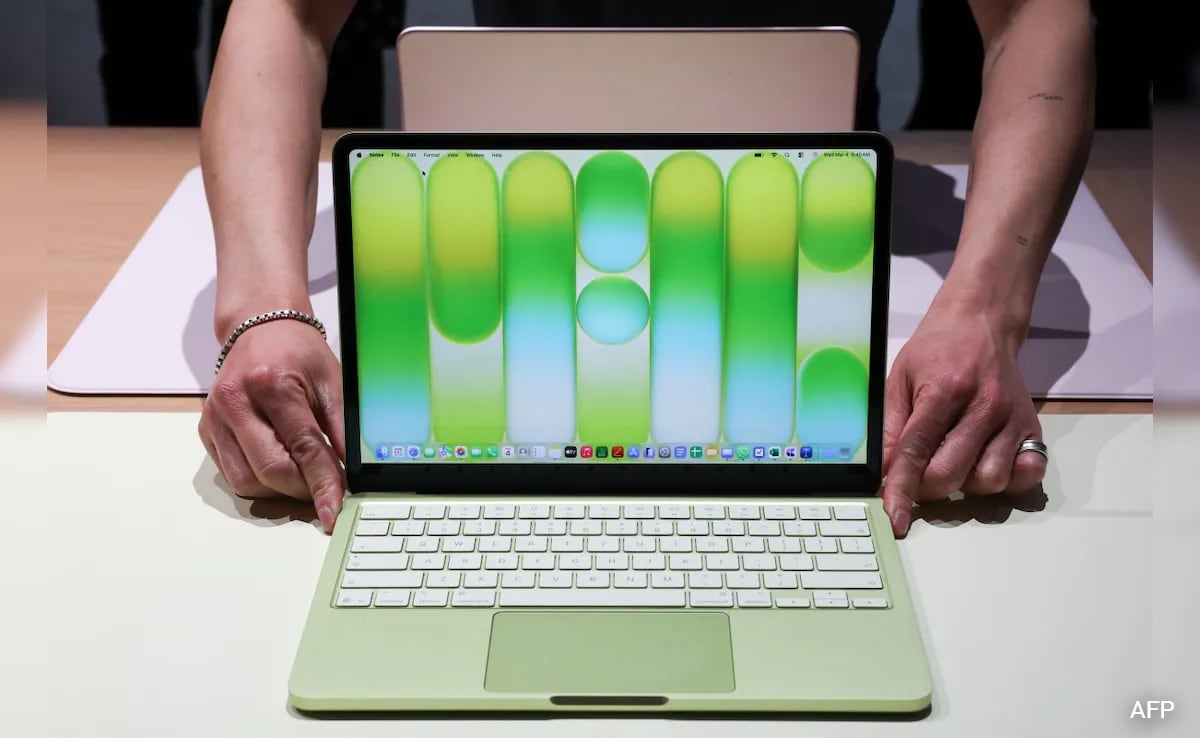
The release of the MacBook Neo at a price point of Rs 69,900 represents a calculated disruption of the mid-range laptop market, signaling a pivot from Apple's historical reliance on high-margin exclusivity toward a high-volume market share capture. By positioning a device under the 70,000 INR threshold, Apple is not merely launching a product; it is deploying a customer acquisition engine designed to lock users into the macOS ecosystem at the exact moment their spending power begins to scale. This move addresses a specific competitive vacuum in the Indian market where premium builds have traditionally been sacrificed for raw specifications in the Windows ecosystem.
The Economic Logic of the 69,900 Price Point
The specific pricing of the MacBook Neo is a response to the "efficiency frontier" of consumer electronics in emerging markets. In India, the sub-70,000 category is the highest-volume segment for professionals and students who require reliable hardware but cannot justify the 100,000+ INR investment for a MacBook Air or Pro. Apple’s strategy here relies on three distinct economic pillars:
- Component Amortization: By utilizing existing chassis designs and supply chain pipelines established for previous M-series iterations, Apple minimizes R&D overhead. The MacBook Neo likely leverages a "binning" strategy for its silicon, utilizing chips that meet high-performance standards but do not require the peak thermal envelopes of the Pro line.
- Ecosystem Lifetime Value (LTV): The hardware margin on a Rs 69,900 device is secondary to the recurring revenue generated through iCloud subscriptions, App Store commissions, and Apple Music. A user onboarded at 21 years old via a MacBook Neo represents a thirty-year revenue stream.
- Market Share Aggression: Apple currently faces pressure from high-performance ARM-based Windows laptops. By lowering the barrier to entry, Apple prevents potential switchers from ever experiencing the competing Windows/Qualcomm architecture.
Architecture of the MacBook Neo
The MacBook Neo is built on a philosophy of "Optimized Constraints." To achieve this price point, Apple has made specific engineering trade-offs that prioritize perceived performance over raw, sustainable peak power.
Silicon Efficiency and Thermal Design
The heart of the Neo is a modified M-series silicon variant. Unlike Intel or AMD counterparts that rely on high wattage to achieve performance, Apple’s silicon maintains a superior performance-per-watt ratio. This allows the Neo to operate without an internal fan. The thermal management system utilizes a high-conductivity aluminum heat spreader that dissipates energy through the chassis. While this results in thermal throttling during sustained 4K video renders or heavy 3D compilation, it provides a silent, "instant-on" experience for 95% of standard workflows, such as web browsing, document execution, and light photo editing.
Display and Visual Fidelity
Apple maintains its "Retina" standard, but the Neo likely utilizes a standard LED-backlit panel rather than the Liquid Retina XDR found in higher-tier models. The distinction lies in the peak brightness—measured in nits—and the refresh rate. By capping the display at 60Hz and approximately 400-500 nits, Apple reduces the component cost and battery drain significantly while maintaining a color accuracy that outclasses most Windows competitors in the same price bracket.
The Friction of Entry-Level Specifications
The primary critique of the MacBook Neo centers on its base configuration, specifically the RAM and storage overhead. Apple’s Unified Memory Architecture (UMA) is frequently cited as a justification for lower RAM counts. In a UMA, the CPU and GPU share a single pool of high-bandwidth, low-latency memory. This reduces the need for data duplication between the processor and the graphics card.
However, the "8GB is enough" narrative faces significant headwinds in an era of memory-intensive web browsers and background AI processes. The "Swap Memory" mechanism—where the system uses the high-speed SSD as temporary RAM—mitigates performance drops but increases the wear-and-tear on the NAND flash storage over a 5-to-7-year cycle. Users planning for a long-term deployment must weigh the initial savings against the eventual bottlenecking of non-upgradable components.
Strategic Positioning Against Windows Ultrabooks
The MacBook Neo does not compete with gaming laptops; it competes with the Dell Inspiron, HP Pavilion, and ASUS Vivobook series. The Windows competitors in the Rs 60,000 to 75,000 range often boast higher raw specs—16GB RAM and 512GB SSDs are standard. Apple counters this with three "Soft Advantages" that are harder to quantify on a spec sheet but dominate the user experience:
- Trackpad and Haptics: The Force Touch trackpad uses electromagnets to simulate a click, providing a uniform feel that physical diving-board trackpads cannot match.
- Battery Longevity: While Windows laptops often quote "up to 12 hours" based on unrealistic idle tests, the M-series architecture delivers 15-18 hours of actual "active screen time."
- Resale Value: A three-year-old MacBook typically retains 50-60% of its original value, whereas a Windows laptop in the same price bracket often depreciates by 70-80%. This makes the "Total Cost of Ownership" (TCO) for the MacBook Neo lower than its cheaper competitors.
[Image comparing laptop depreciation curves over 5 years]
Logistics and the Indian Manufacturing Nexus
The timing of the Neo launch is inextricably linked to the "Make in India" initiative and the Production Linked Incentive (PLI) schemes. By shifting more assembly to local partners like Foxconn and Tata, Apple avoids the 20% Basic Customs Duty (BCD) applied to imported electronics. This tax arbitrage is exactly what allows the price to sit at Rs 69,900. Without local assembly, this device would likely be priced closer to Rs 85,000, placing it in direct competition with Apple's own MacBook Air M2 or M3, leading to counter-productive cannibalization.
The distribution strategy for the Neo focuses heavily on tier-2 and tier-3 cities. In these regions, the Apple logo functions as a significant status symbol and a marker of professional readiness. By making the "ticket to entry" more affordable, Apple is expanding its cultural footprint into the heart of the Indian middle class.
Operational Limitations and Risk Factors
Investment in the MacBook Neo carries inherent risks for the power user. The lack of port versatility—likely limited to two USB-C ports—requires an additional investment in "dongles" or hubs, effectively raising the price of admission. Furthermore, the inability to upgrade internal components post-purchase creates a "locked-in" hardware state.
From a software perspective, the Neo is optimized for the current macOS version, but as AI-driven features (like Apple Intelligence) become more integrated into the OS, the base-model NPU (Neural Processing Unit) might struggle. The distinction between "functional" and "optimal" will widen over the next 24 to 36 months.
Strategic Recommendation
For the enterprise or individual contributor, the MacBook Neo is a "Traction Device." It provides the most frictionless entry point into a professional Unix-based environment.
- Students and Generalists: Purchase the base model. The performance-per-rupee in daily tasks is unmatched, and the resale value provides an easy exit path for a future upgrade.
- Creative Professionals: Avoid the base Neo. The RAM bottleneck in 10-bit video editing or heavy Lightroom workflows will result in significant productivity loss. Redirect the budget toward a refurbished MacBook Air with 16GB of RAM or wait for seasonal discounts on the M3 line.
- IT Procurement Managers: The Neo is the ideal "Fleet Laptop." The low maintenance requirements, high battery life, and standardized software image make it the most cost-effective unit for non-technical staff.
The Neo succeeds by redefining the floor of the Apple experience without compromising the brand's perceived premium status. It is a volume play that ensures Apple's dominance in the next decade of the Indian digital economy.