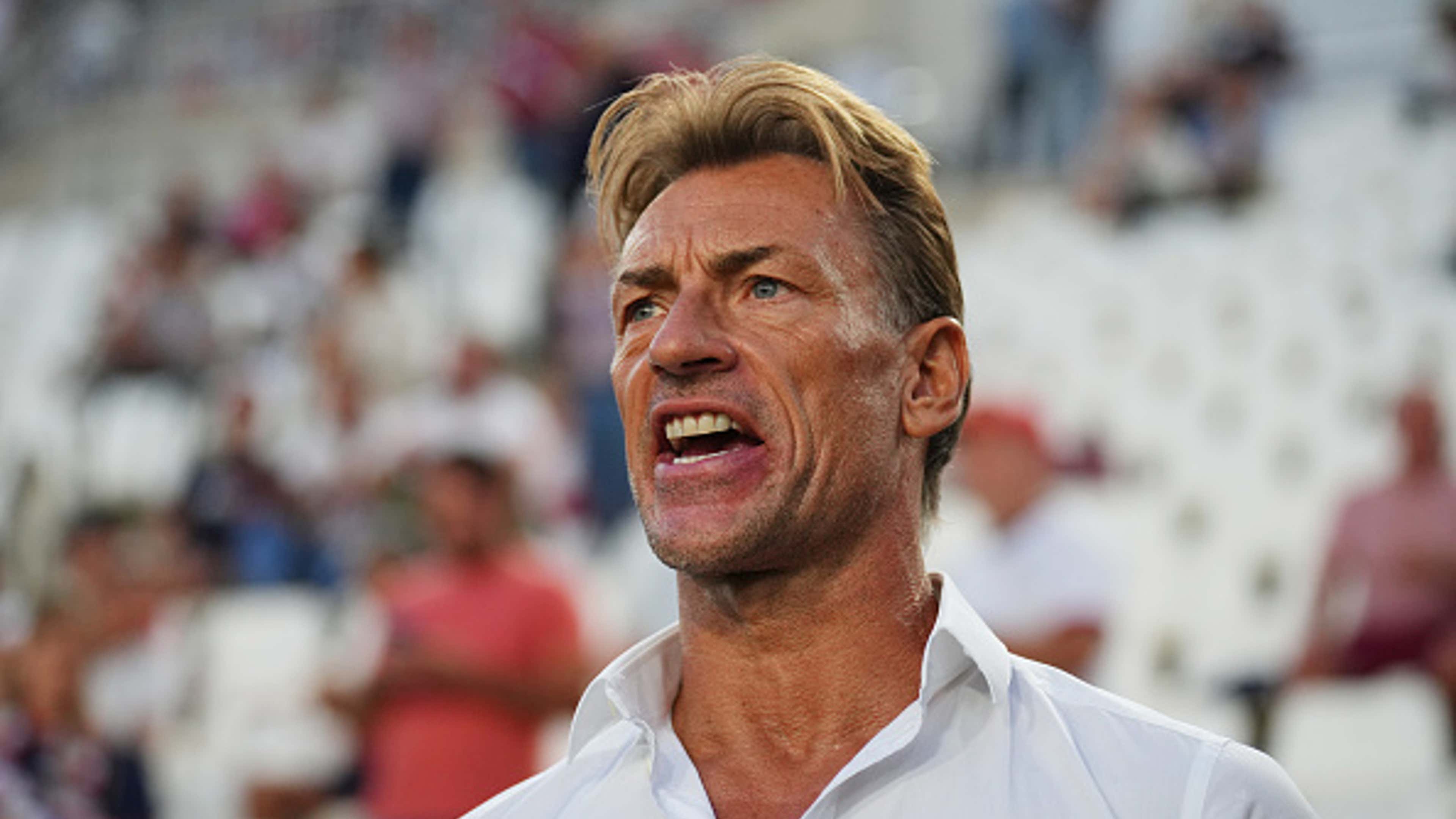
The desert is a cruel place for architects of hope. It offers vast horizons and endless resources, but the sand has a way of shifting just as you think you have built something permanent. Herve Renard, a man who wears crisp white shirts like armor and carries the aura of a Hollywood lead, found this out in the most clinical way possible.
The news didn't arrive with a thunderclap. It was a brief, sharp severance. The Saudi Arabian Football Federation decided that the magic had evaporated. They sacked him. Again. Meanwhile, you can explore related developments here: Why Your Stanley Cup Bracket Is Already Trash.
To understand why this feels like more than just a standard coaching casualty, you have to look back at a Tuesday afternoon in Lusail in November 2022. Argentina, led by the greatest player to ever lace up boots, was supposed to dismantle Saudi Arabia. It was meant to be a ceremonial opening for Lionel Messi’s coronation. Instead, Renard delivered a halftime speech that has since become the stuff of digital folklore. He paced the dressing room, shouting about taking pictures with Messi, demanding his players find their souls. They did. They won 2-1.
For one afternoon, the entire kingdom breathed as one. That victory was a geopolitical statement wrapped in a sporting miracle. It was the peak. But the problem with peaks is the inevitable descent on the other side. To explore the full picture, check out the excellent article by Yahoo Sports.
The Weight of the White Shirt
Renard is not a typical coach. He is a nomad. A specialist in the impossible. He won the Africa Cup of Nations with Zambia—a feat so statistically improbable it bordered on the supernatural. Then he did it again with Ivory Coast. He is the guy you call when you have talent but no heartbeat.
When he returned to the Saudi post for his second stint in late 2024, the mission was clear: fix the mess. The Green Falcons were stumbling through the third round of Asian World Cup qualifying. The swagger of 2022 had been replaced by a tentative, nervous brand of football that looked more like survival than competition. Renard was supposed to be the antidote. He was the familiar face, the one man who knew how to make these specific players believe they were giants.
But football has a short memory. Gratitude is a currency that devalues faster than any fiat money on earth.
Consider the perspective of a hypothetical fan in Riyadh, let’s call him Omar. For Omar, the 2026 World Cup isn't just a tournament; it’s a coming-out party for a nation investing billions into the sport. When the national team loses to Indonesia—a match that should have been a formality—it feels like a personal insult to the ambition of the state. It feels like the engine is stalling. Renard sat on the bench during that 2-0 defeat in Jakarta, his trademark white shirt dampened by humidity and the creeping realization that his spells no longer worked.
The Arithmetic of Failure
The numbers started to scream louder than the history. One point from matches against Australia and Indonesia. Zero goals in three consecutive games. In the cold light of the standings, Saudi Arabia sat fourth in Group C. Only the top two go through automatically. The rest are cast into the purgatory of the play-offs.
Modern Saudi football exists in a pressurized chamber. With the arrival of global superstars like Cristiano Ronaldo and Neymar in the domestic league, the expectation is that the local players will absorb that excellence through osmosis. There is an unspoken rule: if we provide the best environment in the world, we expect the best results in the world.
Renard was caught in the middle of this transition. He was trying to manage a squad where many of his key players were suddenly seeing less playing time at their clubs, squeezed out by high-priced foreign imports. You cannot build a sharp blade if the steel is sitting in the scabbard on Friday nights.
The Invisible Stakes
Why does this dismissal matter more than the dozen others happening across the globe this week? Because Saudi Arabia is the sole bidder for the 2034 World Cup. Their identity is now inextricably linked to the pitch. Failure to qualify for 2026 isn't just a sporting setback; it’s a brand crisis.
The Federation didn't just fire a coach; they fired a narrative. They realized that the "Spirit of 2022" was becoming a ghost that haunted the current squad rather than a light that guided them. You can only talk about the past for so long before the present demands an answer.
Renard’s departure is the end of a specific kind of romanticism in Middle Eastern football. It signals the end of the "saviour" era. The idea that one charismatic Frenchman can walk into a room, yell the right words, and upend the global order has been replaced by a brutal, data-driven pragmatism. If the wins aren't there, the charisma is just noise.
The Loneliness of the Nomad
There is a certain sadness in seeing a partnership like this dissolve. Renard and Saudi Arabia seemed like a perfect aesthetic match—the silver-haired tactician and the ambitious kingdom. But international football is a meat grinder. It doesn’t care about your past trophies or how well you wear a tailored shirt.
Now, the search begins for a successor who can navigate the most intense pressure cooker in Asian sports. The next person to step into that dugout won't just be managing a team; they will be managing the ego of a nation that has forgotten how to be an underdog.
Renard will walk away, likely to another high-stakes job in Africa or Europe, his suitcase already packed. He is a man comfortable with goodbyes. But as he leaves Riyadh, he leaves behind a team that is still searching for the identity he once gave them in a locker room in Qatar.
The sun sets over the desert, and the tracks of the hero are quickly covered by the wind. The 2026 World Cup is visible on the horizon, but for the Green Falcons, the road to get there just became a lot more treacherous, and a lot more silent.
Success is a guest that rarely stays for breakfast.