The air at the National Mall usually tastes of exhaust and ancient stone, but in the early hours, before the first tour bus exhales its passengers, it belongs to the workers. You see them if you look closely—the people who keep the gears of the capital turning while the rest of the world debates the headlines. Among them is a man whose name has become a strange footnote in American political theater. Carlos De Oliveira, often reduced to the title of "pool guy" in a high-stakes federal indictment, recently stood before a different kind of giant.
He wasn't at a hearing. He wasn't in a Florida courtroom. He was on a ladder, dwarfed by the knees of Abraham Lincoln.
The Lincoln Memorial is a heavy place. It isn't just the weight of the Georgia marble or the Tennessee pink stone; it’s the weight of what the building is supposed to mean. When you stand at the base of that nineteen-foot-tall seated figure, you feel small. That is the point. But for De Oliveira, the scale of the task seemed more literal than symbolic. Armed with tools and a quiet focus, he spent his morning working on the preservation of an icon that has watched over every social upheaval of the last century.
There is a profound irony in the image. Here is a man entangled in a legal storm involving the highest levels of executive power, a man accused of conspiring to obstruct justice by moving boxes of classified documents at a private club. Yet, in the soft light of a Washington morning, his hands were busy maintaining the very image of the Union’s preservation. It is a collision of the mundane and the monumental.
The Invisible Labor of History
We tend to think of monuments as eternal. We imagine they simply exist, unchanging, as the world rots and reforms around them. The truth is far more fragile. Stone breathes. It traps moisture. It accumulates the soot of a million passing cars and the oils of a billion wandering hands. Without constant, meticulous care, the Great Emancipator would eventually succumb to the slow violence of the elements.
De Oliveira’s presence on that site, captured in photographs that quickly circulated through the digital ether, highlights a reality we often ignore: the machinery of the state is run by individuals who are often caught between their personal lives and the massive, grinding wheels of history. Whether he is a maintenance professional at a golf club or a technician on a federal monument, the work remains the same. It is the labor of keeping things in place. It is the effort to prevent decay.
Imagine the silence in that chamber at 6:00 AM. The only sound is the scrape of a tool or the soft rustle of a jacket. Lincoln sits there, frozen in a state of permanent contemplation, his hands resting on the arms of his chair—one clenched, one open. De Oliveira moves around the base, a speck of high-visibility gear against the stark white background. In this moment, he isn't a defendant. He isn't a headline. He is a man with a job to do.
The Weight of the Association
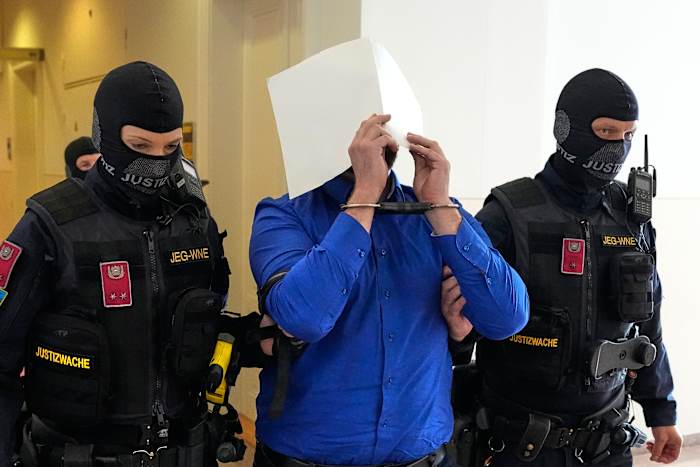
The public fascination with these photos doesn't stem from an interest in stone masonry. It comes from the cognitive dissonance of seeing a character from a political drama performing a civic duty. Since the indictment was unsealed, De Oliveira has been a ghost in the public consciousness—a name on a legal filing, a face captured in blurry court-arrival footage. To see him working on the Lincoln Memorial feels like a glitch in the narrative.
But should it?
Washington D.C. is a city of layers. The people who serve the coffee in the Rayburn Building often live miles away from the policy decisions made inside those walls. The people who scrub the floors of the White House are often invisible to the presidents they work for. De Oliveira represents that bridge. His journey from the Mar-a-Lago pool deck to the interior of the nation's most sacred secular shrine is a reminder that the "help" sees everything and says very little, until they are forced to.
The stakes for him are invisible but crushing. While he works on the marble, the legal case against him continues to move through the courts like a glacier—slow, cold, and indifferent to the individual caught in its path. He faces charges related to the alleged attempt to delete security camera footage. The contrast is sharp: in Florida, he is accused of trying to make things disappear; in D.C., he is working to ensure a legacy remains visible.
The Human Cost of the Spotlight
There is a specific kind of loneliness that comes with being a tertiary character in a national scandal. You are famous enough to be recognized at your job, but not powerful enough to control the conversation. You become a Rorschach test for the public. To some, De Oliveira is a victim of a system that chews up small players to get to the big ones. To others, he is a willing participant in a breach of national security.
Neither of those labels accounts for the man on the ladder.
When we strip away the partisan framing, we are left with the human element. We see a man who still has to earn a living. We see a professional who, despite the cameras and the clouds of litigation, shows up to work. There is a dignity in that, regardless of one's opinion on the underlying legal case. The act of maintenance is, in itself, an act of faith. It assumes there is something worth saving. It assumes that tomorrow will come, and the stone will still be there.
The Lincoln Memorial has seen it all. It saw the March on Washington. It saw the protesters of the 1960s. It saw the heavy silence of the pandemic. It has watched as the men who occupied the nearby White House rose and fell, were honored and disgraced. It is a house of memory.
The Reflection in the Stone
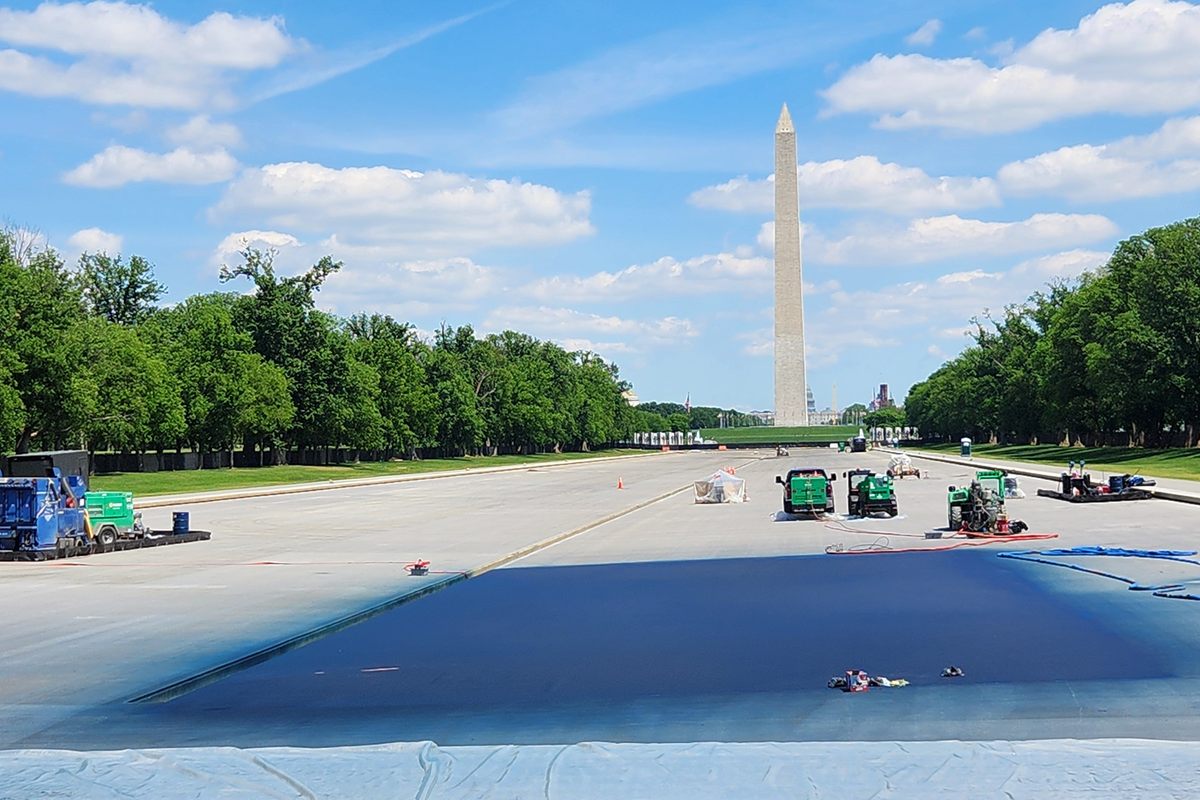
As the sun rose higher, casting long shadows across the Reflecting Pool, the work continued. The "pool guy" was no longer near a pool, but the water was still there, stretching out toward the Washington Monument, a mirror for the sky.
We often look at the giants and forget the people who polish their shoes. We focus on the leaders and ignore the hands that hold the ladders. Carlos De Oliveira, standing in the shadow of the man who saved the Union, serves as a jarring, necessary reminder of the people who inhabit the margins of power. They are the ones who keep the lights on, the water running, and the marble white.
The photos of that morning don't provide answers to the legal questions. They don't tell us what happened in the storage rooms of a Florida estate. But they do offer a glimpse into the strange, overlapping realities of American life. One day you are moving boxes that contain the secrets of a nation; the next, you are cleaning the dust off the boots of history.
As the first tourists began to trickle in, the work was likely finishing up. The tools would be packed away. The ladder would be moved. And Abraham Lincoln would remain, staring out over the water, his expression unreadable, his surface just a little bit cleaner than it was the day before. The man who did the work would slip back into the city, back into the legal fray, leaving behind only the quiet, polished evidence of his presence.
The stone doesn't care about the politics of the person who cleans it. It only knows the touch of the hand that keeps it from falling apart.