The weight of the world does not always arrive with a bang. Sometimes, it announces itself through the hum of a basement air conditioner and the scratch of a fountain pen on legal yellow paper.
For nearly a decade, Jerome Powell occupied a position that made him, by almost any metric, the most powerful economic actor on Earth. Yet to the average person buying a carton of eggs or signing a thirty-year mortgage, he remained a distant abstraction. He was a gray suit on a cable news ticker. He was a set of dry, heavily parsed sentences broadcast from a wood-paneled room in Washington, D.C.
To understand what just ended with the conclusion of his tenure as Chairman of the Federal Reserve, you have to look past the charts. You have to look at the kitchen tables.
Every time the Federal Open Market Committee met, a collective breath was held across the globe. A fraction of a percentage point shift in the federal funds rate—a number decided by a small group of people in comfortable chairs—cascaded through the global financial system like a tidal wave. It determined whether a young couple could afford their first home. It dictated whether a small business owner in Ohio had to lay off three workers or could afford to hire two more. It expanded and contracted the very boundaries of ordinary human lives.
Powell inherited a machine built on theory, but he was forced to operate it in a world of chaotic, unprecedented reality. His legacy is not a clean line on a graph. It is a story of survival, improvisation, and the immense, terrifying burden of trying to steer an economy through a once-in-a-century storm.
The Mechanic of Eccles
Jerome Powell was an anomaly from the start. He was not an academic economist. He did not possess a Ph.D. from an Ivy League institution, analyzing the world through mathematical models that assumed human beings always act rationally. He was a lawyer and an investment banker. He looked at markets not as equations to be solved, but as engine blocks to be disassembled and repaired.
When he took the oath of office, the economic landscape appeared remarkably placid. Unemployment was low. Inflation was a ghost, whispered about in textbooks but rarely seen in the wild. The primary challenge seemed to be normalization—gently raising interest rates from their post-2008 emergency floors without upsetting the stock market.
Then, the world broke.
The arrival of the global pandemic turned the economic playbook into scrap paper. Imagine a massive, intricate factory where suddenly every machine is turned off simultaneously, the workers are sent home, and the supply lines are severed overnight. That was the spring of 2020. The fear was palpable, not just in the hospitals, but in the credit markets. The plumbing of the global financial system began to freeze. If companies could not borrow short-term cash to pay their workers, the entire economic apparatus faced total collapse.
In that moment, the former college guitar player and corporate fixer chose to shatter the traditional boundaries of central banking.
The Fed flooded the system with liquidity. It bought government debt. It bought corporate bonds. It backstopped municipal lending. It essentially became the buyer and lender of last resort for the entire American economy. It was an exercise in raw, unadulterated financial power, executed with a speed that shocked even Wall Street veterans.
For a moment, it worked. The panic subsided. The floor held. But every action has an equal and opposite reaction, and the bill for emergency triage always arrives eventually.
The Transitory Trap
There is a specific kind of loneliness that comes with making decisions under conditions of radical uncertainty. By 2021, the smoke from the pandemic shutdowns was clearing, but it was replaced by a different kind of fog.
Prices began to tick upward. First it was used cars. Then lumber. Then groceries.
We all felt it. It was the sudden, jarring realization that a hundred dollars didn't fill the shopping cart the way it did twelve months prior. It was the creeping anxiety of looking at a menu or a gas pump and wondering where the ceiling was.
Inside the Federal Reserve, the initial diagnosis was confident: "transitory."
The narrative was logical. The inflation was merely the result of clogged ports, semiconductor shortages, and the awkward mechanics of restarting a global economy that had been abruptly mothballed. It would pass. The models said so.
But the models were wrong.
The word "transitory" became an albatross around Powell’s neck. As the months dragged on, inflation mutated from a temporary supply-chain glitch into a stubborn, pervasive wildfire. It began bleeding into wages and services. The public’s psychology began to shift. Once people expect prices to rise tomorrow, they demand higher wages today, creating a self-fulfilling spiral that can ruin a nation’s currency.
The delay in recognizing the permanence of inflation is the heaviest critique of Powell’s tenure. It was a rare, visible stumble by a man known for his methodical approach. The hesitation cost time, and in central banking, time is the only currency that truly matters. When the realization finally hit that the fire was out of control, the response had to be brutal.
The Volcker Shadow
To fix the mistake, Powell had to channel a ghost.
Paul Volcker, the legendary Fed Chair of the late 1970s and early 1980s, had defeated the Great Inflation of that era by raising interest rates to agonizing heights, deliberately triggering a severe recession to break the back of price increases. Volcker became a hero to economists, but he was hated by millions of ordinary Americans who lost their jobs, their farms, and their businesses in the process.
Powell faced a similar, agonizing choice. To save the purchasing power of the dollar, he had to inflict pain.
What followed was the most aggressive rate-hiking campaign in four decades. Meeting after meeting, the Fed jacked up borrowing costs by 75 basis points at a time. It was the economic equivalent of slamming on the brakes of a speeding semi-truck.
The immediate casualty was the American dream of homeownership. Mortgage rates jumped from 3% to over 7% in a blink. The housing market froze. Aspiring buyers were priced out overnight, forced to watch their ambitions evaporate under the weight of monthly payment calculations that no longer made sense.
The tension during this period was suffocating. Economists almost universally predicted a "hard landing"—a euphemism for a recession that would throw millions out of work. Critics from the left argued that Powell was punishing working-class people to cure an inflation caused by corporate greed and global supply chains. Critics from the right argued he was doing too little, too late.
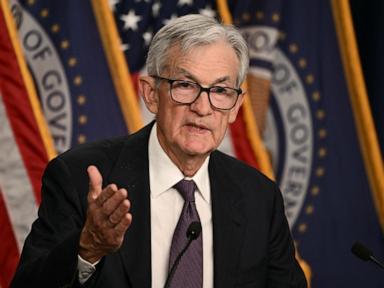
Every press conference became a high-stakes psychological drama. Powell stood at the podium, choosing his words with surgical precision. A single misplaced adjective could wipe out billions of dollars in wealth in seconds. He maintained a stoic, almost grim demeanor, repeatedly stating that the Fed would "keep at it until the job is done."
It was a high-wire act performed over an abyss. If he raised rates too much, he would cause a depression. If he stopped too soon, inflation would entrench itself permanently.
The Soft Landing Myth Made Real
Then, the impossible happened.
As the rate hikes filtered through the system, the raging fire began to simmer down to a manageable burn. Inflation started its long, agonizing descent back toward the Fed’s 2% target.
But the expected disaster never arrived.
The layoffs didn't materialize. The unemployment rate remained historically low. Consumer spending held resilient. The American economy, battered and bruised, kept moving forward.
Against all conventional economic wisdom, the Fed appeared to have engineered a "soft landing." It was an outcome so rare in financial history that many experts had dismissed it as a theoretical myth, a unicorn of macroeconomic policy.
It is easy to look at the final chapters of Powell’s term and see a triumph. The numbers, on their face, suggest a masterclass in crisis management. But the view from the windowless room at the Fed is very different from the view from the grocery store checkout line.
While inflation has slowed, prices have not dropped; they have merely stopped rising as fast. The cumulative increase in the cost of living over his tenure remains a permanent scar on household budgets. The interest rates that cooled the economy remain a heavy burden for anyone trying to buy a car, carry credit card debt, or finance a business. The victory was real, but it was a pyrrhic one for millions who feel economically stuck, trapped in a reality where survival is a constant calculation.
The Silent Legacy
Jerome Powell’s departure marks the end of an era defined by the erosion of certainty. He did not leave behind a perfect system or an unblemished record. His legacy is complicated, messy, and deeply human.
He proved that institutions can adapt under immense pressure, but he also demonstrated the profound limits of economic forecasting. He showed that a leader can admit a mistake—as he did with inflation’s permanence—and still pivot effectively to address it.
Ultimately, his tenure reminded us of a fundamental truth that we often prefer to forget. The global economy is not a self-regulating machine. It is a fragile construction held together by public trust, institutional credibility, and the decisions of flawed individuals operating in the dark.
As the gavel passes to a new leader, the dust is still settling on the Powell era. The true measure of his decisions will not be found in the archives of the Federal Reserve or the memoirs of central bankers. It will be found in the quiet choices made by ordinary people every single day, as they navigate the economic world he helped reshape, dollar by dollar, percent by percent.