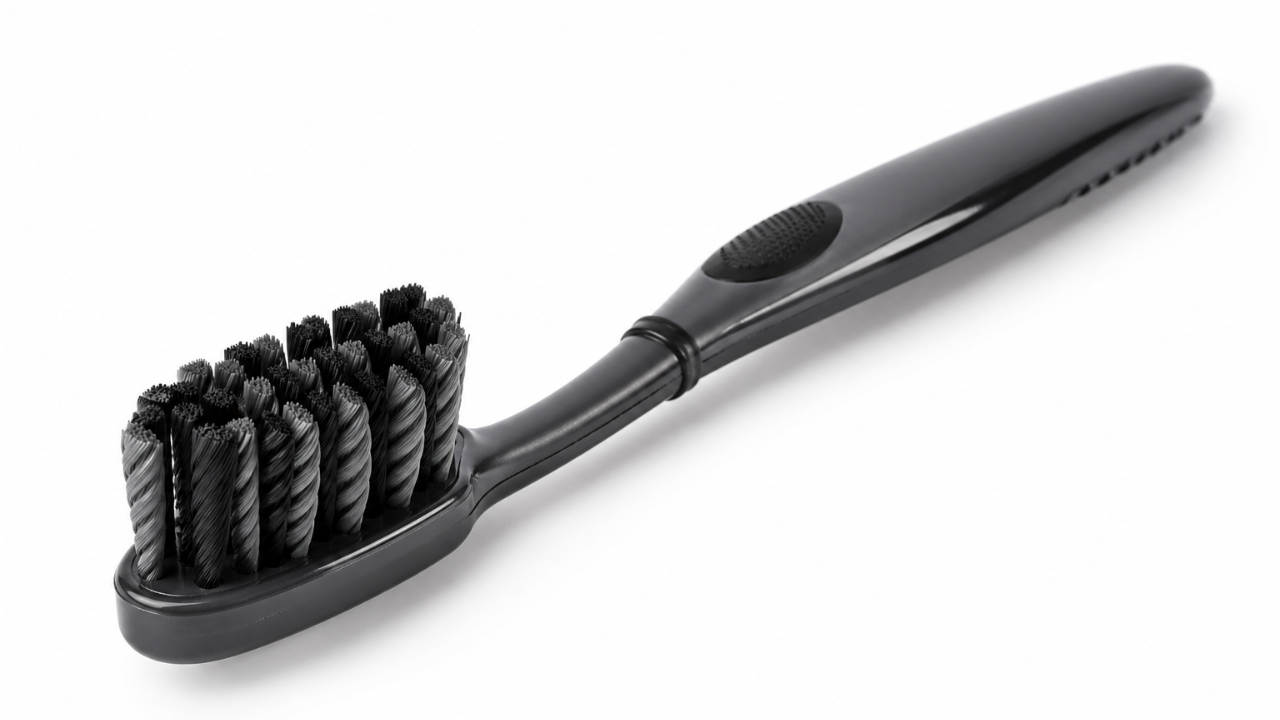
The rapid global adoption of graphene-enhanced toothbrushes represents a fundamental shift in oral care manufacturing, moving from passive mechanical abrasion to active material-driven hygiene. While traditional nylon bristles serve as static tools for biofilm disruption, graphene integration transforms the brush head into a functionalized surface capable of microbial inhibition and structural endurance. This transition is not driven by consumer novelty alone but by a convergence of material performance, antimicrobial efficacy, and mechanical longevity that traditional polymers cannot replicate.
The Structural Mechanics of Graphene-Polymer Composites
The primary driver of graphene's efficacy in toothbrushes lies in the physical properties of the material itself. Graphene is an allotrope of carbon consisting of a single layer of atoms arranged in a two-dimensional honeycomb lattice. When integrated into toothbrush bristles—typically composed of nylon or PBT (Polybutylene terephthalate)—graphene functions as a reinforcement agent.
Mechanical Integrity and Bristle Memory
The mechanical failure of standard toothbrushes occurs through "bristle splaying," where the fibers lose their elastic modulus and fail to return to their original vertical position. This degradation reduces the efficiency of plaque removal by decreasing the surface area contact with the gingival margin. Graphene-enhanced filaments exhibit a higher tensile strength and a superior flexural modulus. By reinforcing the polymer matrix, graphene reduces the rate of deformation, effectively extending the functional lifespan of the tool beyond the typical three-month degradation cycle.
Conductivity and Static Reduction
Traditional plastic bristles generate static electricity during the high-frequency friction of brushing. This static charge can influence the adhesion of debris to the bristles. Graphene, being highly conductive, mitigates this charge accumulation. This property facilitates a cleaner rinse-off process, preventing the buildup of organic matter at the base of the bristle tufts—a common site for bacterial colonization.
The Antimicrobial Mechanism of Action
The "Scientists reveal" aspect of graphene adoption centers largely on the material’s inherent ability to manage oral microbial populations without the use of chemical leaching. Unlike silver-ion brushes that rely on the release of metal ions, graphene operates through physical and oxidative pathways.
Physical Membrane Disruption
The edges of graphene nanosheets, often referred to as "nanoknives," can physically penetrate the cell membranes of bacteria. When bacteria come into contact with the graphene-infused surface, the sharp atomic edges disrupt the lipid bilayer, leading to the leakage of intracellular contents and subsequent cell death. This mechanical kill-mechanism is significant because it does not contribute to antimicrobial resistance, a growing concern with chemical-based antibacterial agents.
Oxidative Stress Induction
Beyond physical contact, graphene-based materials can induce oxidative stress within bacterial cells. This process involves the generation of reactive oxygen species (CH: Reactive Oxygen Species) or the extraction of electrons from the bacterial membrane, which destabilizes the metabolic functions of the pathogen. In the context of oral hygiene, this specifically targets Streptococcus mutans, the primary catalyst for dental caries, and various anaerobic bacteria responsible for periodontal disease.
Moisture Management and Hydrophobicity
Bacterial growth on toothbrushes is exacerbated by the retention of moisture between uses. Graphene surfaces often exhibit increased hydrophobicity. By reducing the surface energy of the bristles, graphene prevents water from "wicking" deep into the tuft holes. A drier environment serves as a hostile habitat for mold and bacteria, ensuring that the brush remains more hygienic between uses compared to standard nylon counterparts.
Market Dynamics and the Cost Function of Oral Care
The sale of millions of units globally indicates that the value proposition of graphene has successfully crossed the chasm from niche bio-hacking to mass-market health. The adoption curve can be mapped through three distinct pillars of consumer motivation.
Pillar 1: Total Cost of Ownership (TCO)
While the acquisition cost of a graphene toothbrush is typically $20%$ to $40%$ higher than a premium standard brush, the TCO is often lower. The structural reinforcement provided by the carbon lattice allows for a longer duration of peak performance. If a standard brush loses $50%$ of its plaque-removal efficiency at day 60, and a graphene brush maintains that efficiency until day 100, the consumer realizes a gain in functional value that offsets the initial price premium.
Pillar 2: The Clean-Feel Feedback Loop
The "why people are buying them" question is partially answered by the sensory experience of charcoal-graphene blends. Graphene is often co-processed with activated charcoal. This combination increases the surface area for adsorption. Consumers report a smoother dental surface (the "tongue test") which is a result of the dual-action of mechanical scrubbing and the adsorption of volatile organic compounds and surface stains.
Pillar 3: Perceived Safety vs. Chemical Additives
As consumers move away from triclosan and other synthetic antimicrobial coatings, graphene represents a "clean" technology. It is perceived as a structural element rather than a chemical additive. This alignment with the "low-tox" lifestyle trend has accelerated its adoption in North American and European markets.
Limitations and Technical Constraints
No material innovation is without bottlenecks. The efficacy of graphene toothbrushes is heavily dependent on the quality and concentration of the graphene used.
- Dispersion Challenges: If the graphene is not uniformly dispersed within the polymer during the extrusion process, it creates "clumps" that act as failure points rather than reinforcements. This leads to brittle bristles that snap rather than flex.
- Concentration Thresholds: There is a diminishing return on graphene concentration. Excessive loading can make bristles too rigid, potentially causing gingival recession or enamel abrasion if used with improper technique.
- Regulatory Lag: Because graphene is a relatively new nanomaterial in consumer health, long-term longitudinal studies on the ingestion of nano-fragments from bristle wear are still in the data-collection phase. Current evidence suggests that the carbon-bonded matrix is stable, but the industry lacks a standardized "Graphene Quality Index" for consumer goods.
Strategic Implementation for the Consumer
To maximize the utility of graphene-integrated oral care, the application must be methodical. The shift from nylon to graphene requires a recalibration of brushing habits to avoid unintended tissue trauma while leveraging the material's strengths.
- Pressure Calibration: Given the higher flexural modulus of graphene-enhanced bristles, users should apply less manual pressure. The material’s inherent stiffness handles the mechanical disruption of the pellicle layer more efficiently than nylon.
- Rinse and Air-Dry Optimization: To leverage the hydrophobic properties of the carbon lattice, the brush should be rinsed under high-pressure water and stored in an open-air environment. Enclosed travel cases negate the antimicrobial advantages by trapping humidity.
- Replacement Synchronization: Despite the increased durability, the brush should still be replaced when the indicator filaments fade or at the four-month mark. While the bristles may not splay as quickly, the accumulation of microscopic mineral deposits from tap water will eventually diminish the "nanoknife" efficacy of the graphene edges.
The surge in graphene toothbrush sales is a calculated response to the limitations of 20th-century polymer science. By moving the hygiene burden from the user's technique to the tool's material properties, graphene represents the first significant hardware upgrade in manual oral care in several decades. The focus now shifts to the standardization of graphene quality to ensure that "graphene-infused" remains a technical specification rather than a marketing descriptor.