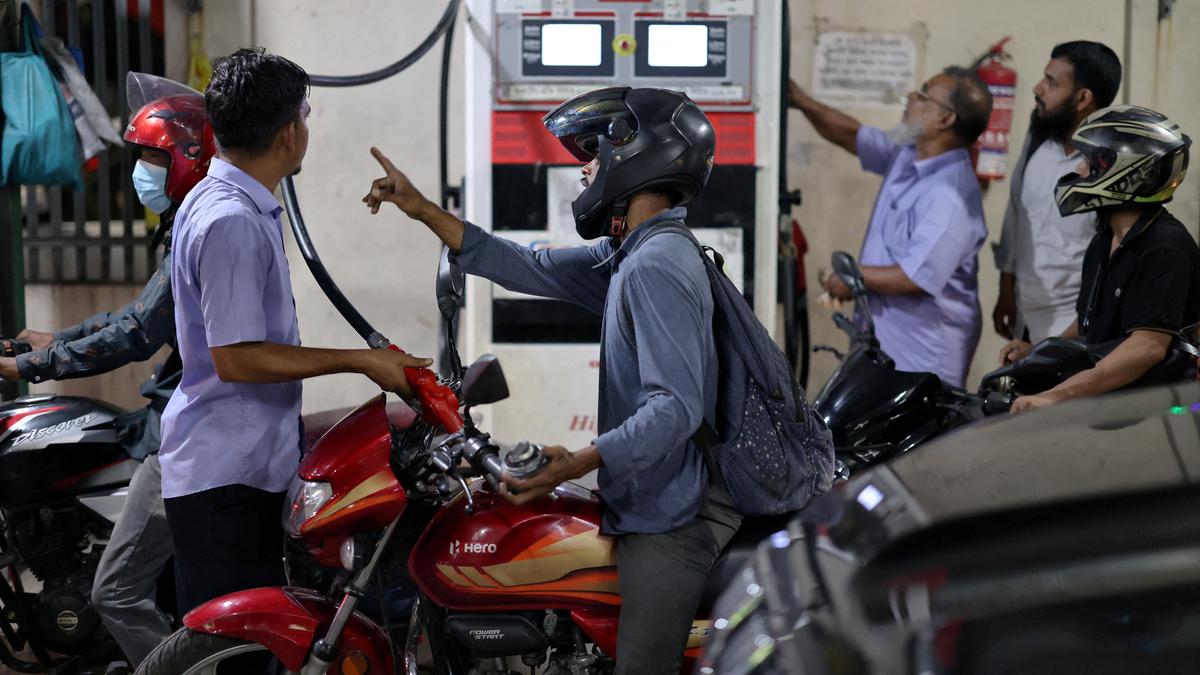
Bangladesh’s decision to elevate domestic fuel prices is not a localized policy shift but a defensive reaction to a structural deficit in the nation’s energy procurement framework. When West Asian conflicts disrupt global supply chains, the impact on Dhaka is magnified by three specific variables: a depleted foreign exchange reserve, a heavy reliance on the spot market for Liquefied Natural Gas (LNG), and a rigid subsidy mechanism that has reached its fiscal ceiling. This analysis deconstructs the economic transmission of regional conflict into domestic price hikes and examines the sustainability of the current energy model.
The Transmission Mechanism of West Asian Instability
The primary driver of price increases is the risk premium embedded in Brent Crude and global refined product benchmarks. While Bangladesh sources a significant portion of its crude and refined oil through long-term contracts (predominantly with Saudi Aramco and Kuwait Petroleum Corporation), these contracts remain indexed to international market rates.
Conflict in the Middle East triggers price discovery across three distinct channels:
- Freight and Insurance Risk: Escalated tensions in the Strait of Hormuz or the Red Sea result in immediate spikes in War Risk Surcharges (WRS). For a nation like Bangladesh, which operates on thin maritime logistics margins, these surcharges are passed directly to the state-owned Bangladesh Petroleum Corporation (BPC).
- The Spot Market Feedback Loop: To meet peak demand, Bangladesh often supplements long-term contracts with spot market purchases. During periods of geopolitical friction, the spot market experiences higher volatility than long-term benchmarks.
- Refined Product Spreads: Bangladesh imports more refined products (Diesel, Jet Fuel, Furnace Oil) than crude. The "crack spread"—the difference between the price of crude and the refined product—widens during supply disruptions, as global refining capacity becomes a bottleneck.
The Fiscal Trilemma: Reserves, Subsidies, and Inflation
The Bangladesh government operates under a fiscal trilemma where it must balance the stability of foreign exchange reserves, the solvency of the BPC, and the containment of domestic inflation.
The Depletion of Foreign Exchange Buffers
Fuel imports are denominated in USD. As the Federal Reserve maintains a higher-for-longer interest rate environment, the Taka has faced consistent downward pressure. When global oil prices rise, Bangladesh requires more USD to purchase the same volume of energy. This creates a "double-hit" effect: the commodity is more expensive in dollar terms, and the dollar is more expensive in Taka terms.
The BPC Balance Sheet Constraint
The Bangladesh Petroleum Corporation has historically functioned as a buffer, absorbing high international prices to shield the domestic economy. However, the BPC’s ability to sustain losses is finite. When the gap between the landed cost of fuel and the retail price exceeds the government’s budgetary allocation for subsidies, the state is forced to choose between a widening fiscal deficit or a price hike. In the current cycle, the IMF’s Extended Fund Facility (EFF) conditions have mandated a shift toward an automated, market-based pricing formula, effectively removing the government's ability to provide indefinite subsidies.
Structural Vulnerabilities in the Energy Mix
The severity of the price hike is a direct symptom of the "Gas-to-Fuel" substitution failure. Bangladesh’s industrial sector and power plants were designed to run primarily on domestic natural gas. As domestic gas fields (such as Titas and Bibiyana) face natural depletion, the state has been forced to pivot to expensive LNG and liquid fuels (High-Speed Diesel and Heavy Fuel Oil).
The Inefficiency of Liquid Fuel Power Plants
Liquid fuel-based "Rental Power Plants" were originally intended as short-term emergency measures. However, they remain a significant part of the grid. Because these plants have a high heat rate (lower efficiency), the cost per kilowatt-hour ($kWh$) is extremely sensitive to fluctuations in the price of furnace oil. A 10% increase in fuel costs does not lead to a linear 10% increase in power costs; it causes a disproportionate spike in the weighted average cost of electricity due to the high variable cost of these specific units.
The LNG Spot Market Trap
Unlike oil, which has a more liquid global market, LNG pricing is often more erratic. During West Asian crises, European and Asian buyers compete for the same seaborne cargoes. Bangladesh often finds itself priced out of the spot market, leading to "load shedding" (rolling blackouts). To avoid total grid failure, the government reverts to using more diesel and furnace oil—ironically the very commodities whose prices are spiking due to the conflict.
Quantifying the Macroeconomic Fallout
The adjustment of fuel prices acts as a regressive tax on the productive economy. The impact is distributed across three critical sectors:
- Agriculture: Irrigation pumps in Bangladesh are largely diesel-powered. A price hike during the Boro rice planting season directly increases the cost of production, leading to food inflation.
- Ready-Made Garments (RMG): As the primary export engine, the RMG sector relies on captive power generation (gas and diesel) to maintain production schedules. Higher energy costs erode the competitive edge of Bangladeshi exports against regional rivals like Vietnam or India.
- Logistics and Transportation: The pass-through effect in the transport sector is near-instantaneous. Because the supply chain for essential goods is fragmented, each layer of transport adds a margin to the fuel cost increase, resulting in a compounded retail price hike for the end consumer.
The Limitation of Market-Based Pricing Formulas
The recently introduced automated pricing formula is intended to provide transparency and fiscal discipline. However, it possesses a fundamental flaw: it is a reactive rather than a proactive tool. The formula adjusts prices based on the previous month's average. In a rapidly escalating geopolitical crisis, the formula can leave the BPC with a liquidity mismatch, where they are selling fuel today at prices that cannot cover the cost of the next shipment.
Furthermore, the formula does not account for the "inflationary floor." While prices go up when global markets rise, domestic retail prices for goods and services rarely settle back to their original levels when fuel prices eventually drop. This "price stickiness" means that temporary geopolitical spikes cause permanent shifts in the cost of living.
Strategic Imperatives for Energy Security
To break the cycle of reactive price hikes, the strategy must shift from price management to volume and risk management.
- Strategic Petroleum Reserves (SPR): Bangladesh lacks sufficient storage capacity to hedge against short-term volatility. Developing a 90-day reserve would allow the BPC to bypass the spot market during the peak of a West Asian crisis.
- Aggressive Diversification of Procurement: Relying on a few West Asian suppliers creates a geographic single point of failure. Bangladesh must explore G2G (Government-to-Government) contracts with producers in Central Asia or West Africa to dilute the geopolitical risk of the Persian Gulf.
- Accelerated Decarbonization as a Fiscal Strategy: Renewable energy is often framed as an environmental goal, but for Bangladesh, it is a fiscal necessity. Every megawatt of solar or wind power reduces the need for a USD-denominated fuel import.
- Natural Gas Exploration: The most effective hedge against oil price volatility is increasing domestic gas production. Shifting the focus from expensive LNG terminals to offshore and deep-water exploration in the Bay of Bengal is the only long-term path to energy sovereignty.
The current price hike is a symptom of a system at its limit. Until the underlying dependency on volatile, dollar-priced imports is reduced, the Bangladesh economy will remain a hostage to the geopolitical stability of West Asia. Policy must prioritize the build-out of storage infrastructure and the renegotiation of long-term supply contracts to include price caps or "collars" that protect the BPC from extreme market excursions.