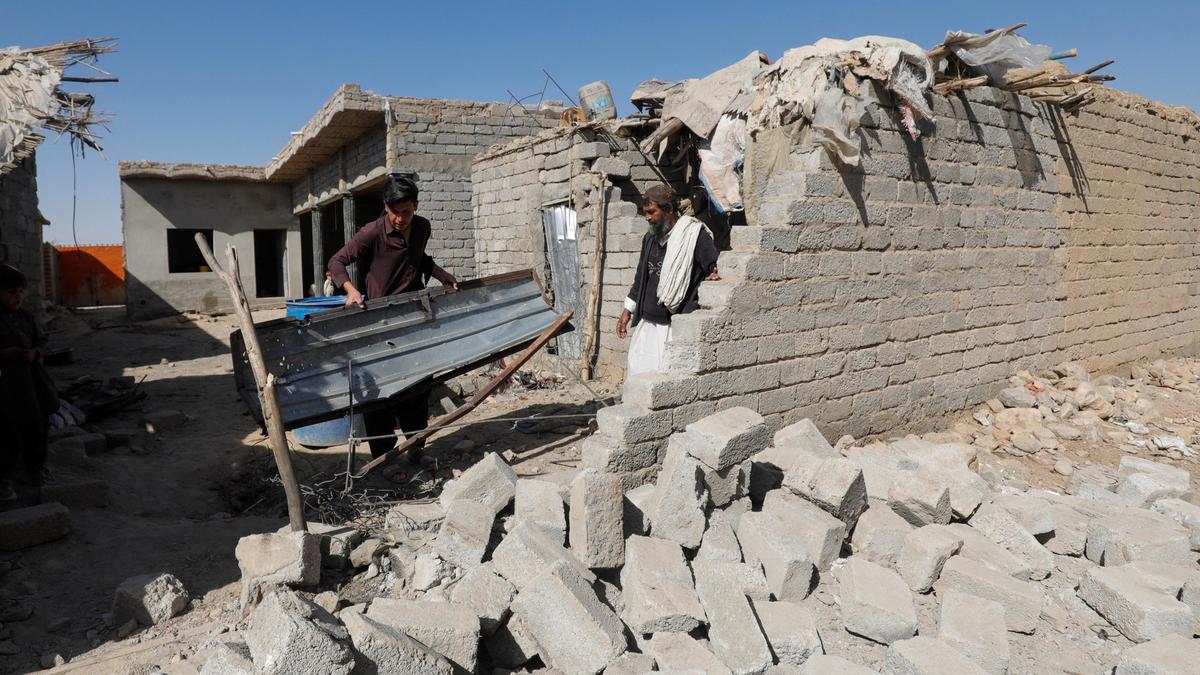
The detonation of an improvised explosive device (IED) at a Jewish school in Amsterdam represents more than a localized breach of physical security; it is a calculated disruption of the urban social contract. While initial reportage focuses on the immediate shock of the blast, a rigorous analysis must look at the event through the lenses of Tactical Signaling, Psychological Cascades, and the Erosion of Institutional Resilience. The explosion functions as a high-leverage tool where a minimal kinetic investment yields a disproportionate psychological and political return.
The Triple-Axis Impact Model
To quantify the effectiveness of such an event, one must categorize the impact across three distinct domains. Standard media narratives treat these as a singular "tragedy," but for a strategic analyst, they are separate vectors of a coordinated attack.
- The Kinetic Vector: This is the physical damage. In the context of the Amsterdam incident, the primary objective of the kinetic vector was not mass casualty—given the timing and placement—but the breach of a "hardened" perimeter. The physical destruction of doors or windows serves as a proof of concept that existing security protocols are permeable.
- The Symbolic Vector: Schools are high-value symbolic targets. Targeting an educational institution focused on a specific minority group transitions the act from "crime" to "existential threat." The symbol being attacked is the safety of the next generation, which is the most sensitive pressure point in any societal structure.
- The Civic Vector: This measures the strain placed on the state’s monopoly on violence. When a high-profile site is attacked, the government is forced into a reactive posture, reallocating finite police and intelligence resources. This creates a "security tax" on the city, as budgets are diverted from proactive community policing to static site protection.
Security Architecture and the Failure of Deterrence
The occurrence of this explosion suggests a breakdown in the Deterrence-Detection-Delay (DDD) framework.
- Deterrence: The visible presence of cameras, gates, or patrols failed to influence the perpetrator’s cost-benefit analysis. This indicates either a highly motivated actor or a perceived low probability of apprehension.
- Detection: The failure to intercept the actor during the transit or placement phase reveals gaps in real-time surveillance monitoring and electronic SIGINT (Signals Intelligence) surrounding sensitive sites.
- Delay: In this instance, the delay mechanism (physical barriers) was the target itself. The explosion bypassed the need to circumvent locks or guards by simply neutralizing the physical interface of the building.
The technical nature of the explosive used provides a footprint of the perpetrator's capability. High-order explosives suggest state-level or organized militant involvement, while low-order "kitchen chemistry" (such as TATP or black powder derivatives) points toward radicalized individuals or small cells utilizing decentralized digital manuals.
The Logistics of Targeted Radicalization
This event does not exist in a vacuum; it is the output of a logistical pipeline. Analyzing the "Why" requires looking at the Information Supply Chain.
- Platform Amplification: The act is designed for the smartphone era. The goal is the creation of "viral terror," where the image of the damaged school is disseminated faster than the official police response. This creates a feedback loop that emboldens similar actors in other geographies.
- Geopolitical Proxyism: Amsterdam, as a European hub, serves as a theatre for external conflicts. The school becomes a proxy for broader Middle Eastern or ideological tensions. By striking in the Netherlands, the actor imports a foreign conflict into a domestic setting, forcing local politicians to take sides, thereby deepening societal polarization.
Economic and Social Depreciation
The secondary effects of the explosion are measurable in the "Security Premium" now required for Jewish life in Europe.
- Insurance Escalation: Premiums for institutions labeled as "high risk" will inevitably rise, creating a financial burden that can lead to the eventual closure of community centers or schools—a form of "soft" displacement.
- Educational Attrition: The psychological cost to parents and students results in a migration toward homeschooling or private, ultra-secured environments, which further isolates the community from the broader civic fabric.
- The Intelligence Bottleneck: Following the blast, Dutch intelligence services (AIVD) must filter a massive increase in "noise"—thousands of low-quality tips and false alarms. This saturation of the system is a tactical win for adversaries, as it hides genuine threats behind a wall of administrative overload.
The Probability of Contagion
Current data suggests that successful attacks of this nature often lead to a "clustering" effect.
- The Copycat Variable: Success breeds imitation. The lack of an immediate, high-profile arrest increases the perceived "success rate" of the tactic.
- The Escalation Ladder: Once a school is hit, the threshold for what constitutes a "shocking" event rises. To achieve the same level of media saturation, future actors may seek to increase the lethality or the complexity of the attack.
Tactical Hardening and Strategic Reorientation
To counter this trajectory, the response cannot be purely reactive. It requires a shift from Static Defense to Dynamic Intelligence.
- Predictive Patterning: Utilizing AI-driven analytics to monitor surge patterns in extremist rhetoric across localized encrypted channels.
- Infrastructure Redundancy: Designing educational facilities with "sacrificial" exterior structures that can absorb blast energy while maintaining the integrity of the occupied zones.
- Hyper-Local Counter-Narratives: Disrupting the symbolic value of the attack by demonstrating immediate institutional recovery and reinforced civic solidarity, thereby lowering the "Return on Investment" (ROI) for the attacker.
The state must now move beyond the investigation of a single crime scene and address the systematic vulnerability of its urban landscape. The Amsterdam explosion is a diagnostic signal of a deeper instability in the European security apparatus.
The immediate strategic priority is the deployment of a Visible-Invisible Hybrid Security Model. This involves maintaining a high-visibility deterrent at sensitive sites to reassure the public, while simultaneously scaling "invisible" technical surveillance—including facial recognition in transit hubs and chemical sniffer drones—to intercept the logistics of the next device before it reaches its terminal destination.