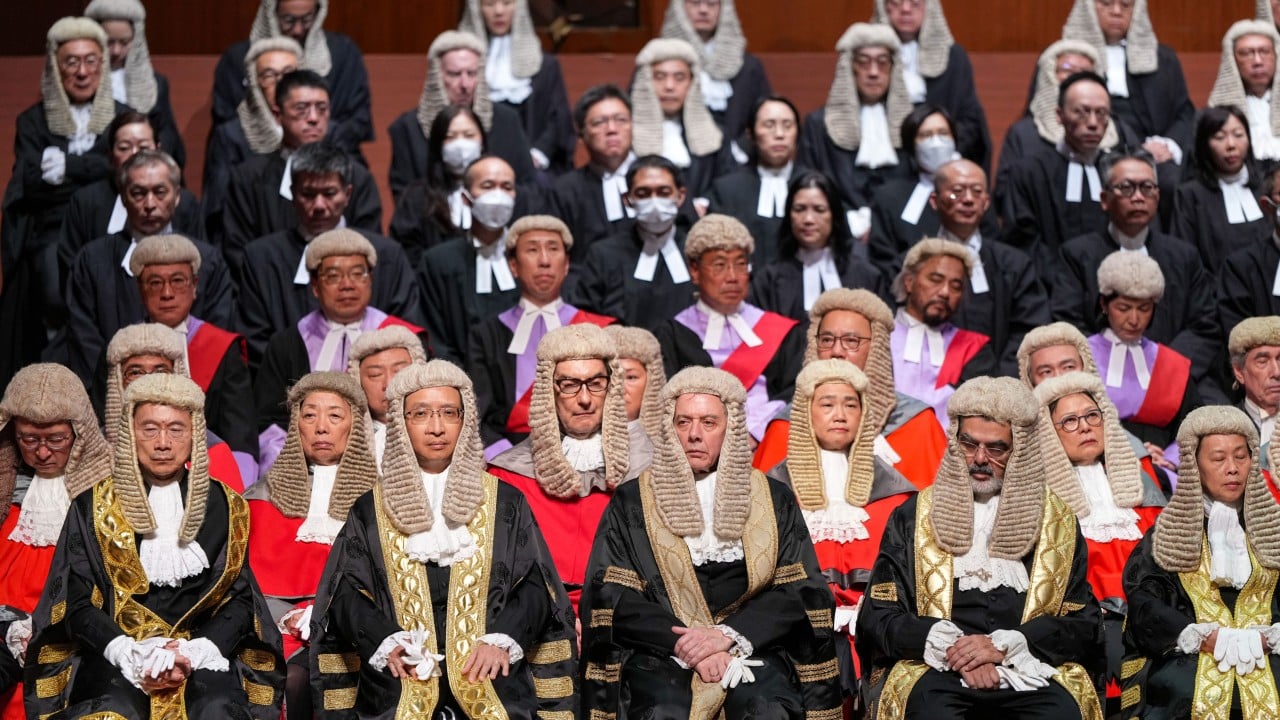
The fluorescent lights of Courtroom 4B hum with a low, persistent anxiety. Elias sits at the defense table, his hands pressed so flat against the wood that his knuckles have turned the color of bone. He is twenty-two. He is terrified. He is waiting for a human being to decide if the next five years of his life will be spent behind a steel door or under the open sky.
In the back of the room, a group of developers whispers about optimization. They speak of "algorithmic fairness" and "predictive risk modeling." To them, Elias is a data point. He is a collection of variables: age, zip code, prior offenses, and socioeconomic markers. They argue that a machine, unburdened by a bad night’s sleep or a missed breakfast, would be more consistent. They are probably right. A machine would be faster. It would be cheaper. It would never be cranky.
But justice was never meant to be a math problem.
The Myth of the Clean Slate
The push for AI in the judiciary stems from a desperate, well-meaning desire to scrub away human bias. We know the statistics. We know that judges are more lenient after lunch and harsher when their favorite sports team loses. We see the glaring disparities in sentencing that haunt our legal system like a persistent fever. The logic seems sound: if humans are broken, let the code fix it.
Code, however, is a mirror, not a window.
When we feed an algorithm decades of historical sentencing data, we aren't giving it a map of justice; we are giving it a map of our own prejudices. If the past was biased, the machine will be biased, but with a terrifying new authority. It becomes "objective" discrimination. It hides the ghost in the machine behind a curtain of complex math that even the lawyers can't peer through.
Imagine the machine looking at Elias. It sees a young man from a neighborhood with a high crime rate who dropped out of high school. The algorithm calculates a 78% recidivism risk. It doesn't care that he dropped out to care for a dying mother. It doesn't know that the "prior offense" on his record was a survival-driven mistake from a decade ago. To the AI, these are noise. To a judge, they are the story.
The Weight of a Gaze
There is a specific, heavy silence that happens when a judge looks a defendant in the eye. It is the moment where the law stops being a book of rules and starts being a relationship between a society and its members.
A judge’s role isn't just to calculate; it is to witness.
When Judge Sarah Miller looks at Elias, she sees the tremor in his hands. she hears the crack in his voice when he speaks about his younger sister. These aren't just "data points." They are the indicators of a soul. A machine can process the facts of a case, but it cannot weigh the sincerity of a confession. It can identify a crime, but it cannot recognize a changed man.
The law is built on "discretion"—a word that sounds cold in a textbook but feels like oxygen in a courtroom. Discretion is the ability to look at a rigid rule and say, "In this specific case, for this specific person, the rule does not serve the truth." Algorithms are the enemies of discretion. They are built to find the average, the mean, and the standard. They are designed to ignore the outlier.
But every human being is an outlier.
The Ghost of Accountability
If a judge makes a catastrophic error, there is a path to recourse. There are appeals. there is public outcry. There is a name and a face attached to the decision. A judge carries the weight of their rulings home with them. It sits on their shoulders at dinner. It stays with them in the quiet hours of the morning. This burden is the ultimate safeguard of our liberty.
Who do you blame when the algorithm gets it wrong?
You cannot cross-examine a black-box model. You cannot ask a neural network why it weighed a specific variable more heavily than another. When we outsource judgment to software, we are effectively removing the "why" from the legal process. We are replacing a transparent, if flawed, human process with a proprietary secret owned by a private corporation.
We are trading accountability for efficiency.
Consider the "COMPAS" system already used in some jurisdictions to predict future criminality. Studies found it was no more accurate than a group of random people on the internet, yet it was used to help determine the length of people's lives behind bars. The math was flawed, the data was skewed, and the human oversight was thin. The result wasn't a more perfect union; it was a more automated tragedy.
The Need for Friction
We live in an era that worships "frictionless" experiences. We want our food, our rides, and our entertainment with the click of a button. But justice should have friction. It should be hard. It should be slow. It should be a gut-wrenching, difficult process that leaves everyone involved feeling the gravity of what is happening.
When we make sentencing as easy as a "Submit" button, we lose the moral cost of the act. The distance between the decision and the consequence grows too large. A judge who has to say the words "I sentence you" feels the vibration of those words in their own throat. A software engineer who pushes a code update that increases average sentences by 10% feels nothing but the satisfaction of a successful deployment.
The "human element" isn't a bug in the system. It is the feature that keeps the system from becoming a factory.
The Living Law
The law is not a static set of coordinates. It is a living, breathing social contract that must evolve as our values change. In the 1950s, judicial "logic" looked very different than it does today. If we had automated the courts in 1955, the civil rights movement would have been strangled by a machine that saw "stability" and "precedent" as the only variables worth protecting.
Progress requires the ability to break the rules. It requires judges who are willing to be "wrong" according to the data of the past so they can be "right" according to the morality of the future.
Machines are incapable of moral courage. They can only tell us what has happened, never what ought to happen. They can simulate logic, but they can never simulate empathy. They can find the law, but they can never find grace.
The Verdict in the Room
Back in Courtroom 4B, Judge Miller leans forward. She has read the reports. She has seen the numbers. But she is also looking at Elias’s father in the third row, a man who has worked two jobs for thirty years and whose presence speaks volumes about the support system Elias will have if he is released.
She makes a choice. It isn't the choice the spreadsheet recommended. It is a choice that balances the safety of the community with the potential of a human life. It is a nuanced, messy, complicated, and deeply human decision.
As Elias is led out—not to a cell, but to a mandatory rehabilitation program and three years of strict probation—the developers in the back sigh. The data, they mutter, suggested a different outcome. They see an error in the system.
Elias sees a second chance.
We must decide which one of those we value more. If we ever reach the point where we prefer the cold certainty of a calculation over the trembling hand of a human being trying to do what is right, we will have lost more than just our legal system. We will have lost the very thing that makes us worth judging in the first place.
The hum of the courtroom continues, but the seat of the judge remains occupied by a person. For now, the machine is kept at bay, waiting in the wires, hungry for a certainty that we can never afford to give it.
Judge Miller closes her file. The sound echoes against the wood. It is a sharp, singular note that no algorithm could ever hope to strike.