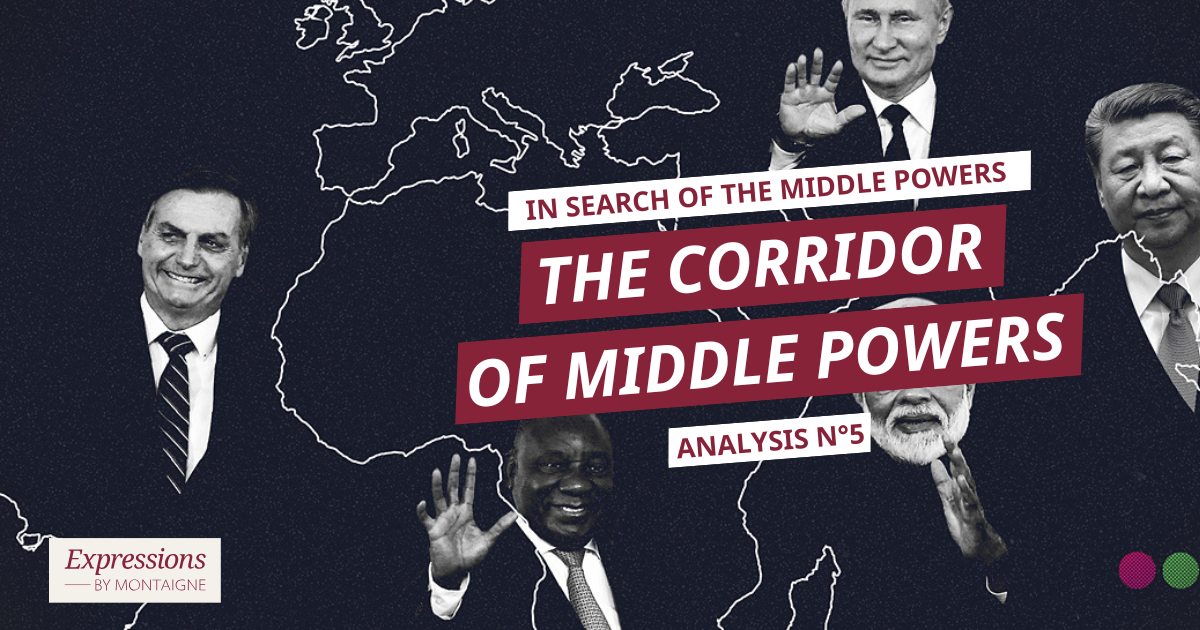
The "secret diary" of a middle power is usually a work of fiction designed to hide a lack of leverage. We are told a comforting fairy tale about these nations: that they are the "moral stabilizers" of the world, the calm adults in the room when the superpowers throw tantrums. It is a lie sold by diplomats to justify their per diems.
Middle powers—think Australia, South Korea, Turkey, or Brazil—are not the world’s bridge-builders. They are its most ruthless opportunists. They don't seek "global stability" out of some altruistic impulse; they seek to maximize their own relevance by playing both sides of the fence until the fence breaks. If you want to understand the next decade of global trade and conflict, stop looking at the G2 and start looking at the cynical maneuvering of the tier-two players who are profiting from the chaos.
The Myth of the Ethical Mediator
The standard view of middle-power diplomacy suggests these nations use their "soft power" to uphold the international rules-based order. This is a fundamental misunderstanding of how power functions. In reality, middle powers only support the "rules" when those rules prevent a superpower from crushing them. The moment the rules become inconvenient, they are discarded.
Take the current obsession with "de-risking" from China. Western middle powers claim they are protecting democratic values. Yet, look at the trade data. While talking a big game about human rights and maritime security, these nations are simultaneously expanding their critical mineral dependencies and export ties where the margins are highest. They aren't mediating; they are hedging.
Hedging is not a virtue. It is a survival strategy that creates massive volatility. By refusing to commit to a single bloc, middle powers create a "bidding war" environment. They flirt with Washington for security guarantees while taking Beijing’s infrastructure checks. This doesn't stabilize the system—it accelerates the decomposition of global trust.
The Middle Power Trap for Investors
I have watched hedge funds and multinational corporations dump billions into "emerging middle powers" under the assumption that these countries are safe havens from superpower friction. This is a catastrophic mistake.
When you invest in a middle power, you aren't buying into a stable neutral zone. You are buying into a high-stakes gambling parlor. Because these nations lack the raw military or economic scale to dictate terms, their entire foreign policy is reactive. One election cycle or one shift in a superpower's trade policy can send a middle power’s economy into a tailspin as they are forced to choose a side they weren't ready to pick.
Middle powers are essentially "beta" versions of superpowers—all the volatility, with none of the insurance. If you are looking for a "safe" harbor in Southeast Asia or Eastern Europe, you are looking for something that doesn't exist. You are better off betting on the volatility itself than betting on the supposed "stability" of a middle-tier player.
Why "Rules-Based Order" is a Marketing Slogan
The term "rules-based order" is the most successful branding campaign of the 21st century. Middle powers love it because it gives them a seat at the table. But let’s be precise: international law has always been an optional suggestion for the powerful and a straitjacket for the weak.
Middle powers occupy the uncomfortable space where they are strong enough to ignore some rules but too weak to write new ones. This creates a specific type of hypocrisy. They will lecture the world on climate change or trade liberalization while maintaining protectionist agricultural policies or digging up every ounce of coal they can find to fuel their industrial base.
They are the ultimate "free riders" of the global system. They benefit from the security umbrella provided by one superpower while feeding off the economic engine of another. This isn't "shrewd diplomacy." It's a parasitic relationship that only works as long as the superpowers don't call the bluff. And the bluff is currently being called.
The Weaponization of Neutrality
We often hear that "neutrality" is the goal for countries like India or Indonesia. They want to be the "Global South" leaders. This is a miscalculation. In a bipolar or tripolar world, neutrality is just another word for "available to the highest bidder."
Imagine a scenario where a middle power controls 70% of the processing capacity for a specific semiconductor component. They claim neutrality to avoid being sanctioned by either the US or China. In practice, they will use that "neutrality" to extract massive concessions from both, effectively holding the global supply chain hostage. This isn't stabilizing the world; it’s an act of economic extortion.
We are seeing this play out in the energy sector. Middle powers in the Gulf aren't trying to bring peace to energy markets; they are managing the decline of fossil fuels by squeezing every cent out of a transitioning world. They aren't mediators; they are liquidators.
The Failure of Regional Blocs
The competitor’s view often champions regional organizations (like ASEAN or the African Union) as the vehicle for middle-power influence. This ignores the reality of internal competition. Middle powers within these blocs hate each other more than they fear the superpowers.
A regional bloc is usually just a collection of middle powers trying to prevent any one of their neighbors from becoming a regional hegemon. The result is total paralysis. They can't agree on a security framework, they can't agree on a common currency, and they certainly can't agree on how to handle the "big two."
If you are waiting for a coalition of middle powers to save the global trade system, you will be waiting forever. They are too busy sabotaging each other's trade deals to provide any real leadership.
The Harsh Truth for Corporate Strategy
If you are running a company and your strategy involves "pivoting to middle powers" to avoid geopolitical risk, you are doing it wrong. You are simply trading one type of risk for another—often one that is harder to quantify.
- The Loyalty Tax: Eventually, you will be forced to choose. If you have your supply chain in a middle power that tries to play both sides, you will get hit by the secondary sanctions of whichever superpower loses the bidding war.
- The Fragility of Influence: Middle powers have "inflated" egos. They think they have more leverage than they do. When the squeeze comes, they will sacrifice foreign corporations first to appease their domestic base and save their own skins.
- The Complexity Penalty: Managing operations in five middle powers is infinitely more expensive and risky than managing them in one superpower, even with the inherent tensions. The "diversification" benefit is an illusion when all those middle powers are tied to the same global credit and energy cycles.
Stop Asking the Wrong Questions
People ask: "How can middle powers help maintain peace?"
The real question is: "How much damage will middle-power opportunism do to the global economy before the superpowers crack down?"
People ask: "Which middle power is the next big thing?"
The real question is: "Which middle power is currently the most over-leveraged on its own geopolitical importance?"
The era of the "quiet, ethical middle power" is over—if it ever existed. We are entering the era of the Geopolitical Mercenary. These are nations that will sell their alignment to the highest bidder, flip on their allies at the first sign of a better deal, and use the "rules-based order" as a shield while they sharpen their knives.
Stop romanticizing the middle. It isn't a place of balance. It is a zone of maximum friction, hidden agendas, and profound instability. If you want to survive the next decade, stop looking for the "secret diary" of these nations and start looking at their invoices. They aren't writing history; they are just checking the price tag.
Forget the idea of a "multipolar" world being safer. A world with twenty middle powers all trying to be the main character is a world of twenty different ways for things to go wrong. The middle isn't the solution; it's the most volatile part of the problem.