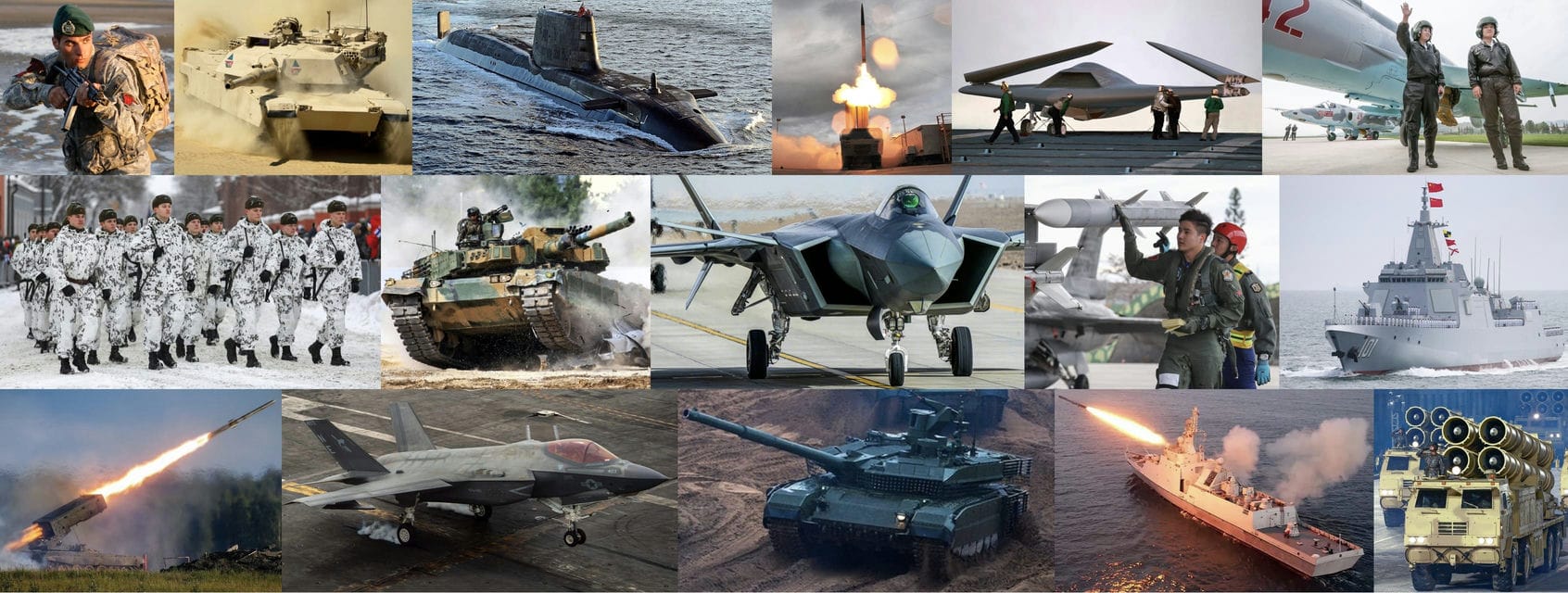
The headlines are screaming that the United States is "running out of missiles" because of the ongoing exchange with Iran and its proxies. Pundits are clutching their pearls over "depleted stockpiles" and "hollowed-out industrial bases." They want you to believe the most powerful military-industrial complex in human history is one shipment away from throwing rocks.
It is a lie. Not because the shelves are overflowing, but because you are measuring the wrong thing.
The panic over the "depleted" US missile inventory is a carefully orchestrated piece of theater designed to satisfy two audiences: defense contractors looking for a blank check and a public that still thinks war is fought like it’s 1944. We aren't running out of weapons. We are witnessing the intentional, high-speed liquidation of an obsolete inventory to make room for a hardware transition that would be politically impossible during peacetime.
The Lazy Math of Attrition
The standard argument, recently echoed by outlets like The Times of India, suggests that because the US is firing SM-3s and SM-6s at a rate exceeding their annual production, the math inevitably leads to zero.
This is amateur hour logic.
It assumes that a military’s strength is a static pool of water rather than a pressurized flow. When you hear that "stockpiles are low," what the Pentagon is actually saying is that the current generation of interceptors—expensive, aging, and maintenance-heavy—is being used for exactly what it was built for.
I have spent years watching defense budgets get bloated by "sustainment costs." It costs a fortune just to keep a missile sitting in a tube. By firing these interceptors against Iranian drones and ballistic missiles, the US isn't "losing" an asset. It is offloading a liability while gathering the most comprehensive real-world kinetic data set in the history of electronic warfare.
The Interceptor Trap
The media obsesses over the price tag. "A $2 million missile to shoot down a $20,000 drone."
This is the "People Also Ask" equivalent of complaining about the price of a fire extinguisher while your house is burning down. The cost of the interceptor is irrelevant. The only metric that matters is the protected value. If a $2 million SM-2 stops a drone from hitting a $2 billion guided-missile destroyer or a carrier deck housing 80 aircraft, the ROI is astronomical.
But the contrarian truth goes deeper: the US wants to be "out" of the current inventory.
We are at the precipice of a shift toward Directed Energy Weapons (DEW) and hyper-velocity projectiles. Transitioning the Navy to laser-based defense or microwave systems is a bureaucratic nightmare when you have 5,000 legacy missiles sitting in warehouses that "need" to be used. The "shortage" is the perfect catalyst to bypass Congressional gridlock and force the transition to the next generation of warfare.
The Production Line Delusion
Critics point to the fact that Raytheon or Lockheed Martin can’t simply "flip a switch" to double production. They cite lead times for rocket motors and semiconductors as proof of American weakness.
This ignores how American industry actually scales. The US does not maintain "warm" production lines for maximum capacity during peace. That would be an economic disaster. Instead, we maintain a "surge" architecture.
When the press reports that it takes two years to build a missile, they are looking at current contracts. They aren't looking at the Defense Production Act or the "black budget" allocations that allow for modular manufacturing. I’ve seen how "impossible" bottlenecks vanish the moment the profit margin hits a certain threshold. The "shortage" is a pricing signal. It’s a way for the industry to demand—and receive—the capital needed to automate lines that were previously manual.
Why the Iran "War" is a Beta Test
Let’s be brutally honest about what is happening in the Red Sea and across the Levant.
The US is using Iran’s proxies as a free, live-fire testing range. For decades, our missile defense assumptions were based on simulations. Now, we are seeing exactly how a $20,000 drone swarm behaves against an Aegis combat system.
Every time a missile is fired, the telemetry fed back to the engineers at Palantir, Anduril, and the major primes is worth more than the physical missile itself. We are trading physical inventory—which has a shelf life—for permanent, algorithmic superiority.
If you think China is watching this and thinking, "Oh look, the US is running out of missiles," you are delusional. They are watching and thinking, "The US just updated their targeting software for the thousandth time this month based on real-world intercepts."
The Stockpile Accounting Trick
There is a concept in military logistics called "War Reserve Stock." This is the number everyone quotes. What they don't quote is the "Training and Operational" inventory or the "Pre-positioned" stocks that aren't on the official public balance sheet.
When a report says the US is "depleted," it usually refers to the "Active Inventory" allocated for a specific theater. It does not account for the thousands of units in various states of refurbishment or the components sitting in Tier 2 and Tier 3 supplier warehouses.
Imagine a scenario where a grocery store says they are "out of milk" because the shelf is empty, while there are ten pallets sitting in the cold room out back. The store tells the customers they are out because they want to justify raising the price of the next shipment. That is the Pentagon’s current PR strategy.
The Danger of the "Just-in-Time" Military
There is a legitimate risk here, but it isn't the one the media is talking about. The danger isn't that we will have zero missiles. The danger is that we have become too efficient at "Just-in-Time" warfare.
The military has adopted the Silicon Valley model of "shipping the MVP" (Minimum Viable Product). We deploy just enough to win the current skirmish, keeping the rest of the capital in R&D. This works against a regional power like Iran. It is a catastrophic gamble against a peer competitor like China in the Taiwan Strait.
In a high-intensity conflict, you don't need "better" data; you need "more" mass. The contrarian take isn't that we are fine; it’s that we are fine right now, but we are addicted to the high of technological superiority at the expense of raw, brutal volume.
Stop Asking if the Shelves are Empty
The question "Is the US running out of weapons?" is a fundamental misunderstanding of 21st-century power.
Wealthy nations don't run out of weapons. They run out of the political will to fund the next iteration. By framing the current situation as a "shortage," the defense establishment is ensuring that the will to fund the next $500 billion cycle remains ironclad.
We aren't seeing the end of the American arsenal. We are seeing the clearing of the deck.
The missiles being fired today are the ghosts of the Cold War. Their replacement isn't another missile—it's a paradigm of autonomous, cheap, and endless attrition that the current "stockpile" metrics can't even measure.
The inventory isn't disappearing. It's evolving. If you can't see that, you're the one who’s running out of ammunition.