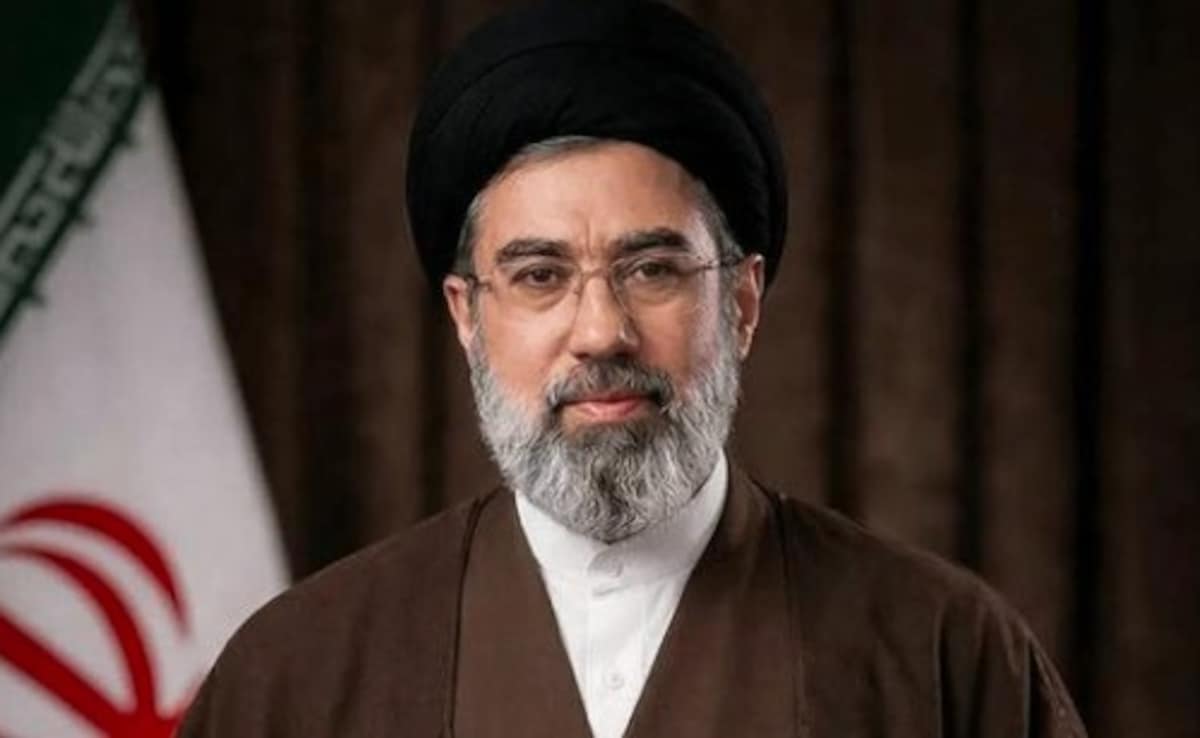
Stop clutching your pearls over the "revelation" that an UK-Israeli firm reportedly financed London properties for Mojtaba Khamenei. If you are shocked by this, you haven’t been paying attention to how global capital actually moves. The headlines are screaming about hypocrisy and "shadowy deals," but they are missing the mechanical reality of high-stakes international finance. This isn't a story about a lapse in ethics. It is a story about the absolute indifference of the global banking apparatus and the fundamental failure of the Western sanctions regime.
The Myth of the Iron-Clad Sanction
Mainstream reporting treats sanctions like a physical wall. They aren't. They are a sieve. The narrative suggests that because Iran is under heavy restrictions, its elite should be financially paralyzed. That is a fantasy sold to taxpayers to make them feel like foreign policy has "teeth."
In reality, the sophisticated movement of money doesn't care about the passport of the ultimate beneficial owner (UBO). It cares about the structure of the Special Purpose Vehicle (SPV) holding the asset. I have watched firms spend millions on compliance only to realize they were three shell companies deep into a relationship with a sanctioned entity. It isn't always incompetence; it’s the architecture of the system.
When a UK-Israeli firm provides a loan, they aren't looking at a photo of the Supreme Leader’s son. They are looking at a balance sheet provided by a nominee director in a jurisdiction like the British Virgin Islands or Cyprus. By the time that money hits a London luxury real estate deal, it has been "sanitized" by at least four layers of legal fiction.
Why the "Hypocrisy" Angle is Lazy Journalism
The media loves the irony of an anti-Western Iranian figurehead owning property in the heart of "The Great Satan's" closest ally. They call it hypocrisy. I call it a hedge.
If you are a member of a revolutionary guard or a high-ranking cleric’s family, you know better than anyone that your domestic economy is a tinderbox. You don't keep your wealth in rials. You keep it in the most stable, liquid asset on the planet: London real estate.
The "hypocrisy" isn't a bug; it's the entire point. The very people shouting "Death to England" in the streets of Tehran are the ones most desperate for the protection of English Common Law. They want the title deeds to their Knightsbridge apartments to be enforceable in a court that isn't subject to the whims of a revolutionary tribunal.
The Israeli Connection: Business is A-Political
The most "scandalous" part of this report is the involvement of an Israeli-linked firm. The public expects a blood feud; the market expects a return on investment.
Money is the ultimate pragmatist. On the trading floor, there are no flags. There is only risk-adjusted yield. If an Israeli-backed lender sees a high-value London asset as collateral, they aren't checking the political lineage of the borrower if the paperwork is "clean." To assume that every Israeli firm acts as an arm of Mossad is as intellectually lazy as assuming every Iranian businessman is a direct proxy for the IRGC.
The reality is far more cynical. These firms operate in a gray zone where the origin of funds is often obscured by design. If the interest rate is right and the collateral is a £10 million townhouse, the loan gets signed.
The Illusion of Due Diligence
Most people believe "Know Your Customer" (KYC) rules are designed to catch bad actors. They aren't. They are designed to provide "reasonable cover" for the institution.
- The Paper Trail: As long as the documents provided by the borrower meet the regulatory checklist, the lender is legally protected.
- The Nominee Strategy: Professional money launderers—or even just high-net-worth individuals seeking privacy—use law firms to act as fronts.
- The Third-Party Audit: Lenders rely on external reports. If the auditor doesn't flag the Khamenei connection, the lender has "plausible deniability."
I’ve sat in boardrooms where "red flags" were treated as hurdles to jump over rather than reasons to stop. If you can explain away a suspicious source of wealth with a well-worded letter from a Swiss attorney, the deal moves forward.
London: The World's Laundromat
We need to stop pretending London is a victim of "dirty money." London is the architect of the environment that welcomes it. The city’s economy is fundamentally reliant on the inflow of foreign capital, regardless of its scent.
From the "Enablers" (the lawyers, real estate agents, and wealth managers) to the tax system, the UK has spent decades positioning itself as the premier destination for the world’s elite to park their "gray" cash. When a report like this breaks, the government acts surprised. They shouldn't be. They built the pipes.
The "London Homes" in question are not just residences. They are safety deposit boxes in the sky. They represent the failure of the UK’s Unexplained Wealth Orders (UWOs). These legal tools were supposed to be the "silver bullet" against kleptocrats. Instead, they have been bogged down in high-priced legal challenges that the government rarely has the stomach to fight.
The Hard Truth About "Targeted" Sanctions
People ask: "How can this happen if he is on a sanctions list?"
The answer is simple: Sanctions are only as good as the enforcement at the point of sale. If a lender is based in a jurisdiction with lax oversight, or if the loan is structured as a private credit arrangement through a series of offshore trusts, the "system" never sees the name Mojtaba Khamenei.
Sanctions often hit the general population of a country—making it impossible for a student to pay tuition or a hospital to buy medicine—while the elite continue to use private banking corridors that remain wide open. This isn't an accident. It is a feature of a global financial system that prioritizes liquidity over morality.
What Actually Works (And Why We Don't Do It)
If Western governments actually wanted to stop this, they wouldn't just pass more sanctions. They would:
- End Corporate Anonymity: Force the disclosure of every UBO for every piece of real estate in the UK, with no exceptions for trusts or offshore entities.
- Criminalize the Enablers: Hold the law firms and the lenders personally and criminally liable for failing to identify sanctioned proxies.
- Seize First, Ask Later: Use the same aggressive forfeiture tactics on foreign elites that they use on small-time drug dealers.
We don't do these things because they would cause a systemic collapse of the London property market. The collateral damage to the "legitimate" ultra-wealthy would be too high for the political class to bear.
The Real Risk You're Missing
The danger here isn't just that a revolutionary figure owns a nice house in London. The danger is the distortion of the market.
When "political money" enters a real estate market, it doesn't care about price. It cares about safety. This drives up prices for everyone else, turning cities into hollowed-out museums for the world's most controversial figures.
The Khamenei story is a symptom. The disease is a financial system that has become so complex that it is now functionally unregulatable. Every time a new "leak" or "report" comes out, we act like we’ve found a needle in a haystack. We haven't. We've found a piece of hay. The entire stack is composed of these arrangements.
Stop Asking the Wrong Questions
Don't ask "How did he get a loan?"
Ask: "Who benefited from giving it to him?"
Don't ask "Is this legal?"
Ask: "Why is the law designed to make this possible?"
The "scandal" isn't that Mojtaba Khamenei reportedly has a portfolio in London. The scandal is that you are expected to believe this is an isolated incident. This is the standard operating procedure for every regime that publicly hates the West while privately banking with it.
The next time you see a headline about "Shadowy Iranian Money," remember: the money isn't shadowy. It's sitting right there in plain sight, registered to a shell company, managed by a London lawyer, and protected by the very laws you thought were designed to stop it.
Go check the land registry for any major luxury development in London. You won't find the names of dictators. You'll find a list of companies based in Tortola. That is where the truth hides.
Audit the enablers or stop complaining about the results.