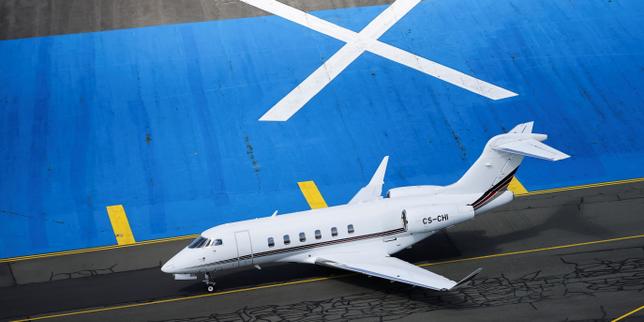
The outrage machine is currently idling on the tarmac, fueled by a lazy narrative that business aviation is "profiteering" off the chaos in the Middle East. You’ve seen the headlines. They paint a picture of greedy brokers squeezing desperate billionaires while the world burns.
It’s a neat, comforting story for people who like to view global logistics through the lens of a Dickens novel. It’s also factually illiterate.
When a region slides into kinetic warfare, the "price" of a flight isn't a reflection of greed. It is a mathematical expression of risk, insurance premiums, and the sudden, violent collapse of supply. If you think $100,000 for a Gulfstream seat out of a war zone is a scam, you don’t understand how insurance works, and you certainly don’t understand how the world actually moves when the sirens start.
The Myth of the Fixed Price in a Variable World
Most people assume a flight from Beirut to Larnaca should cost roughly the same on a Tuesday during peacetime as it does on a Wednesday when rockets are crossing the flight path. This is the first delusion.
In a stable environment, the cost of a private charter is a calculation of fuel, crew, landing fees, and a predictable margin. When the "War Risk" clauses in insurance contracts are triggered, that calculation is thrown into the shredder.
I have seen hull insurance premiums spike 500% in forty-eight hours. Underwriters don't care about your "moral" objections to high ticket prices; they care about the statistical probability of a $60 million airframe being vaporized by a surface-to-air missile.
When an operator sends a jet into a high-risk zone, they aren't just paying for Jet A-1 fuel. They are paying for:
- War Risk Insurance: Specialized coverage that can cost tens of thousands of dollars per single entry.
- Crew Hazard Pay: You cannot force a pilot to fly into a combat zone. You have to make it worth their potential demise.
- Positioning Costs: In a crisis, planes aren't just sitting where you need them. They are often flying empty for five hours just to pick up a passenger for a forty-minute jump.
The critic calls this "price gouging." The insider calls it "covering the spread on a total loss."
Why Commercial Airlines Fail When Private Jets Succeed
The standard retort is: "Why can't they just take a commercial flight?"
Because commercial airlines are built on the "hub and spoke" model, which is the first thing to break in a crisis. A commercial carrier needs a functioning airport, a full ground crew, TSA-equivalent security, and a predictable schedule. When a major carrier cancels its flights to Tel Aviv or Beirut, it’s not because they’re scared; it’s because their risk management software—and their board of directors—won’t allow them to operate in an environment where the "Notice to Air Missions" (NOTAMs) change every twenty minutes.
Private aviation is the scalpels to the commercial airline’s sledgehammer.
Business aviation operates on "ad hoc" permits. A broker with the right connections can secure a landing slot in a window of time that didn't exist an hour ago. They are utilizing the "gray space" of logistics. This isn't a luxury; it's a critical infrastructure of last resort.
If we "fixed" the prices of these flights to keep them "fair," the flights would simply stop existing. No operator is going to risk a $75 million Global 7500 for a $15,000 "fair" charter fee. The high price is the only thing keeping the supply side of the equation from fleeing to the safety of the Swiss Alps.
The Hidden Cost of Safety
Let's talk about the "rich" being evacuated. The media loves to focus on the CEO with the gold watch. They ignore the reality of who is actually on these planes.
In every conflict I’ve witnessed, these "overpriced" private jets are frequently chartered by:
- Multinational Corporations: Moving their mid-level engineers and their families out of harm's way because their duty of care requires it.
- NGOs and Diplomats: Who need to move when the last commercial flight has already left.
- High-Value Assets: People whose presence in a war zone makes them a liability or a target for kidnapping.
The "price" is high because the service is bespoke. You are paying for a security detail, a vetted crew, and a logistics team that is working 20-hour shifts to navigate the shifting bureaucracy of closed airspaces and denied overflight permits.
The Logic of the "Gouge"
People ask: "Is it ethical to charge $20,000 for a seat that normally costs $2,000?"
Wrong question. The right question is: "What is the value of a seat when the alternative is zero seats?"
In economics, we call this the Value of Service Pricing. When the demand is infinite and the supply is near-zero due to physical danger, the price must rise to allocate that resource. If it doesn't, you get a black market that is far more dangerous and far less regulated than the current charter system.
The "price gouging" narrative is a distraction from the real failure: the inability of governments to maintain safe corridors for their citizens. When the state fails, the market steps in. The market is expensive because the market is efficient, and efficiency in a war zone requires a massive amount of capital and risk-taking.
Stop Moralizing the Spreadsheet
I’ve sat in rooms where brokers are frantically calling every tail number in the Mediterranean to find a pilot willing to fly into a city under bombardment. It is a grueling, high-stakes game of Tetris played with human lives and multi-million dollar assets.
The people complaining about the "cost" are usually the ones safely behind a keyboard in London or New York. They aren't the ones coordinating with ground transport to get a family through a checkpoint to a private terminal before the airspace closes at sunset.
If you want cheaper evacuations, figure out how to lower the risk. You can't. So stop complaining that the people who do manage the risk are charging for it.
The high price of private aviation in a war zone isn't a sign of a broken system. It’s a sign that the system is working exactly as it should—by providing a way out when every other door has been locked.
Pay the invoice. Get on the plane. Shut up.