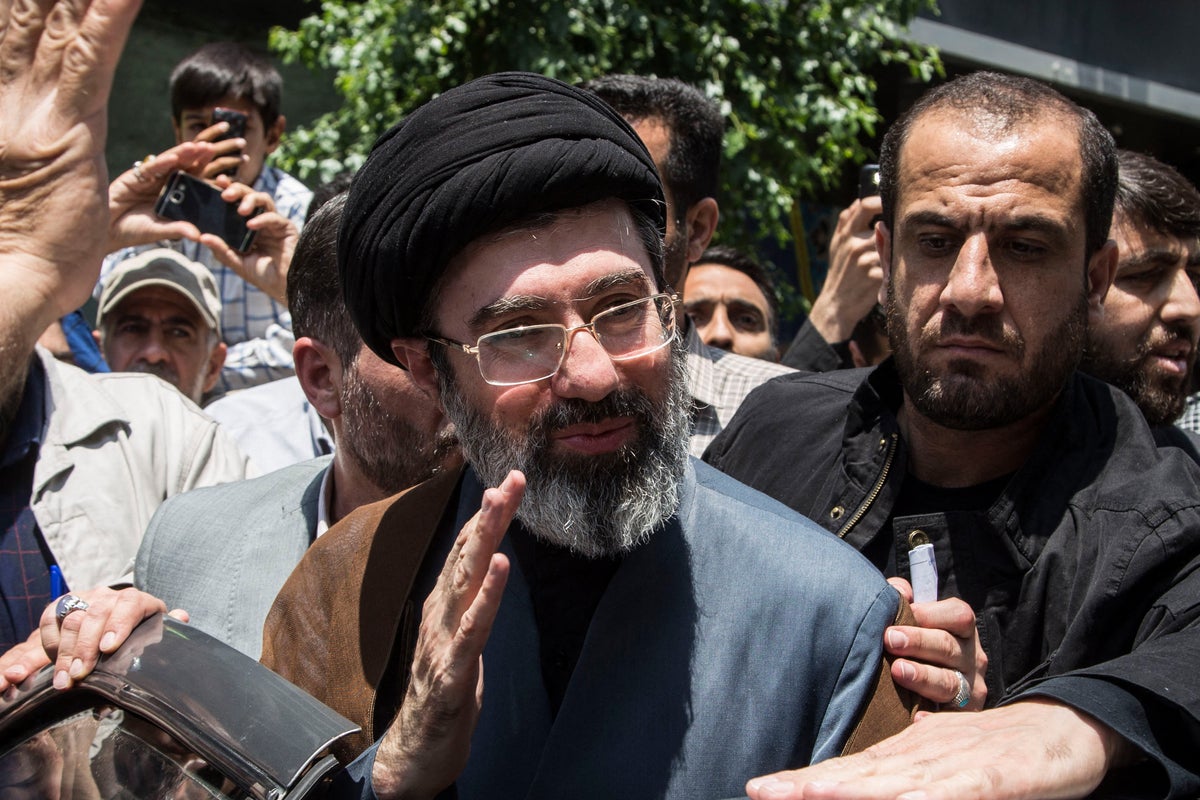
Western analysts are obsessed with the "Crown Prince" narrative. They look at Mojtaba Khamenei and see a dynastic transition, a neat hand-off from father to son that mirrors the Pahlavi monarchy the 1979 Revolution was meant to bury. This interpretation is not just lazy; it is dangerous. It ignores the fact that the religious establishment in Qom is currently being hollowed out, replaced by a security apparatus that no longer needs the approval of octogenarian clerics to function.
The rumors of Mojtaba’s "selection" by the Assembly of Experts are a smokescreen. The real story isn't that a son is taking his father's seat. The story is that the Islamic Revolutionary Guard Corps (IRGC) has finally completed its decades-long hostile takeover of the Iranian state. Mojtaba isn't a king; he is a placeholder for a military junta.
The Theological Dead End
The "lazy consensus" hinges on the idea that the Assembly of Experts—an 88-member body of Islamic scholars—is making a deliberate choice based on religious merit. This is a fantasy. For decades, the requirement for the Supreme Leader to be a Marja (a grand ayatollah and object of emulation) was the bedrock of the regime's legitimacy. When Ali Khamenei took power in 1989, they had to downgrade the constitutional requirements because he didn't have the clerical rank.
With Mojtaba, the religious credentials are even thinner. He is a mid-ranking cleric who spent more time in the Beit Rahbari (the Leader’s Office) managing intelligence networks than he did mastering jurisprudence in the seminaries of Qom. If the Assembly picks him, they aren't choosing a scholar; they are signing a surrender document. I have watched this play out in corporate restructuring: when the board of directors loses its teeth, they don't pick the most qualified CEO; they pick the one the majority shareholders—in this case, the IRGC—demand.
The IRGC’s "Insurance Policy"
Why Mojtaba? It isn't about bloodlines. It is about the "deep state" needing a front man who is already integrated into their communication channels.
- Intelligence Oversight: Mojtaba has effectively run his father’s parallel intelligence apparatus for twenty years. He knows where the bodies are buried because he helped dig the graves.
- Economic Control: Through the Setad (Execution of Imam Khomeini's Order) and other Bonyads, the Leader’s Office controls a multi-billion dollar empire. The IRGC needs a leader who won't audit the books.
- Wartime Continuity: In the wake of the March 2026 strikes that decapitated the upper echelons of the regime, the IRGC cannot afford a transition period. They need a name that carries immediate, albeit superficial, legitimacy with the hardline base.
Imagine a scenario where a "reformer" or even a traditionalist cleric like Hassan Khomeini took the reigns. The IRGC’s economic interests would be under immediate threat. By pushing Mojtaba, the military ensures that the status quo—and their grip on 30% of the Iranian economy—remains untouched.
The Dynasty Trap
The most frequent counter-argument is that Iranians hate hereditary rule. This is true. The "Aga-Zadeh" (children of the elite) are loathed in the streets of Tehran. But the IRGC doesn't care about public opinion; they care about institutional survival.
The competitor's article suggests Mojtaba is "expected" to take over, as if it’s a natural evolution. It isn't. It is a desperate pivot. The regime is betting that the fear of total collapse during a war with Israel and the U.S. will outweigh the public's distaste for a "clerical monarchy."
The Brutal Reality of the Interim Council
While the world watches the Assembly of Experts, the real power sits with the Interim Leadership Council: Masoud Pezeshkian, Gholam-Hossein Mohseni-Ejei, and Alireza Arafi.
- Pezeshkian: The "moderate" face used to keep the bureaucracy running.
- Mohseni-Ejei: The judicial hammer who has spent decades silencing dissent.
- Arafi: The clerical link to the seminaries.
This council is not a bridge to a new leader; it is a filter. They are vetting Mojtaba not for his holiness, but for his loyalty to the security state. If Mojtaba is announced, it will be because these three—and the generals behind them—concluded he is the most pliable option.
Why You’re Asking the Wrong Question
The question isn't "Who is Iran's new Supreme Leader?" The question is "Does the title of Supreme Leader even matter anymore?"
We are witnessing the final transition of Iran from a theocracy to a praetorian state. In a praetorian state, the "Leader" is merely the civilian face of a military command. Whether it is Mojtaba Khamenei or an ultra-hardliner like Mohammad Mehdi Mirbagheri, the outcome is the same: the clerics are now the junior partners.
Stop looking for a change in policy. Stop waiting for a "moderate" shift. This succession is an exercise in hardening the shell. The IRGC has decided that the only way to survive the current rain of fire is to eliminate the unpredictability of a true clerical election.
The "son of Khamenei" headline is a distraction. The reality is the rise of the Iranian Junta.
Would you like me to analyze the specific IRGC factions that are currently vying for control over the interim council?