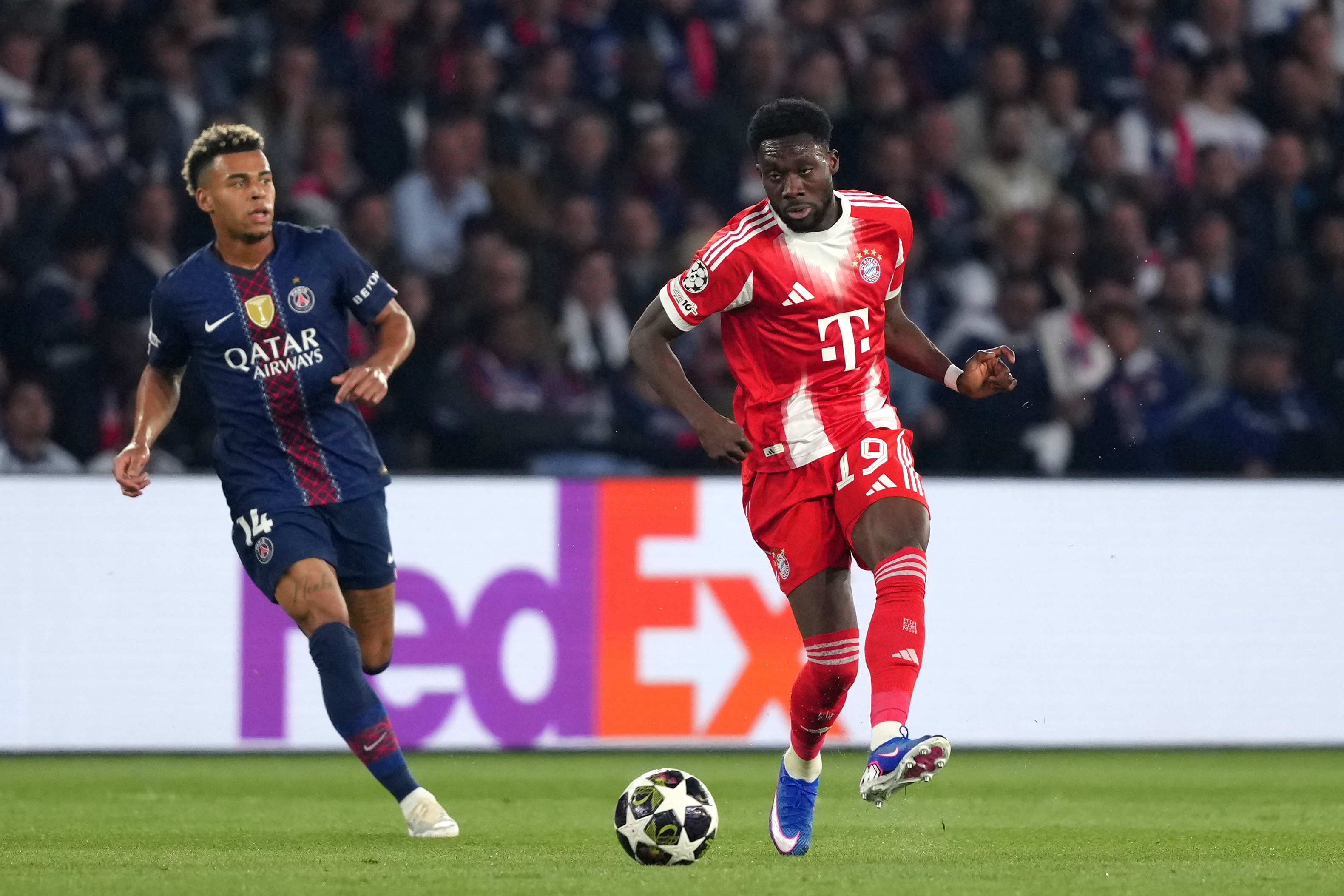
FIFPRO is taking a victory lap, but they’re running in the wrong direction.
The headlines are predictable. They call it a "landmark" win. They say the European bodies have finally admitted the football calendar is "broken." They paint a picture of exhausted athletes being marched toward an early grave by greedy executives at FIFA and UEFA. It’s a convenient narrative. It’s also largely a fantasy designed to protect the status quo of the elite while ignoring the economic engine that actually pays the bills.
The reality is far more cynical. This legal posturing isn’t about player welfare. It’s about a power struggle over who gets to gatekeep the most valuable resource in sports: time. By successfully lobbying to reduce the number of matches, FIFPRO and the domestic leagues aren't saving players; they are stifling the growth of the global game and ensuring that the financial gap between the top 1% and everyone else becomes an unbridgeable chasm.
The Welfare Fallacy
Let’s dismantle the primary argument immediately: that players are "playing too much."
If you look at the raw data, the average elite player isn't seeing a massive spike in total minutes compared to the legends of the 1980s or 90s. What has changed is the intensity and the travel. But modern sports science has outpaced that intensity. We are talking about athletes who have access to cryotherapy, hyperbaric chambers, personalized nutritionists, and GPS tracking that flags a potential hamstring tear before the player even feels a twinge.
When FIFPRO complains about the calendar, they conveniently forget that the biggest clubs—the ones complaining the loudest—have the largest squads in history. If a player is "overworked," that is a failure of coaching and squad management, not a failure of the international match calendar. Managers like Pep Guardiola or Jürgen Klopp have consistently decried the schedule while simultaneously refusing to rotate their stars in matches they deem "too important."
You cannot demand a smaller calendar and then refuse to use the 25-man squad you’ve spent €500 million to assemble. That isn't a welfare crisis. It’s a management ego trip.
The Protectionist Racket
Why are the domestic leagues—the Premier League, La Liga, Serie A—so eager to support FIFPRO in this "landmark" fight? It isn’t out of the goodness of their hearts.
It’s protectionism.
The domestic leagues see FIFA’s expanded Club World Cup and UEFA’s revamped Champions League as direct threats to their domestic broadcast revenue. They want to cap the total number of games because every minute a player spends on a pitch for FIFA is a minute they aren't spending on a pitch for a domestic league.
By framing this as a "player health" issue, the leagues have found the perfect human shield. It’s much harder to argue against "injured players" than it is to argue against "Premier League CEOs wanting to protect their £6 billion TV deal." This isn't a revolution; it's a turf war where the foot soldiers are being told they're being rescued when they're actually being used as leverage.
The High Cost of Less Football
Let’s perform a thought experiment. Imagine FIFPRO gets exactly what it wants. The calendar is slashed by 20%. The Club World Cup is scrapped. International breaks are shortened.
What happens next?
- Revenue Contraction: Less football equals less broadcast inventory. Less inventory equals lower rights fees.
- Wage Stagnation: The astronomical salaries currently paid to the top 0.1% of players are predicated on a high-volume, high-revenue global model. If the revenue drops, the wages follow.
- The "Closed Shop" Effect: With fewer matches, big clubs will need smaller squads. The fringe players—the young prospects and the late bloomers—will lose the very minutes they need to develop. The elite will stay elite, and the ladder will be pulled up behind them.
The irony is that the players FIFPRO claims to represent will be the ones who suffer most financially. The top stars will always get paid. But the rank-and-file professional, the one playing in the mid-table of the Bundesliga or Ligue 1, will see their earning potential decimated as the total value of the footballing economy shrinks to accommodate a "rest period" they didn't actually need.
The Global South Disconnect
The most egregious part of the FIFPRO "victory" is its Eurocentric bias.
For decades, European clubs have hoarded the world's best talent and the world's most lucrative sponsors. FIFA’s attempt to expand the Club World Cup was, in theory, an attempt to globalize the wealth. It was a chance for clubs from South America, Africa, and Asia to actually compete on a stage that generates significant revenue.
By blocking the expansion of the calendar, European bodies are effectively saying: "We have enough money, so nobody else is allowed to make any."
It is a colonialist approach to sports administration. They are disguising their desire to maintain a European monopoly as a concern for player hamstrings. If you care about the global growth of football, you should be demanding more high-level international club competition, not less. We should be finding ways to make the schedule more efficient, not just deleting matches because the G-14 clubs find them inconvenient.
The Myth of Quality over Quantity
The "lazy consensus" says that fewer games will lead to higher quality.
This is a fallacy. High-quality football is a product of technical skill, tactical innovation, and stakes. A bored, rested superstar in a low-stakes domestic match is infinitely less entertaining than a "tired" player in a high-stakes knockout tournament.
Fans don’t want less football. They want better organized football. The current system is messy, yes. The overlap between confederations is a nightmare. But the solution isn't to burn the house down. It’s to fix the plumbing.
We should be looking at:
- Mandatory Squad Rotation: Implementing rules that require a certain percentage of "fringe" players to start in domestic cup competitions.
- Synchronized Seasons: Forcing all confederations to align their calendars to reduce transcontinental travel.
- Specialized Recovery Windows: Instead of scattered breaks, create two distinct, high-intensity competition blocks followed by genuine off-seasons.
Instead, we get lawsuits. We get "landmark" rulings that do nothing but consolidate power in the hands of the European leagues who already have too much of it.
The Battle Scars of Reality
I’ve spent years in the rooms where these deals happen. I’ve seen the balance sheets. The clubs crying about player fatigue are the same ones flying their teams to Australia or the US for a "post-season friendly" the moment the league ends.
If player health were the priority, those lucrative pre-season and post-season tours would be the first thing on the chopping block. But they aren't. Why? Because the clubs keep that money for themselves. They only care about "the calendar" when the money goes to FIFA or UEFA instead of their own bank accounts.
Don't be fooled by the rhetoric. This isn't about the players. It’s about the purse.
Stop asking if the players are tired. Start asking who benefits when the game gets smaller. The answer isn't the fans, and it certainly isn't the players. It’s the gatekeepers of the status quo who are terrified that a truly global, expanded game will leave them behind.
The "landmark" win is a trap. If we keep following this path, we won't get better football. We’ll just get more exclusive, more expensive, and more stagnant football.
The players don't need a union that fights for them to work less. They need a system that ensures the value they create is distributed fairly across the entire globe, not just hoarded in London, Madrid, and Paris.
Stop complaining about the clock and start looking at the map.