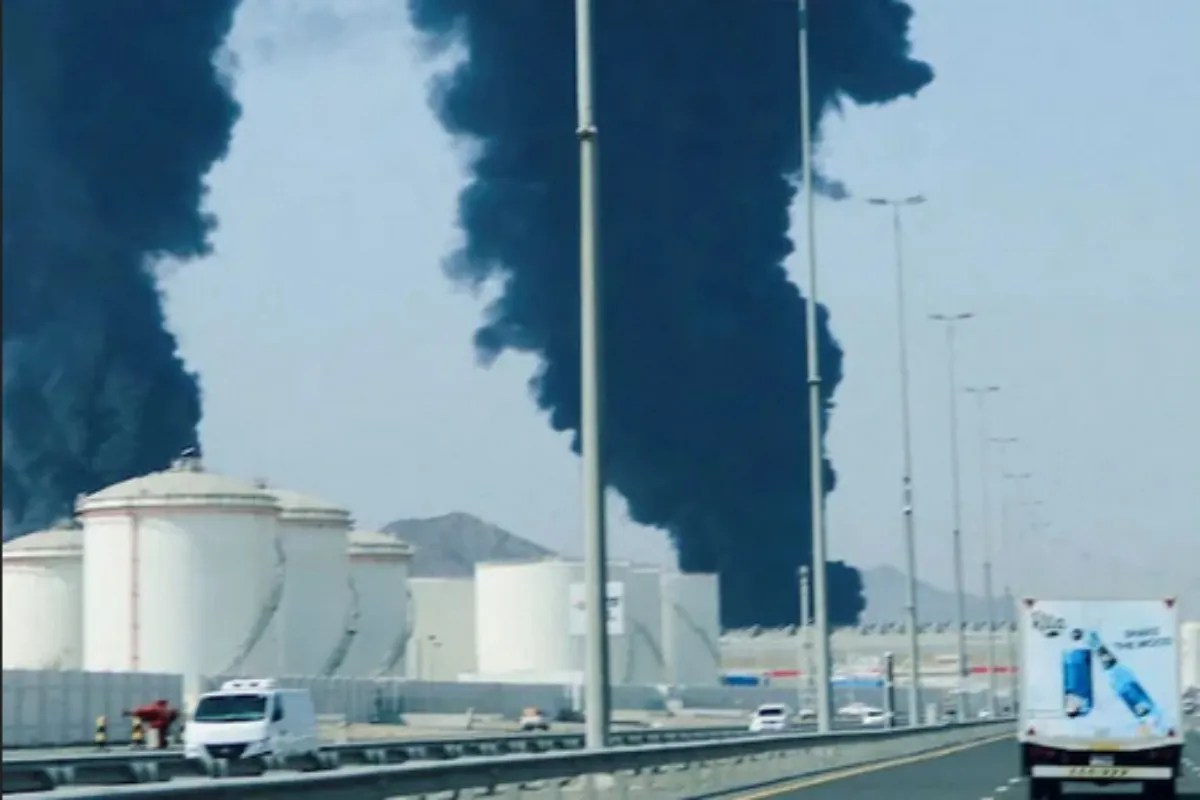
The standard diplomatic playbook is broken. When news broke regarding threats to the United Arab Emirates’ nuclear infrastructure, the response from global capitals followed a predictable, mind-numbing script. New Delhi quickly issued its standard template: expressions of deep concern, followed by a polite plea for dialogue and diplomacy to maintain regional stability.
This boilerplate response misses the point entirely. Expanding on this idea, you can find more in: The Price of a Voice in Evin Prison.
Pleading for "dialogue" when critical infrastructure faces kinetic or cyber threats is not statecraft. It is an evasion of reality. The conventional wisdom suggests that public neutrality and soft-spoken appeals protect a nation’s energy investments and diaspora links. The reality is the exact opposite. In a multipolar world where energy grids are weaponized, passive diplomacy signals vulnerability, invites miscalculation, and fails to protect the vital interests it claims to defend.
The Illusion of the Neutral Bystander
Geopolitical commentators love to praise India's strategic autonomy as a masterclass in balancing rival factions. But there is a sharp dividing line between strategic autonomy and strategic inertia. Observers at NPR have also weighed in on this trend.
When a nuclear facility like the Barakah power plant faces security anxieties, it is not just a localized real estate problem. The Barakah facility supplies roughly a quarter of the UAE’s electricity. Hundreds of thousands of Indian expatriates live and work within the immediate economic ecosystem powered by that grid. Billions of dollars in bilateral trade, remittance flows, and joint energy ventures rely on the absolute inviolability of that airspace and infrastructure.
Issuing a generic press release urging "both sides" to talk does nothing to secure the physical reality on the ground.
- It does not deter non-state actors using cheap, asymmetric drone technology.
- It does not counter sophisticated cyber subversion targeting industrial control systems.
- It does not reassure global energy markets that trade corridors remain resilient.
I have spent years analyzing regional security architectures, watching bureaucrats draft statements designed specifically to say nothing. This risk-averse approach assumes that taking a hard stand creates enemies. What they fail to realize is that refusing to draw a hard line makes you irrelevant to your allies.
The Hard Math of Nuclear Security
Let's dismantle the premise that diplomacy alone solves infrastructure vulnerability. Nuclear facilities are hardened targets, built to withstand massive physical impacts. The real vulnerability lies in the surrounding grid, the cooling systems, and the digital supply chains.
Consider the mechanics of a modern infrastructure threat. An adversary rarely attempts a direct, catastrophic breach of a containment dome. Instead, they target the ancillary systems.
Imagine a scenario where a localized drone swarm disables the external power transmission lines of a functioning nuclear plant. The reactors immediately trip and switch to emergency diesel generators. If those generators or their fuel supplies are compromised by a secondary cyberattack, the facility faces a station blackout.
[External Transmission Line Failure]
               │
               ▼
   [Reactor Auto-Trip Activated]
               │
               ▼
[Emergency Diesel Generators Engage] ──(Cyberattack on Fuel Valves)──► [Station Blackout]
This is not science fiction; it is standard modern asymmetric doctrine. Do you honestly think the actors engineered to execute such a precise, multi-layered disruption care about a press release calling for "peaceful negotiations"?
Relying on old-school diplomatic engagement to handle high-tech, asymmetric threats is like bringing a knife to a drone fight. The International Atomic Energy Agency (IAEA) establishes strict guidelines for physical protection, but the enforcement of those perimeters requires hard power and explicit, ironclad deterrence frameworks.
Why the "De-escalation" Narrative is Flawed
The public constantly asks: Shouldn't nations always advocate for de-escalation to prevent wider conflict?
The brutal truth is that unconditional advocacy for de-escalation frequently rewards the aggressor. When a dominant state or a state-sponsored proxy threatens a critical energy node, they are practicing gray-zone warfare. They push the boundaries just below the threshold of open conflict, testing the waters to see what the international community will tolerate.
If the response from major regional powers is a soft call for dialogue, the aggressor learns that their actions carry zero geopolitical cost. They achieve their goal of projecting power and causing economic jitters without facing any tangible pushback.
True stability is achieved through predictable deterrence, not predictable appeasement.
The Cost of India's Caution
By refusing to name actors or explicitly commit to the collective defense of shared infrastructure, New Delhi risks undermining its own ambitions as a net security provider in the Indian Ocean and Gulf regions.
| Current Passive Approach | Proposed Deterrence Framework |
|---|---|
| Vague statements on "all parties" | Clear red lines regarding critical infrastructure |
| Reliance on host-nation defense | Active intelligence sharing and joint counter-drone deployment |
| Prioritizing short-term diplomatic politeness | Building long-term, credible security architecture |
The downside to a more assertive stance is obvious: it forces a nation out of its comfort zone and into the crosshairs of regional disputes. It requires spending political capital. But the downside of caution is far worse—becoming a spectator while the energy security of your primary economic partners is systematically eroded.
Redefining Regional Security Partnerships
If you want to protect your interests in the Gulf, you have to stop acting like an observer and start acting like a stakeholder. The UAE has rapidly modernized its economy, moving into advanced technological spheres and nuclear energy. Security partnerships must modernize at the same pace.
This means moving past cultural exchange programs and symbolic naval port visits.
Real security looks like integrated air defense coordination. It looks like shared cyber-threat telemetry to protect industrial control networks from state-sponsored malware. It means establishing a clear, unambiguous doctrine that states an attack on mutual critical infrastructure will result in immediate, asymmetric economic and strategic consequences for the perpetrator.
Stop asking how diplomacy can fix a security breach after it happens. Start building the architecture that prevents the breach from ever being considered an option. The era of comfortable neutrality is over, and the sooner the foreign policy establishment realizes it, the safer our economic future will be.