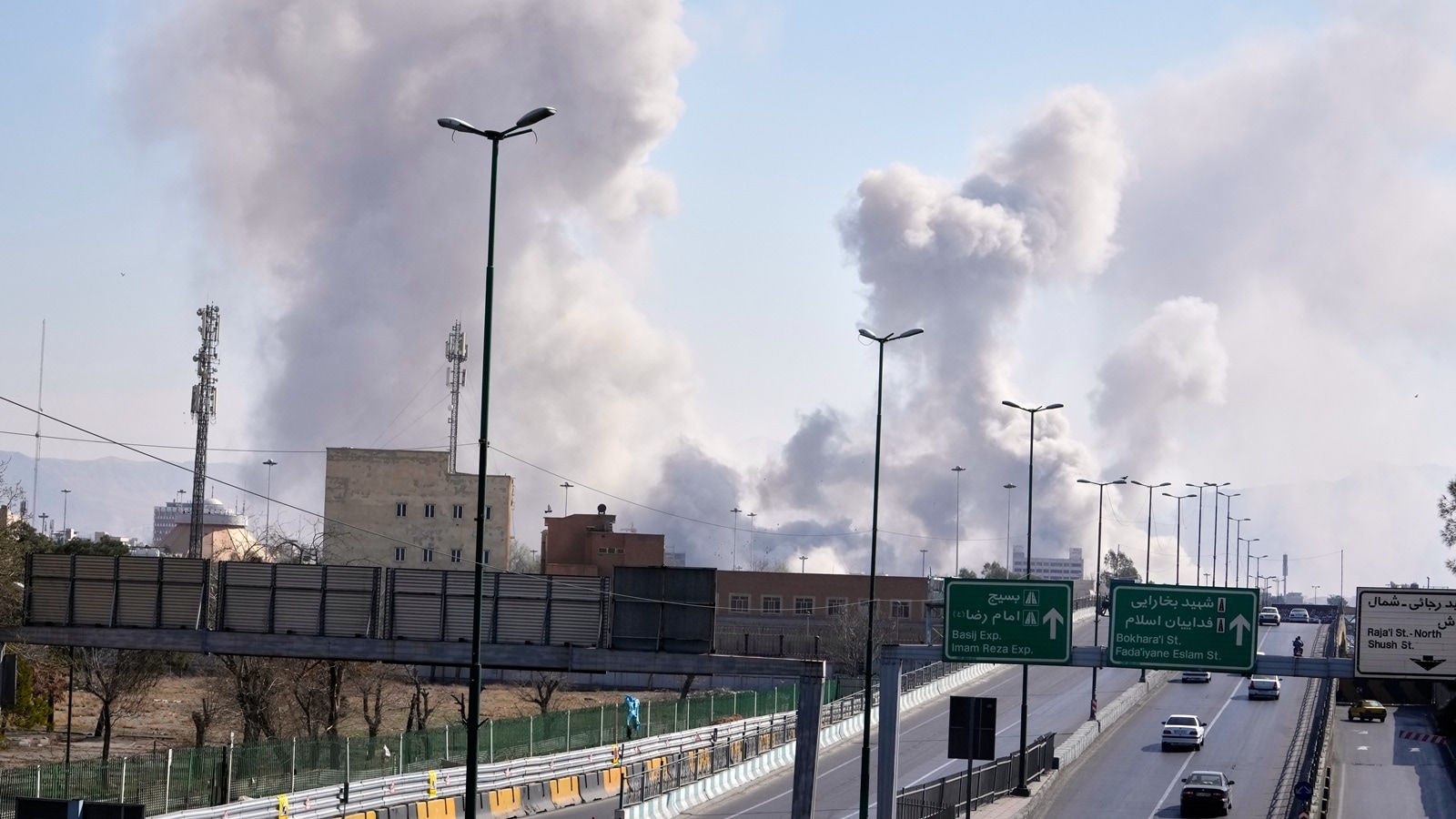
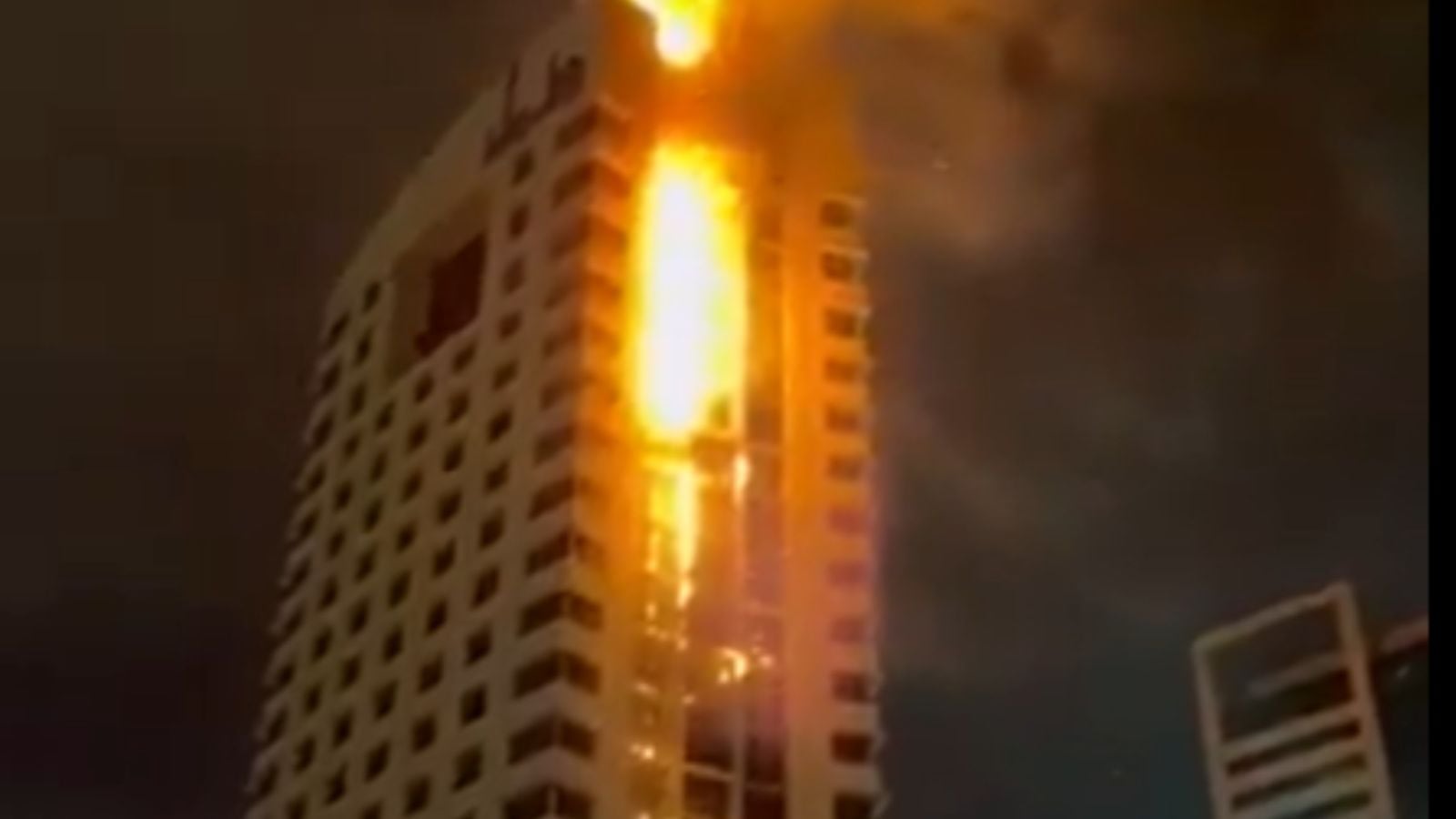
The sound of a city at night is usually a hum of air conditioners and distant traffic. In Manama, that hum is the heartbeat of survival. But on a Tuesday that started like any other, the rhythm broke. It wasn't a sound that alerted the engineers at the desalination plant; it was a silence. A sudden, shuddering halt of high-pressure pumps that transform the salt-heavy brine of the Persian Gulf into the lifeblood of a nation.
Water is a ghost in the desert. You don't see it, but its absence is heavy. In Bahrain, an archipelago where the sun scrapes the skin and the earth is a parched crust, water isn't a utility. It is a miracle of engineering. When the government announced that a "hostile projectile" from Iran had struck a key desalination facility, the news didn't just ripple through geopolitical circles. It hit the kitchen sinks. It hit the shower heads. It hit the very sense of security that allows a modern civilization to bloom in a wasteland.
The Fragile Glass House
To understand the weight of this strike, you have to look at the chemistry of survival. Bahrain has almost zero natural freshwater. No rushing rivers. No vast, hidden lakes. Every drop that fills a glass or washes a child’s face is pulled from the sea through a process of extreme heat and pressure. Desalination is the industrial equivalent of forcing a camel through the eye of a needle.
Imagine a father, let’s call him Ahmed. He wakes up at 5:00 AM to the sound of his youngest daughter coughing. He goes to the kitchen to get her a glass of water. He turns the tap. A hiss. A splutter. Then, a brown, metallic trickle that dies into nothing. At that moment, Ahmed isn't thinking about regional hegemony or the shadow war between Tehran and Manama. He is thinking about how long the plastic bottles in the pantry will last. He is thinking about the heat that will reach 110 degrees by noon.
This is the reality of modern conflict. It has moved away from the front lines and into the infrastructure of the everyday. You don't need to occupy a city if you can dehydrate it.
The Anatomy of an Invisible Wound
The strike wasn't just a physical explosion. It was a calculated message sent through steel and salt. The Bahraini authorities reported that the "attack" targeted a facility responsible for a significant percentage of the nation's daily output. In the world of international relations, this is known as "gray zone warfare." It is designed to be devastating enough to hurt, but ambiguous enough to dodge a full-scale declaration of war.
But for the technicians standing on the scorched concrete of the plant, there is no gray area. There is only the twisted wreckage of multi-stage flash distillation units. These machines are masterpieces of physics. They work by lowering atmospheric pressure so that water boils at lower temperatures, capturing the steam, and leaving the salt behind. It is a delicate balance. When a kinetic strike—a drone or a missile—interrupts that balance, the system doesn't just stop. It breaks.
The salt remains. It cakes the pipes. It corrodes the inner workings. A single strike can take weeks, if not months, to repair because the components aren't off-the-shelf parts. They are custom-forged giants.
The Geography of Thirst
Why Bahrain? Look at a map. The kingdom is a small, strategic jewel sitting in the throat of the Gulf. It hosts the U.S. Navy’s 5th Fleet. It is a symbolic and literal bridge between the West and the Arabian Peninsula. By targeting water, an aggressor targets the most vulnerable point of the social contract.
A government’s primary job is to provide the basics: safety and sustenance. When the water stops, the contract feels frayed. The "People Also Ask" sections of the internet often focus on "Is it safe to travel to Bahrain?" or "How does Bahrain get its water?" The answers are now intertwined. Safety is no longer just about the absence of crime; it is about the resilience of the grid.
The dependency on desalination is a technological marvel that carries a terrifying price tag. We have built gleaming metropolises in places where nature never intended humans to live in such density. We rely on a constant, uninterrupted flow of electricity and gas to keep the water flowing. If the power dies, the water dies. If the plant is bombed, the city begins a countdown.
The Psychology of the Shortage
By mid-afternoon on the day of the strike, the grocery stores in Manama saw a surge. It wasn't a riot. It was a quiet, desperate efficiency. People filled carts with crates of bottled water. The price of a five-gallon jug became the most important metric in the country.
Consider the irony. We live in an age of digital clouds and instantaneous data, yet we are still beholden to the same primitive needs as our ancestors. A billionaire in a penthouse and a laborer in a camp are suddenly equals when the pipes go dry. They both need two liters a day to stay compos mentis.
The Iranian government, as is tradition, denied involvement. They spoke of internal failures and technical glitches. But the signature of the strike—the precision, the timing, the choice of target—suggested a much more deliberate hand. It was a reminder that in the modern Middle East, the most effective weapon isn't always a bullet. It's a closed valve.
Beyond the Brine
There is a technical term for what happens to the leftover water in these plants: brine. It is a super-saturated, salty sludge that is usually pumped back into the sea. It is the waste product of our existence in the desert. In a way, the political situation in the Gulf has become like that brine. It is salty, concentrated, and increasingly toxic.
The strike on the desalination plant is a harbinger. It tells us that the next century of conflict will not be fought over borders, but over resources. While the world watches oil prices, the people on the ground are watching water levels. You can live without a car. You cannot live without a drink.
As the sun sets over the Gulf, the horizon turns a bruised purple. In the suburbs of Manama, families sit in the heat, waiting for the sound of the pipes groaning back to life. Every time a faucet is turned, there is a moment of bated breath. Will it work?
The repair crews work under floodlights, their shadows long against the mangled metal of the distillation units. They are the new soldiers. Their tools are wrenches and welding torches. They are fighting to keep the desert from reclaiming the city.
The lesson of the Bahrain strike is simple and haunting. We have built a world of incredible complexity and beauty, but it is a world held together by a very thin straw. When that straw breaks, the majesty of our skyscrapers and the speed of our fiber-optic cables mean nothing.
We are just people in the sand, looking at the sea, wondering why it won't let us drink.
The tap remains dry. The silence is the only thing that flows.