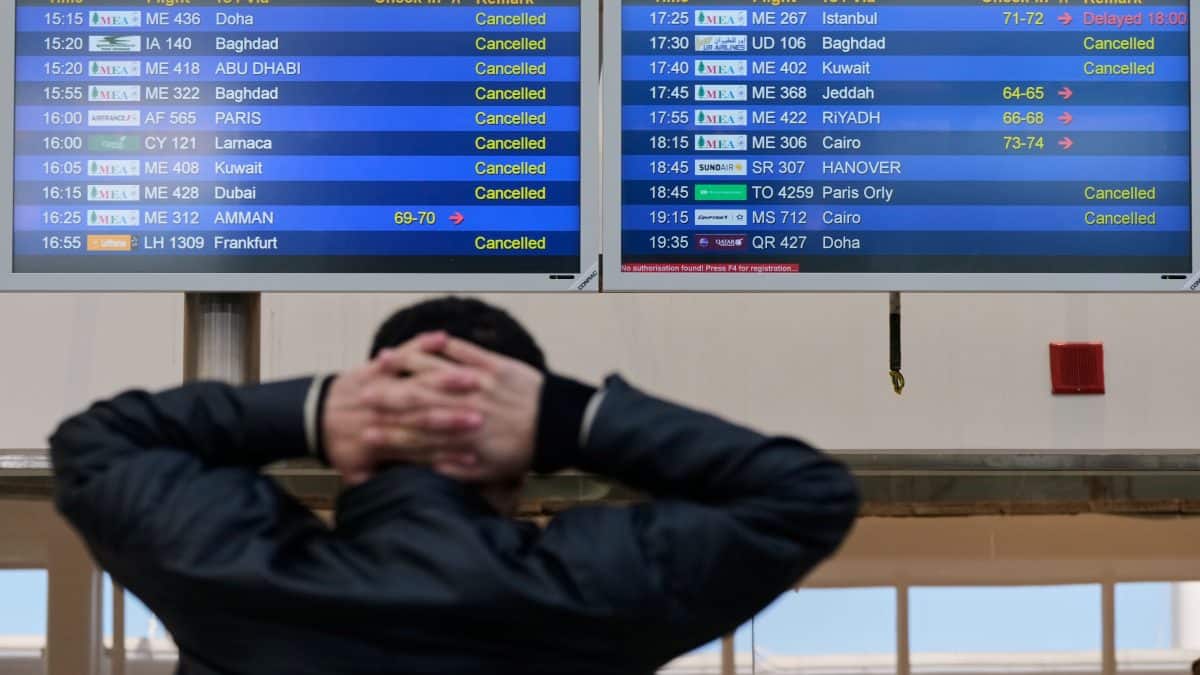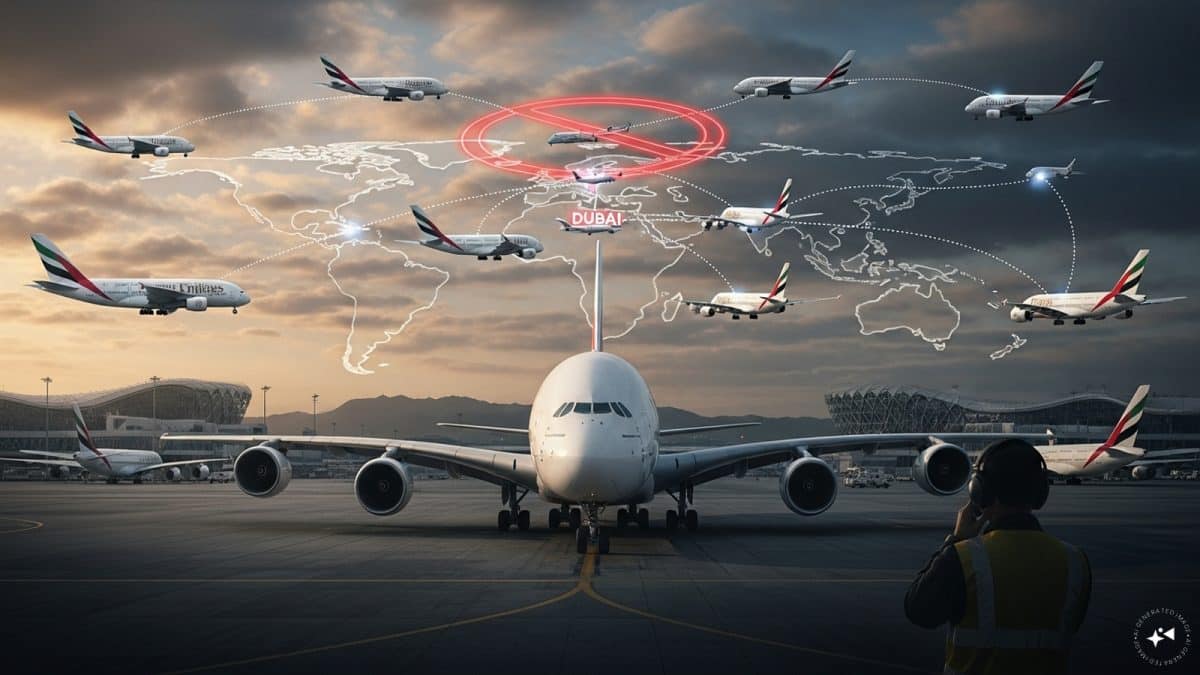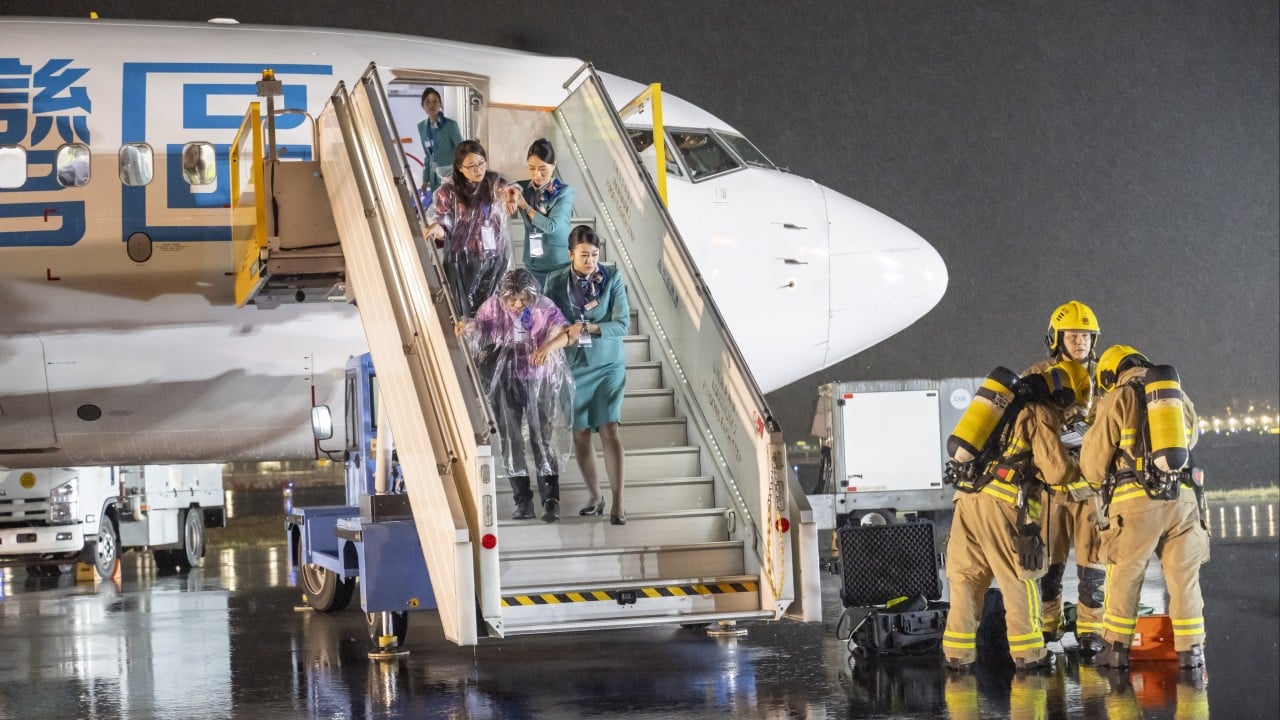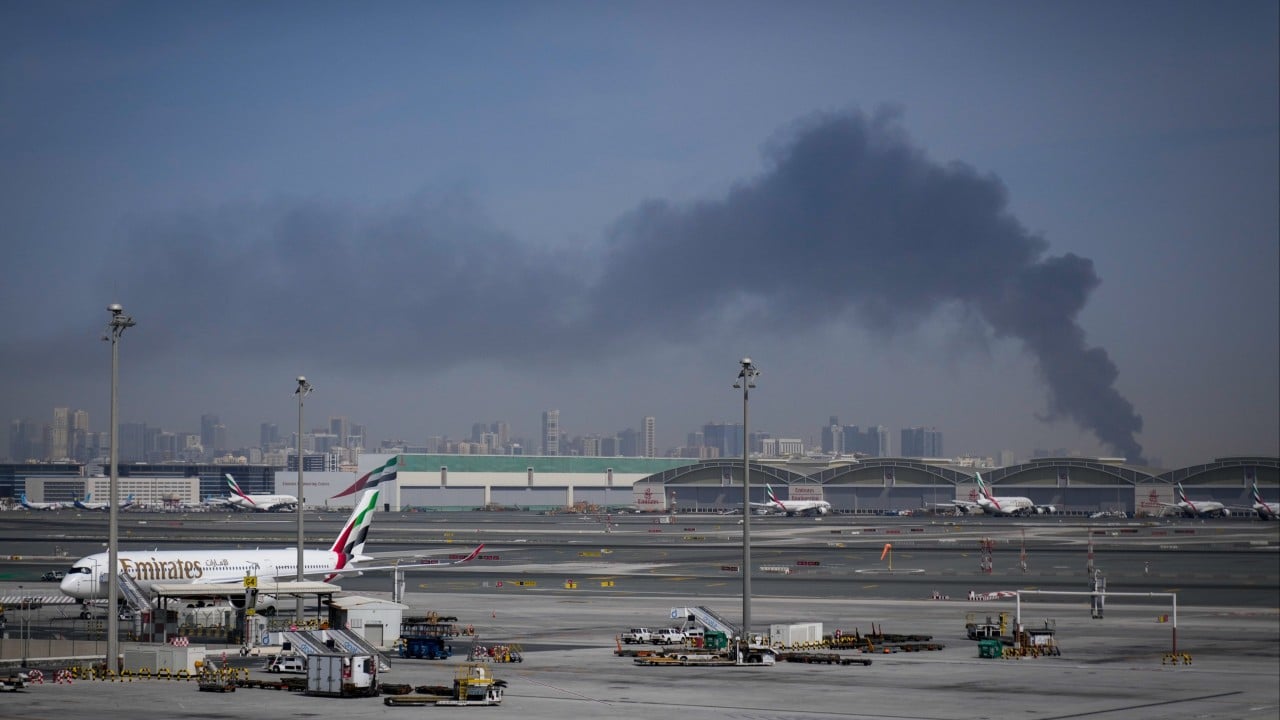
Stop refreshing the booking engine and start looking at the map.
The headlines are screaming about Rs 9 lakh ($11,000) one-way tickets from Delhi to London. They want you to believe that the escalating conflict in West Asia has broken the aviation industry. They want you to feel like a victim of geography and geopolitics. They’re telling you that because Iran’s airspace is a "no-go" zone, your summer vacation is being held hostage by a fuel surcharge. Don't miss our recent post on this related article.
It’s a lie. Or, at the very least, it’s a massive failure to understand how airline revenue management actually works.
The Rs 9 lakh ticket isn't a "price." It’s a signal. It is the algorithm’s way of saying, "We are technically full, but if you are desperate enough to pay for our CEO’s next bonus, we’ll bump someone else." To read more about the history here, AFAR offers an informative breakdown.
If you pay it, you aren't a victim of war. You’re a victim of your own inability to plan or your refusal to fly anything other than a direct legacy carrier.
The Myth of the Mandatory Detour
The "consensus" suggests that rerouting around Iran adds so much time and fuel that prices must quintuple. This is basic math for people who can't do math.
Yes, avoiding Iranian and Iraqi airspace adds distance. Flights that used to cut straight across are now dipping south through Saudi Arabia or hugging the northern corridor through Azerbaijan and Turkey. We are talking about an extra 45 to 90 minutes of flight time.
In the world of wide-body jets like the Boeing 777-300ER or the Airbus A350, an extra hour of fuel burn is expensive, but it doesn't turn a Rs 80,000 ticket into a Rs 9,00,000 ticket. Fuel typically accounts for 25% to 35% of an airline's operating costs. Adding 10% more flight time does not justify a 1,000% price hike.
The price isn't rising because the planes are thirsty. The price is rising because capacity is being artificially throttled. When you remove a primary corridor, you don't just add time; you create a bottleneck in the remaining "safe" sky. Air Traffic Control (ATC) in the remaining corridors can't handle the volume. Airlines then cancel "marginal" flights to maintain their slots at Heathrow or Gatwick.
Lower supply + panicked demand = the Rs 9 lakh anomaly.
Why You’re Looking at the Wrong Numbers
When people see these astronomical prices, they are usually looking at "Last Seat Availability" in Full-Fare Business or First Class.
Airlines use nested booking classes. You might see a "Y" class fare—the most expensive, unrestricted economy ticket. These are designed for corporate travelers whose companies have "must-fly" contracts. These people don't care if the ticket is Rs 1 lakh or Rs 10 lakh; the company pays, the tax deduction happens, and the executive makes the meeting.
If you are a retail traveler looking at these prices and complaining, you’re looking at a product that wasn't built for you. You are window shopping at a boutique and complaining that the gold-plated mannequin is too expensive.
The Real Cost of a Reroute
- Extra Fuel: ~7,000 to 12,000 kg depending on the aircraft.
- Labor: Crew overtime triggers (sometimes requiring an extra pilot if the duty period is exceeded).
- Opportunity Cost: The plane arrives late for its next leg, cascading delays through the network.
Even with these factors, the "fair" price increase for a rerouted Delhi-London flight is roughly 15% to 20%. Anything beyond that is pure, opportunistic yield management.
The Geography Tax is Optional
The loudest complainers are those who insist on flying Air India or Virgin Atlantic direct. They want the convenience of a nonstop flight while the world is literally on fire in the transit zone.
If you want to beat the "Iran Surcharge," you have to stop thinking linearly.
- The Central Asian Pivot: Look at carriers like Air Astana. Flying through Almaty or Astana takes you nowhere near the conflict. You’re flying north, over Russia (if permitted) or through the "Middle Corridor."
- The Southeast Asian Slingshot: It sounds insane, but flying from Delhi to Singapore or Bangkok and then to London can sometimes be cheaper and more reliable during a West Asian flare-up. You’re adding miles, but you’re bypassing the bottleneck.
- The Hub-and-Spoke Reality: The Gulf carriers (Emirates, Qatar, Etihad) are the ones truly sweating. Their entire business model relies on their hubs being the "center of the world." When that center becomes a war zone, they have to scramble. But guess what? They have the most planes. They will eat the margin loss to keep their market share.
The "People Also Ask" Delusion
People are asking: "Is it safe to fly to London right now?"
The answer is: "Yes, because airlines are cowards."
I say that with respect. Airlines are the most risk-averse entities on the planet. They remember MH17. They remember the Ukrainian International Airlines flight shot down over Tehran. If there were a 0.01% chance of a missile lock, the flight wouldn't be "more expensive"—it would be canceled.
The fact that the flight exists is proof that the risk is managed. You aren't paying for "safety." You’re paying for the logistical headache of avoiding the danger.
Another popular question: "When will airfares return to normal?"
They won't. Not because of the war, but because you’ve proven you’ll pay.
Airlines use "event-based pricing" to test the ceiling of what the market can bear. If a thousand people pay Rs 5 lakh for a flight this week, the airline’s "normal" price next month won't be the old Rs 60,000. It will be Rs 85,000. We are currently witnessing a massive, real-time experiment in price elasticity.
The Industry Insider’s Playbook
I’ve spent years watching revenue managers tweak algorithms behind the scenes. They love a good crisis. A crisis allows them to reset the "anchor price" in the consumer’s mind.
If you want to travel from India to Europe without getting fleeced, you need to ignore the aggregators for a moment and understand the "Fifth Freedom" flights and the secondary hubs.
- Fly to Warsaw or Budapest: LOT Polish or other Eastern European carriers often have different risk profiles and different routing options. Once you’re in the EU, a budget flight to London is Rs 5,000.
- The "Shadow" Capacity: Airlines often hold back seats for travel agents and consolidators. The 9-lakh price you see on a travel app is often the "public" price, while the "private" inventory is being moved at a third of that cost through traditional channels.
- The Point-to-Point Gamble: Book a flight to a city that isn't a major global hub, then book a separate ticket to London. The algorithm struggles to price multi-city, multi-airline itineraries when the primary routes are in chaos.
The Brutal Truth About Aviation
Aviation is not a public service. It is an extractive industry.
When a war breaks out, the airline's first responsibility isn't to get you to your destination; it's to protect the hull (the plane) and the margin. If they can fly half the number of people at ten times the price, they will do it every single time. It's more profitable, easier on the engines, and requires less catering.
The Rs 9 lakh airfare isn't a sign of a broken system. It’s a sign of a system working exactly as intended. It is filtering out the "price sensitive" (you) in favor of the "time desperate" (the 1%).
Stop crying about the reroute. The extra hour in the air is a minor inconvenience. The real tragedy is that you’re still trying to use 2019 logic in a 2026 world. The "direct flight" is now a luxury good, like a Birkin bag or a private jet. If you can’t afford the luxury price, get comfortable with a layover in Tashkent or Helsinki.
The sky isn't falling. It's just getting more exclusive. If you don't like the price, stay on the ground. The airline won't miss you; they’ve already found someone with a corporate credit card who doesn't even look at the receipt.
Book the detour or stay home. Those are your only real options. Anything else is just noise.