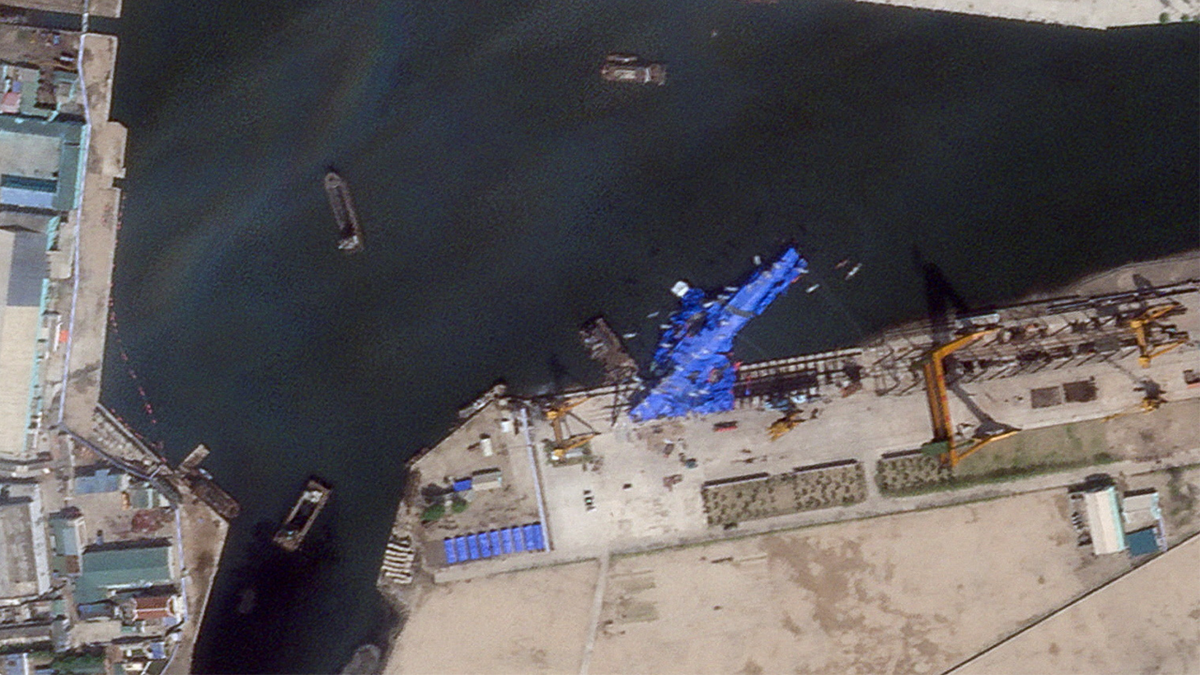
The headlines are predictable. They are boring. Every time Pyongyang slides a destroyer into the water and burps a few cruise missiles into the Sea of Japan, the Western media apparatus goes into a frantic, copy-paste tailspin. We see the same grainy footage of Kim Jong Un in a leather trench coat, the same panicked quotes from retired generals, and the same tired analysis about "escalating tensions."
Stop falling for it.
If you view these naval tests as a genuine preparation for a maritime offensive, you are fundamentally misreading the hardware, the geography, and the math. These aren't weapons of conquest. They are expensive, floating billboards designed to hide the fact that North Korea’s conventional navy is a rusted-out relic of the 1960s.
The Destroyer Delusion
The "competitor" narrative focuses on the platform—the naval destroyer. In modern naval warfare, a destroyer is a multi-mission powerhouse. It is supposed to provide air defense, hunt submarines, and project power hundreds of miles away.
North Korea’s "new" destroyers are essentially oversized patrol boats with a fresh coat of paint.
I’ve spent years looking at satellite imagery and procurement trails for various defense contractors. When you look at the displacement and the sensor suites on these vessels, you see the glaring gaps. They lack the integrated Aegis-style combat systems required to survive in a high-intensity environment. A ship that can’t see a torpedo coming from ten miles away isn't a threat; it’s a target.
By framing this as a "test of naval power," the media grants Pyongyang a legitimacy it hasn't earned. These ships are built for coastal defense because they wouldn't last twenty minutes in blue water against a US carrier strike group or even a modern Japanese destroyer.
Why Cruise Missiles are the Poor Mans Choice
Everyone gets antsy about "stealthy" cruise missiles. The logic goes like this: cruise missiles fly low, hug the waves, and bypass radar. Therefore, we should be terrified.
Wrong.
The introduction of cruise missiles to their naval fleet is actually a pivot of desperation. Ballistic missiles are the real deal—high speed, difficult to intercept, and capable of carrying massive payloads. Cruise missiles, by contrast, are slow. They are essentially small, unmanned airplanes.
In a theater like the Korean Peninsula, which is packed with the highest density of Patriot batteries, THAAD systems, and ship-borne interceptors on the planet, a subsonic cruise missile is a clay pigeon.
Pyongyang uses them because they are cheaper to build and easier to hide than the massive liquid-fuel rockets they usually parade through the streets. If they were confident in their ability to strike with impunity, they wouldn’t be tinkering with low-altitude drones-with-fins. They are trying to find a loophole in a defensive net that has already closed.
The Geography Problem No One Mentions
The Sea of Japan is a bathtub.
If North Korea launches from a destroyer, they are signaling exactly where they are. In a real conflict, the minute that missile clears the tube, the ship's acoustic and thermal signature is burned into every sensor from Okinawa to Hawaii.
A naval-launched missile is actually less dangerous than a mobile, land-based launcher hidden in a mountain tunnel. On land, North Korea has the advantage of "shoot and scoot." At sea, they have nowhere to go. Their navy lacks the submarine-silencing technology or the air cover to protect these precious destroyers.
The "nuance" the experts miss is that these tests aren't about military utility. They are about domestic industrial signaling. Kim needs to show his generals that the "Byungjin" policy—simultaneously developing the economy and the nuclear program—is working. It isn't. The economy is a shambles, so he doubles down on the optics of the military program.
Dismantling the People Also Ask Nonsense
People often ask: "Can North Korea's missiles hit the US mainland from a ship?"
Technically? Maybe, if they sailed the ship into the middle of the Pacific, which would be detected before it even left the harbor. Practically? No. The weight of an Intercontinental Ballistic Missile (ICBM) is far too great for these destroyers to handle. They are firing short-to-medium range tactical missiles. They are hitting a buoy 200 miles away and pretending they’ve conquered the ocean.
Another common query: "Is this a response to US-South Korea drills?"
This is the "lazy consensus" at its finest. It assumes North Korea is a reactive player. It isn't. Their weapons development timeline is fixed. They test when the hardware is ready or when a political anniversary requires a fireworks display. Attributing every launch to a specific joint exercise gives them too much credit and ignores their long-term strategic roadmap.
The Harsh Reality of Naval Tech
Let’s talk about the math. To make a naval missile system effective, you need three things:
- Targeting Data: You need over-the-horizon radar or satellites to tell the missile where to go. North Korea’s satellite program is in its infancy.
- Data Links: You need to be able to talk to the missile while it's in flight. Their electronic warfare capabilities are localized and easily jammed.
- Survability: You need to not sink.
I have seen plenty of defense budgets wasted on "prestige projects." These ships are the ultimate prestige project. They are built to look terrifying in a propaganda reel, not to win a war.
If you want to be worried about North Korea, look at their cyber warfare capabilities. Look at their artillery aimed at Seoul. Look at their biological research. Those are the asymmetric threats that actually work. A destroyer firing a cruise missile is just a 20th-century solution to a 21st-century problem.
Stop Reading the Script
The next time you see a "breaking news" alert about a North Korean missile launch, ask yourself: What are they trying to hide today? Usually, it’s a failure in food distribution or a stalled diplomatic channel. The missile is the shiny object meant to distract you from the fact that the Kim regime is playing a losing hand with a very loud deck of cards.
Every dollar spent on a naval destroyer is a dollar not spent on the mobile launchers that actually keep the Pentagon up at night. This isn't an escalation. It's a strategic blunder cloaked in sea spray.
The Pentagon knows this. The Blue House knows this. It’s time the public stopped biting on the bait.
Go back to your day. The ocean is fine.