The humidity in the northern Philippines clings to everything. It is a heavy, wet blanket that smells of salt and drying earth. For an observer standing on the shore, watching the ships move through the gray-blue water of the South China Sea, the world looks quiet. But the air here is vibrating with a tension that has nothing to do with the weather.
I remember talking to a harbor master in a small coastal village years ago. He told me that in this part of the world, you don’t listen to what the politicians say. You listen to the movement of the metal. You listen to the hum of engines that don’t belong to the fishing fleets. You watch how the horizon changes when the big grey hulls start appearing more often than the trawlers. Lately, the horizon has been crowded. For a different look, consider: this related article.
In the past, the silence of the Pacific was a different kind of silence. It was a silence born of a promise.
After 1945, Japan looked at its own charred cities and made a vow to the world, and to its own soul. They enshrined that vow in Article 9 of their constitution, renouncing war as a sovereign right and pledging to never maintain land, sea, or air forces for the purpose of international conflict. It was a radical experiment. Could a nation truly turn its back on the sword? For decades, the answer was yes. They built cars, they built electronics, they built prosperity. They left the fighting to others. Further coverage regarding this has been published by Al Jazeera.
But history is a persistent animal. It does not stay buried. It claws its way to the surface, especially when the geography of the map starts to feel like a cage.
Recently, that cage cracked.
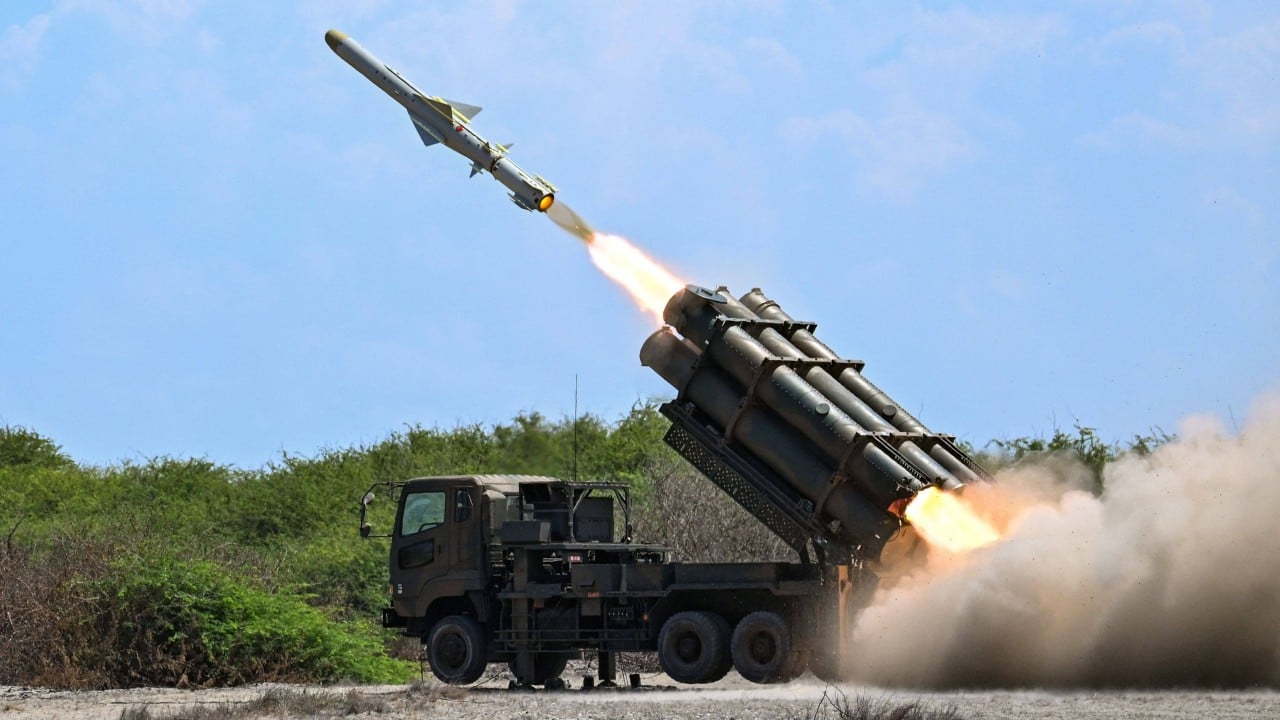
Japan brought the Type 12 surface-to-ship missiles to the Philippines for a joint training exercise. This move, while framed by Tokyo as a defensive necessity, struck a nerve that resonated all the way to Beijing. China did not stay quiet. They condemned the act, calling it a provocative step that threatens regional stability. They see what the world sees: a Japanese military stepping out of the defensive shadows and into the sunlight of active deterrence.
Let us be clear about what this means. This is not a test in the sense of a firework display. This is the repositioning of a chess piece that hasn't moved in nearly eighty years.
Metaphorical note: Think of Japan as a homeowner who has spent decades painting a beautiful garden, all while refusing to touch the lock on the front door, even as the neighbors outside begin to shout. Now, they are holding the key.
The Type 12 missile system is not a toy. It is a precision instrument. It is designed to strike at sea, to deny an adversary the freedom to move their own ships through contested waters. To the Japanese defense establishment, this is common sense. They look at the growing reach of other powers in the region—at the way islands are being transformed into bases, and at the way the maritime borders are becoming increasingly blurred—and they conclude that they cannot afford to be passive.
But to the Chinese government, this is a rupture in the post-war order. They view the deployment as a clear sign that the spirit of Article 9 is being hollowed out, replaced by a cold, hard focus on military readiness. They argue that this move invites an arms race, that it turns the Pacific into a powder keg where a single miscalculation could light the fuse.
Why does this matter to the person sitting at home, thousands of miles away?
Because the global economy is a giant, interconnected machine, and the gears of that machine are lubricated by the shipping lanes of the Pacific. When the people who operate the gears start pointing missiles at one another, the friction increases. Costs rise. Stability falters.
I think back to the fisherman I mentioned. He doesn't care about the intricacies of the Type 12, or the legal interpretation of Article 9. He cares about whether he can take his boat out tomorrow without being told he is trespassing in his own water. He cares about whether the sound of the ocean will remain the sound of the ocean, or if it will be drowned out by the roar of jets and the thrum of destroyers.
The anxiety in the region is palpable. It is not an abstract fear. It is the fear of being small in the middle of a fight between giants.
Japan finds itself in a strange, liminal space. They are caught between the ghost of their past, which demands restraint, and the reality of their present, which demands strength. The government in Tokyo is trying to walk a razor’s edge. They want to be a capable ally to the United States and a protector of their own sovereignty, but they are terrified of triggering the very conflict they seek to deter.
The condemnation from China is a warning. It is a signal that the era of Japanese restraint is viewed by Beijing as officially over. This changes the calculus for every nation in the Indo-Pacific. It forces countries like Vietnam, Indonesia, and Malaysia to pick up their own pieces and decide where they stand in this new, sharper configuration of power.
Consider the sequence of events here:
- The regional security environment shifts due to increased territorial assertiveness by major powers.
- Japan perceives an existential threat to its maritime supply lines.
- Japan modernizes its posture, moving beyond the strict limitations of the past.
- The neighbors react, signaling that this is not acceptable.
This is not just a disagreement over a training exercise. It is a renegotiation of who gets to control the water.
There is a tragedy in this, in a way. The tragedy is that the promise of 1945—that we could evolve past the need for these weapons—is being sacrificed on the altar of geopolitical insecurity. It suggests that the progress we thought we made was not a permanent change in human nature, but merely a temporary reprieve.
Hypothetical scenario: Imagine a scenario where the tension continues to boil. If these deployments become permanent, if the missile batteries become a fixture of the island chain, then the Pacific becomes a place of permanent vigilance. We move from a state of peace to a state of 'armed monitoring.' The difference is subtle but profound.
When I look at the news, I don't see missiles. I see the end of an era of innocence. I see the world returning to a logic that has failed us time and time again: the logic that the only way to keep the peace is to threaten the hell out of your neighbor.
It is a terrifying logic.
And yet, it is the one we are living through. The air in the Philippines remains heavy. The ships keep moving. The radar screens in command centers across the region are pulsing with new, red dots.
We are watching a slow-motion transformation. We are witnessing the solidification of a new reality, one where the old rules of engagement are being rewritten by the necessity of the moment. It is not a story with a simple ending. It is a story that is currently being written in the wake of every ship that passes through these straits.
There is no going back to the silence of the past. That silence was bought with a trauma so deep it reshaped a nation's identity. Today, that identity is being reshaped again, not by the trauma of war, but by the relentless, cold pressure of a changing world.
The observer on the shore today knows something the politicians have yet to fully admit. He knows that once you start pointing these weapons, you don't just stop. You settle in for the long haul.
The sun sets over the South China Sea, turning the water into a sheet of hammered copper. It is beautiful. It is serene. But if you listen closely, underneath the sound of the waves, there is a low-frequency hum. It is the sound of the world tightening its grip, preparing for a future that looks hauntingly like the past. The water doesn't care. It will keep rising and falling, indifferent to the steel that floats upon it. But we should care. We should care because the echoes of these decisions will be heard for generations to come, rippling out from this single, contested patch of ocean to touch every shore, every port, and every person who relies on the stability of a world that is slowly losing its balance.
Look at the horizon. It is no longer just a line where the sky meets the water. It is a boundary. And it is moving closer.