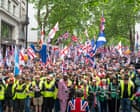
You saw the headlines. Flashing blue lights, massive crowds blocking Whitehall, and a number plastered across every news site: 43 arrested in London. If you only read the social media feeds, you'd think the capital was a war zone on Saturday. Far-right activists shouting slogans in Parliament Square while pro-Palestine demonstrators marched to Waterloo. It sounds like a recipe for total chaos.
But if you look at what actually happened on the ground, the real story isn't the violence. It's how a massive £4.5 million security operation managed to keep two boiling pots from spilling over.
The Metropolitan Police deployed 4,000 officers, including reinforcements shipped in from across the country. They used drones, horses, helicopters, and armored vehicles. When tens of thousands of deeply polarized people hit the same streets on the same afternoon, 43 arrests isn't a sign of a riot. It's proof that tight police containment actually worked. Both events passed off without major, structural violence.
The media loves a dramatic total, but grouping these arrests into one big bucket misses the point entirely. To understand what's really happening to public order in Britain, you have to break down who got picked up, why they were cuffed, and what it tells us about the changing nature of protest.
The Fragmenting Right and the Battle of Britain
Let's start with Tommy Robinson’s "Unite the Kingdom" rally. Robinson, whose real name is Stephen Yaxley-Lennon, was aiming for a massive show of force. Organizers dreamed of a million people. In reality, the Met estimated the turnout at around 60,000. That's still a huge crowd, but it's less than half the size of his 150,000-strong demonstration last September.
So why did the numbers drop? Look at the shift in messaging. Robinson has recently been leaning hard into Christian iconography after a stint in prison, leading the crowd in the Lord’s Prayer and chanting "Christ is king." Watchcounters and watchdog groups like Hope Not Hate point out that this pivot to religious nationalism alienated a lot of the secular, football-lad contingent that usually forms his backbone.
Out of the 43 total arrests across London, 20 were linked to this right-wing rally. Nine of those were for alleged hate crimes.
The details are ugly. Minorities on the police force bore the brunt of it. One ethnic-minority officer was told to "go home." Others faced vile homophobic slurs. People were arrested for holding signs reading "fuck Islam."
But here’s the crucial difference from last year: the physical aggression toward the police was drastically lower. Last September, over 20 officers were assaulted. This time, the crowd mostly complied with geographic restrictions, focusing their anger on Prime Minister Keir Starmer and chanting for his removal ahead of the 2029 election. The state also flexed its administrative muscles before the march even started, blocking 11 foreign far-right agitators from entering the UK, including US-based activist Valentina Gomez.
The Red Lines at the Nakba Day Rally
On the other side of central London, between 15,000 and 20,000 people marched to mark Nakba Day, commemorating the 1948 displacement of Palestinians. Organizers claimed the numbers were way higher, closer to 250,000, but independent assessments put it much lower.
The Met arrested 12 people here, including two for alleged hate crimes.
For months, the debate in the UK has been about where political speech ends and criminal hate speech begins. Saturday showed exactly where the Met is drawing that line now. Officers didn’t just watch; they targeted specific placards.
Arrests were made for signs reading "Globalise the intifada"—which police argue constitutes a call to violence—and for placards expressing support for Palestine Action, a group that has faced intense legal scrutiny and bans. Another arrest involved a banner proclaiming "We will not surrender, victory or martyrdom."
The police are currently reviewing seven more videos of chants and signs to see if they cross the legal threshold for anti-Jewish hate speech. It’s a delicate tightrope. Protesters accuse the police of heavy-handed political censorship, while Jewish community groups point out that 33 major pro-Palestine marches since late 2023 have left many local residents feeling too intimidated to visit their own city center.
The Stray Items and the Viral Noise
Then you have the remaining 11 arrests. These weren't actually linked to either political ideology. They were just the standard fallout of putting tens of thousands of people in a confined space on the same day London was hosting the FA Cup Final at Wembley.
Some incidents were just bizarre. A woman was arrested near Whitehall for carrying a one-meter sword. Another man was arrested for actual bodily harm after he allegedly boarded a coach meant for pro-Palestine marchers and punched a passenger who told him to get off.
Naturally, the internet didn't care about these nuances. It didn't take long for Elon Musk to chime in on X, calling Britain a "prison island" and demanding the release of people "imprisoned merely for social media posts." Robinson quickly thanked him for providing a "360° view."
But shouting about free speech suppression from a keyboard misses what's actually happening on the pavement. The UK government isn't locking people up for having opinions; it's using massive physical containment and strict Public Order Act conditions to prevent political factions from kicking the living daylights out of each other.
How to Check Your Own Blind Spots
When events like this happen, it's incredibly easy to fall into confirmation bias. If you want to get a realistic picture of public order events without the media spin, you need to change how you consume the news.
First, stop looking at total arrest numbers as a metric for how violent a protest was. A high arrest count often means the police were highly proactive, stepping in early to grab individuals before a crowd dynamic took over. Look for the specific charges instead. Were people arrested for violent disorder, or were they picked up for a offensive placard? The difference tells you whether you're looking at a riot or a legal dispute over speech.
Second, cross-reference your sources. Don't just rely on aerial footage from activist accounts or highly edited clips on social media. Check the official Metropolitan Police operational updates alongside independent legal observers.
The reality of modern public spaces is that they are increasingly policed by logistics and balance sheets. This single afternoon cost taxpayers £4.5 million. That is the real takeaway. The state can still keep the peace, but the financial and human cost of keeping our streets segregated and stable is getting higher every single month.