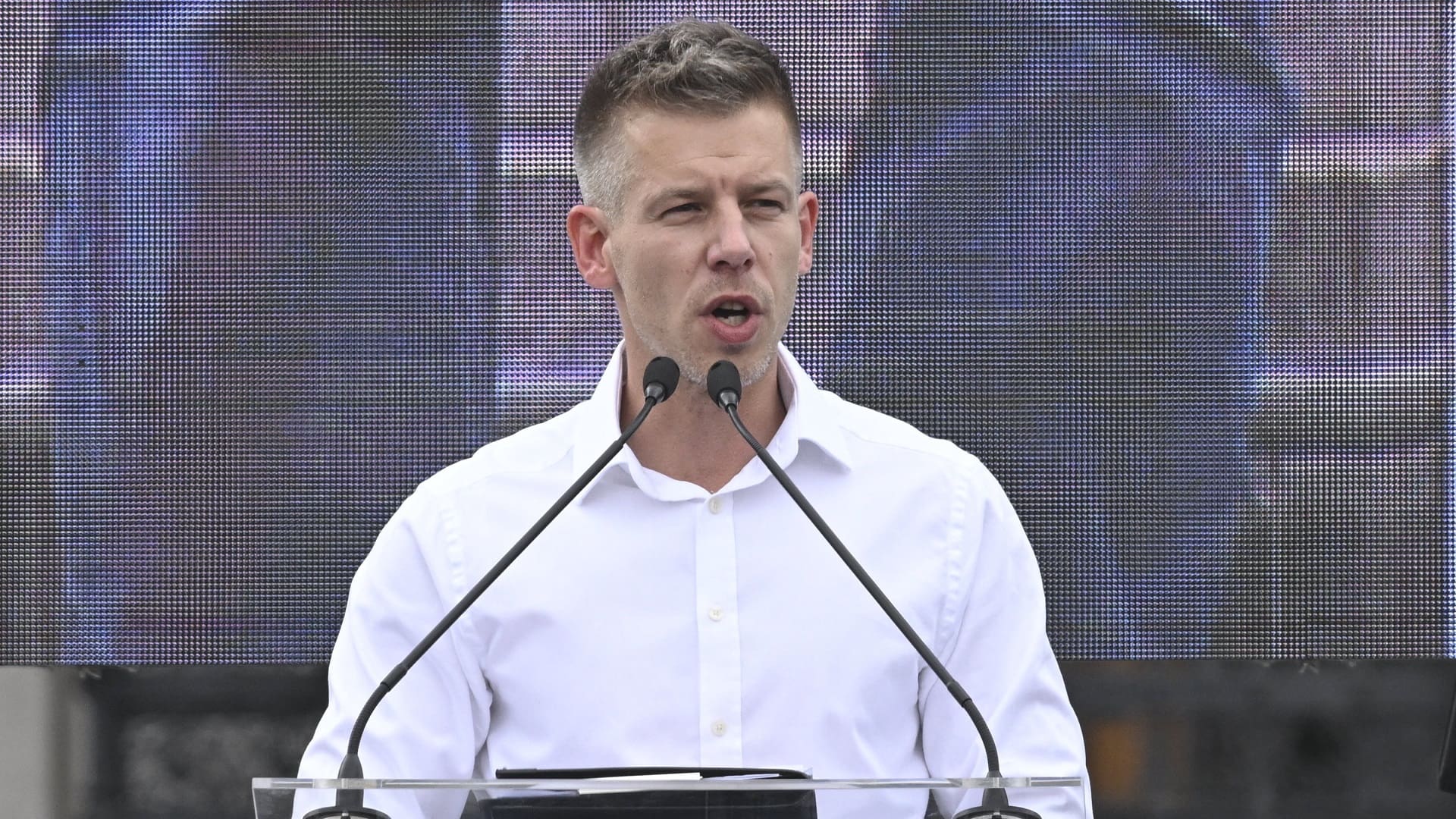
The victory was the easy part. After sixteen years of Viktor Orbán’s iron-fisted "illiberal democracy," the Hungarian electorate delivered a seismic shock on April 12, 2026, handing Péter Magyar and his TISZA party a two-thirds supermajority. It was a landslide that even the most optimistic pollsters hesitated to predict. Now, the man who was once an insider in the Fidesz machine faces a deadline of his own making. Magyar has publicly set his sights on May 9 or 10 to take the oath of office, a timeline that is as much about political theater as it is about administrative urgency.
But beneath the optimism of a fresh start lies a structural nightmare. Taking the oath is a formality; governing a "captured" state is a siege. Magyar isn’t just moving into the Prime Minister’s office; he is attempting to occupy a fortress where every brick, every bureaucrat, and every budget line has been laid by his predecessor to ensure the system survives even if the leader falls.
The May Deadline and the Presidential Gambit
Magyar’s insistence on a May 9 or 10 inauguration is a calculated move to keep the momentum from the April 12 victory from cooling. In Hungarian politics, the President of the Republic—currently Tamás Sulyok—must convene the inaugural session of the new National Assembly. While Sulyok met with Magyar shortly after the election and signaled his intent to propose him as Prime Minister, the transition is fraught with technicalities.
The rush to take the oath is driven by the need to halt the "midnight regulations" common during power shifts. Every day Orbán’s outgoing ministers remain in their seats is another day for files to vanish and contracts to be signed. Magyar understands that his mandate is a ticking clock. The public didn't just vote for a change in face; they voted for a total systemic overhaul.
Why the Supermajority is a Double Edged Sword
Winning 137 of the 199 seats gives Magyar the power to amend the constitution at will. This is the same tool Orbán used to hollow out Hungarian democracy, and now the world is watching to see if Magyar will use it to restore or simply redirect that power. The expectations are crushing.
- Rule of Law Restoration: To unlock billions in frozen EU funds, Magyar must immediately decouple the judiciary from political influence.
- The Media Monolith: Nearly 80% of Hungarian media is controlled by foundations loyal to the previous regime. Turning the lights back on for independent journalism isn't as simple as passing a law; it requires dismantling a massive, privately-held propaganda apparatus.
- The Deep State Dilemma: Fidesz loyalists hold long-term appointments in nearly every regulatory body, from the central bank to the audit office. These "policemen" of the old guard cannot be legally fired without further constitutional gymnastics that might look uncomfortably like the authoritarianism Magyar promised to end.
Magyar’s background as a former Fidesz member gives him a unique advantage—he knows where the bodies are buried. But it also fuels skepticism in Brussels. Is he a true reformer, or just a more palatable version of a Hungarian nationalist?
The Economic Landmine
The "Magyar Miracle" will live or die on the kitchen table. Hungary is currently grappling with the aftermath of years of high inflation and a fiscal deficit that Orbán papered over with "election-year sugar highs." Magyar has promised to join the eurozone by 2030, a goal that requires a level of fiscal discipline that will be painful for a population used to energy subsidies and state-mandated price caps.
The central bank remains under the control of György Matolcsy, an Orbán ally whose term doesn't expire immediately. This creates a scenario where the new government's fiscal policy could be actively sabotaged by the country's own monetary authority. If Magyar cannot stabilize the forint and bring down the cost of living by the end of his first hundred days, the populist wave that carried him to power could turn into a riptide.
A Geopolitical Tightrope
The most immediate shift will be in Budapest's relationship with Kyiv and Brussels. Magyar has signaled a "return to Europe," but he is no pushover. He has already stated he would not support fast-track EU membership for Ukraine, nor would he necessarily reverse all of Hungary’s skeptical stances on migration.
However, the era of the "veto for hire" is likely over. By signaling a willingness to opt-out of certain EU-wide loans rather than blocking them for everyone else, Magyar is signaling a shift toward a "constructive pragmatist" role. He wants the €18 billion in frozen funds, and he knows that the price of admission is a return to predictable, democratic norms.
Taking the oath in May is just the beginning of a brutal reclamation project. Magyar isn't just taking over a country; he's trying to perform an organ transplant on a body politic that has spent sixteen years rejecting anything that isn't Fidesz-branded. The victory was loud, but the cleanup will be silent, tedious, and incredibly dangerous.
The real test won't be the words he speaks on May 9, but the actions he takes on May 11.