Geopolitics isn't a chess match anymore. It’s a supply chain audit.
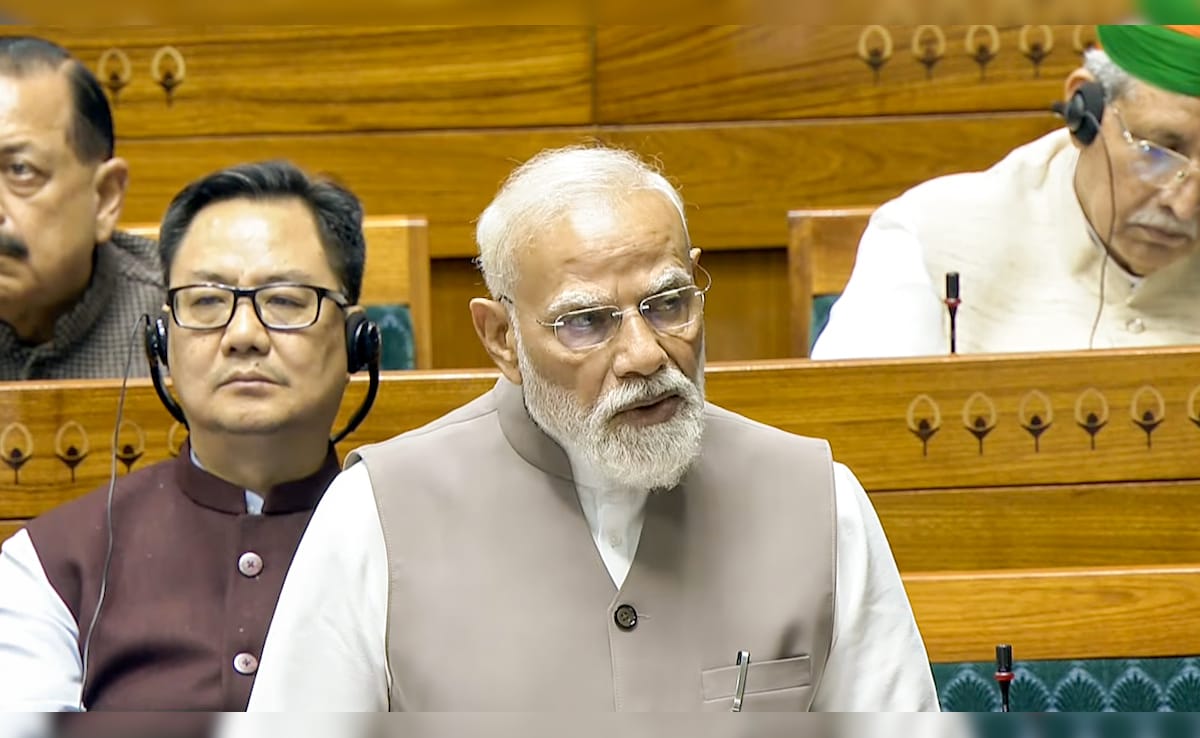
When Prime Minister Narendra Modi stood up to address the impact of the Middle East conflict on India, the mainstream media fixated on the "two mentions of Covid" as if they were nostalgic callbacks or verbal tics. They treated it like a politician reading from an old script because he forgot the new one.
They’re wrong.
The analysts are looking for a military strategy. They should be looking at a balance sheet. The mention of the pandemic in the context of a hot war in the Middle East isn't about health; it's about the brutal realization that the global "Just-in-Time" economy is dead, and "Just-in-Case" is the new, expensive reality.
The Lazy Consensus Of Linear Crisis
The standard narrative suggests that Covid was a "black swan" event and the Middle East war is a "geopolitical flare-up." Most commentators treat them as separate chapters in a history book. This is a fundamental misunderstanding of how modern statecraft functions.
In reality, the pandemic was the stress test that exposed the fragility of the Indian economy’s dependence on external nodes. The war in the Middle East is the second strike on the same bruised muscle. Modi isn't comparing a virus to a missile; he is identifying a recurring systemic failure in the global movement of goods and energy.
If you think India is worried about the moral implications of regional instability, you haven't been paying attention to the math.
The Logistics Of Chaos
The Middle East is India’s gas station and its labor export hub. When the Prime Minister invokes the pandemic, he is signaling to the Indian industrial class that the era of predictable shipping lanes and stable crude prices is over.
Consider the Strait of Hormuz.
Consider the Suez Canal.
During the pandemic, these bottlenecks were choked by labor shortages and lockdowns. Today, they are threatened by drones and regional escalation. The result is identical: an inflationary spike that hits the Indian consumer where it hurts most—the kitchen and the petrol pump.
I’ve sat in rooms with policy planners who are terrified not of the war itself, but of the shipping insurance premiums. When a ship's insurance goes up by 300% because of "regional instability," that cost isn't absorbed by the carrier. It’s added to the price of every smartphone and liter of cooking oil in Mumbai.
The IMEC Pipe Dream
Everyone wants to talk about the India-Middle East-Europe Economic Corridor (IMEC). The media paints it as a "Silk Road killer."
Modi’s mention of the pandemic serves as a grim reminder: infrastructure is only as strong as its weakest link. If a virus can shut down a port in Shanghai and paralyze a factory in Chennai, what does a ballistic missile do to a rail line in Haifa?
The "contrarian" truth here is that India is moving toward aggressive decoupling while publicly preaching connectivity. You don't mention a global pandemic twice in a war rundown unless you are preparing your population for a period of intense protectionism and "Atmanirbhar" (self-reliance) that the WTO would find offensive.
Why The "Energy Security" Argument Is Flawed
The Pundit Class loves to say India is "balancing" its relationships with Israel and the Arab world to secure oil.
That’s a 1990s perspective.
India isn't just balancing diplomacy; it is weaponizing its status as a massive buyer. By mentioning Covid, Modi reminded the world that India kept its head above water when global markets collapsed. He is telling the Middle East: "We survived the total cessation of global trade; we can survive your regional volatility, but can you survive the loss of our market?"
It’s a power move disguised as a historical reference.
The Thought Experiment: The Fortress Economy
Imagine a scenario where the Middle East conflict escalates into a multi-front regional war that lasts three years.
In the old model, India’s GDP would crater. In the post-Covid model—the one Modi is hinting at—India uses the crisis to accelerate domestic manufacturing of semiconductors and defense hardware. The pandemic taught the government that you cannot trust your "allies" to keep the lights on.
The mentions of the pandemic are a warning to the private sector: Stop waiting for "normal" to return. "Normal" was a fluke of the 2010s. We are now in a permanent state of managed disruption.
The Brutal Reality Of Remittances
The media ignores the human capital. Over 8 million Indians live and work in the Gulf. They send back billions. During Covid, these workers were a liability—trapped, jobless, and needing evacuation (the Vande Bharat Mission).
In a war scenario, that liability returns.
Modi’s rhetoric bridges the gap between the two events because the logistics of moving millions of people out of a combat zone are hauntingly similar to moving them during a quarantine. The state is telling you it has the muscle memory for the evacuation, but it doesn't want to use it.
Stop Asking If India Will Intervene
The most common question on search engines is: "Will India mediate the Middle East war?"
This is the wrong question.
India doesn't want to mediate; India wants to insulate.
The Prime Minister’s speech wasn't an olive branch to the warring parties; it was a lead-lined shutter being pulled down over the Indian economy. He is signaling a shift from a "global participant" to a "regional fortress." If you are waiting for a bold diplomatic masterstroke to end the conflict, you will be waiting forever.
The strategy is to build a domestic economy that is indifferent to whether the Middle East is at peace or at war. It is a cold, calculated, and necessary move toward isolationism disguised as "resilience."
The Evisceration Of Globalism
The "lazy consensus" is that global trade is a net positive that every country is trying to save.
Modi’s speech suggests the opposite. By grouping the war with the pandemic, he is framing global interconnectedness as a primary threat to national security. Every connection is a vulnerability. Every trade route is a potential chokehold.
If you are an investor, you should stop looking at the "impact" of the war on India and start looking at how India is using the war to justify breaking the rules of the old global order.
The pandemic was the rehearsal. The Middle East war is the opening night.
Build your walls. Shore up your domestic supply. Stop trusting the map.
Modi isn't stuck in the past; he’s the only one acknowledging that the future is a series of rolling disasters. Deal with it.
If you’re still looking for a "peace plan" in his words, you’re reading the wrong book. Start looking for the blueprints of a fortress.