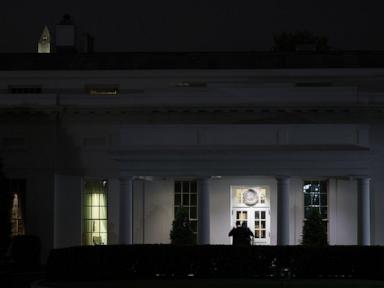
The Department of Justice (DOJ) has shifted its defensive strategy in the ongoing litigation regarding the Mar-a-Lago ballroom, moving from standard administrative rebuttals to an argument centered on acute physical security risks. By leveraging the July 2024 assassination attempt on Donald Trump in Butler, Pennsylvania, the government is forcing a revaluation of the "Public Trust Doctrine" and historical preservation mandates. The core of this legal conflict lies in the irreconcilable friction between static land-use restrictions and the fluid, high-stakes requirements of United States Secret Service (USSS) protective protocols.
The Security Necessity Framework
The DOJ’s recent filings suggest that the physical environment of a protectee’s residence is not merely a matter of aesthetic or historical record but a functional component of a defensive perimeter. The government’s logic follows a three-point security necessity framework: You might also find this connected story insightful: Why China's Economic Carrots Won't Buy Taiwan in 2026.
- Line-of-Sight Mitigation: Preservationist demands to revert the Mar-a-Lago ballroom to its original state or restrict structural modifications directly conflict with the need to eliminate visual vulnerabilities.
- Structural Hardening: Historical designations often prohibit the use of reinforced materials (e.g., ballistic glass, steel-reinforced masonry) that depart from the original architectural intent.
- Operational Maneuverability: Static interior layouts mandated by preservation easements can impede rapid evacuation routes or the deployment of counter-assault teams.
The government is essentially arguing that a historical easement constitutes a "soft target" mandate. By citing the Butler shooting, the DOJ establishes a causal link between environmental vulnerabilities and catastrophic security failures, positing that the judiciary cannot compel a land use that increases the probability of a successful kinetic attack.
The Preservationist Calculus and the Mar-a-Lago Agreement
The preservationist side, led by groups such as Preserve Palm Beach, relies on a 1993 agreement that converted the private residence into a social club. This agreement included specific "use" restrictions intended to limit the density of the site and maintain the integrity of the Marjorie Merriweather Post estate. As reported in detailed reports by TIME, the implications are widespread.
The legal friction point is the Permanent Easement. Under standard property law, an easement is a non-possessory right to use or restrict the land of another. The DOJ’s challenge creates a hierarchy of laws where federal security mandates under 18 U.S.C. § 3056 (the Secret Service’s authorizing statute) theoretically supersede local or private contractual preservation obligations.
This creates a "regulatory taking" paradox. If the court upholds the preservationists' suit, it effectively forces the federal government to accept a heightened risk profile. If the court dismisses the suit based on the DOJ’s security arguments, it sets a precedent that "national security" or "protectee safety" can be used to bypass any local zoning or historical designation in perpetuity.
Quantifying the Vulnerability Gap
The DOJ's argument hinges on the transition from a "Static Security Model" to a "Dynamic Threat Model."
- The Static Model (Preservationist View): Security should adapt to the building. Guards, cameras, and temporary barriers are sufficient to protect the site without altering the historical fabric.
- The Dynamic Model (DOJ View): The building must adapt to the threat. In an era of high-powered, long-range ballistics and drone-based delivery systems, the architectural flaws of a 1920s-era ballroom represent unacceptable vectors of entry.
The "Butler Effect" in this litigation is the introduction of a high-consequence data point that proves the Static Model's failure. The DOJ is using the Pennsylvania event to quantify the "cost of inaction." In their view, the ballroom's glass-heavy design and specific topographical positioning make it an indefensible space without the modifications the preservationists seek to block.
The Jurisdictional Bottleneck
The lawsuit faces a significant procedural hurdle: Standing. To maintain the suit, preservationists must prove they have suffered a concrete, particularized injury. The DOJ argues that "aesthetic injury"—the idea that a historical building looks different—is subordinate to the "existential injury" of a security breach.
This creates a bottleneck in the discovery phase. If the case proceeds, the USSS may be forced to reveal specific "Site Vulnerability Assessments" (SVAs) to justify their stance. These documents are typically classified or highly sensitive. The DOJ is likely using the security argument as a tactical "poison pill"—forcing the plaintiffs to choose between dropping the suit or demanding access to classified security blueprints that the court is almost certain to withhold under the State Secrets Privilege.
The Equilibrium of Public Interest
The court must now balance two competing forms of "Public Good":
- Cultural Heritage: The preservation of Mar-a-Lago as a National Historic Landmark.
- Executive Continuity: The protection of a former president and current candidate, which is viewed as a prerequisite for domestic stability.
The DOJ’s strategy shifts the burden of proof to the preservationists. It is no longer enough for the plaintiffs to show that Trump breached a 1993 contract; they must now prove that enforcing that contract does not create a lethal vulnerability. This is a nearly impossible standard for a private non-profit to meet, as they lack the intelligence and tactical expertise to counter the USSS’s professional assessment.
Structural Implications for Protective Residences
This case establishes a blueprint for how private properties owned by high-profile government officials will be treated under the law. We are seeing the emergence of "Security-Driven Eminent Domain," where the functional requirements of the Secret Service effectively nullify local governance.
The second-order effect of a DOJ victory would be the devaluation of historical easements nationwide. If "security" becomes a universal solvent for land-use restrictions, any property owner with a federal protection detail could theoretically bypass environmental, historical, or aesthetic codes by citing the Butler shooting as a baseline for necessary "structural evolution."
The DOJ has successfully moved the goalposts from a mundane contract dispute to a high-stakes debate on national security. The preservationist's reliance on 30-year-old zoning documents appears increasingly fragile when weighed against the contemporary threat environment. The legal path forward for the plaintiffs is narrow: they must demonstrate that the USSS's security concerns are "pretextual"—essentially arguing that the government is lying about the danger to help Trump keep his ballroom modifications. Given the documented events in Butler, that is a high-risk legal gambit with a low probability of success.
The strategic play here is for the DOJ to move for a summary judgment based on the Supremacy Clause, arguing that federal protective duties override any state-level or private contractual obligations. If successful, this will not only end the Mar-a-Lago ballroom dispute but will effectively grant the Secret Service "architectural veto power" over any site designated as a primary residence for a protectee.