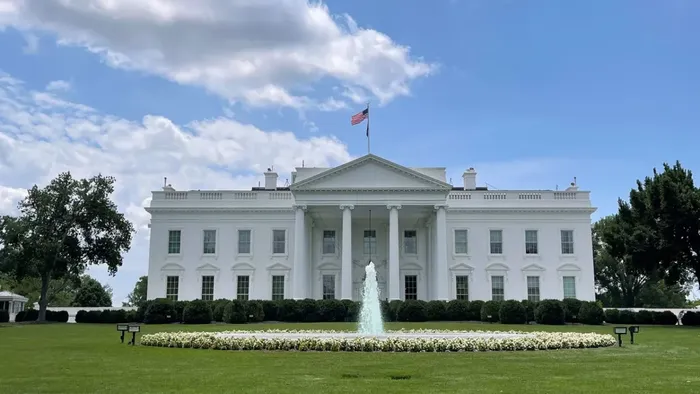
Somewhere in a quiet suburb outside of Lyon, a woman named Elena stares at a digital screen, watching a line graph dip. She isn't a hedge fund manager. She doesn't own a single share of crude oil futures. She is a baker. But when the International Monetary Fund (IMF) releases a report from a glass-walled building in Washington D.C., the ink on those pages ripples across the ocean and settles directly into the sourdough she kneads at 4:00 AM.
The IMF just lowered the global growth outlook to a sobering $3.2$ percent for the coming year. They cited the "fallout" from the conflict in Iran. To a statistician, that fallout is a decimal point. To Elena, it is the realization that the gas powering her ovens is now an extractive luxury, and the flour she buys—shipped via logistics chains that drink expensive fuel—is about to jump in price for the third time this quarter. Don't miss our previous coverage on this related article.
Economics is often treated as a weather report for the wealthy. We hear terms like "stagflationary pressure" and "downward revisions" and our eyes glaze over. We assume these are problems for people in suits. We are wrong. These numbers are the pulse of our ability to live, eat, and plan for a future that feels increasingly like a moving target.
The Ghost in the Supply Chain
When a major geopolitical artery like the one flowing through the Middle East begins to throb with the fever of war, the world’s circulatory system reacts instantly. Iran is not just a spot on a map; it is a vital valve in the global energy heart. When that valve constricts, the pressure doesn't just stay in Tehran or the Strait of Hormuz. It travels. If you want more about the history here, Reuters Business offers an informative summary.
The IMF’s latest report isn't just a warning about "less growth." It is a confession that the global recovery we were promised after the pandemic has been hijacked. Higher inflation is no longer a temporary guest; it has unpacked its bags and moved into the spare bedroom.
Consider the "Invisible Tax." Every time the price of a barrel of oil ticks upward due to regional instability, a hidden tax is levied on everything you touch. That plastic toothbrush? Oil. The delivery truck bringing your groceries? Diesel. The synthetic fibers in your workout gear? Petroleum byproducts. When the IMF expects higher inflation, they are essentially saying that your paycheck just shrank, even if the number on your stub stayed the same.
The Collision of Two Fears
We are currently trapped between two warring economic gods: Stagnation and Inflation. This is the "stagflation" monster that haunted the 1970s, returning with a modern vengeance.
Usually, when the economy slows down, prices drop because people stop buying things. It’s a painful but natural balance. But the Iran conflict has created a "supply shock." This is the economic equivalent of being stuck in a traffic jam while your car is also running out of coolant. You aren't moving forward, but the heat is rising anyway.
The IMF notes that central banks are in an impossible position. If they raise interest rates to kill inflation, they might accidentally kill the entire economy, leading to job losses and shuttered storefronts. If they keep rates low to encourage growth, inflation will continue to eat our savings like a corrosive acid.
It is a tightrope walk over a canyon, and the wind is picking up.
The Human Geometry of $3.2$ Percent
What does a $0.2$ percent downward revision actually look like?
It looks like a young couple in Jakarta deciding they can't afford the loan for a first home. It looks like a logistics firm in Ohio delaying the purchase of five new electric vans, which means five fewer drivers hired from the local community. It looks like the "risk-off" mentality that settles over boardrooms, where "innovation" is swapped for "survival."
The IMF’s report suggests that the global economy is "resilient but steadying at a low level." That word—resilient—is a double-edged sword. Humans are resilient because we have to be. We adapt to the higher cost of eggs. We cancel the summer vacation. We drive the car for another three years instead of upgrading. But resilience born of necessity is often just a polite word for exhausted endurance.
The fallout from the Iran conflict isn't just about missiles and rhetoric. It’s about the displacement of certainty. When energy markets are volatile, nobody wants to build. When nobody builds, the future stays small.
The Fragility of the Global Neighborhood
For decades, we were told that globalization made us untouchable. We built a world where a factory in Vietnam used components from Germany to sell a product to a teenager in Brazil. It was a beautiful, intricate machine.
But machines with too many moving parts are fragile.
The IMF’s lowered outlook is a reminder that we are all neighbors in a very small, very flammable town. When a fire breaks out in one house—especially one sitting on a massive cellar of oil—the insurance premiums go up for everyone on the block. The "geoeconomic fragmentation" mentioned in the report is a fancy way of saying that countries are starting to pull their shutters closed. They are building walls, hoarding resources, and looking at their neighbors with suspicion.
This fragmentation is the real tragedy. When growth slows, the first thing to vanish is the budget for the big problems. The transition to green energy? It gets expensive when the components are stuck behind trade barriers. Global poverty reduction? It stalls when the wealthy nations are busy subsidizing their own heating bills.
The Weight of the Loaf
Back in Lyon, Elena adjusts the price on her chalkboard. It’s a small change—just fifty cents more for a baguette. She hates doing it. She knows her regulars, the elderly man who comes in for his daily loaf, the mother picking up treats for her kids after school. She sees the hesitation in their eyes. She feels the weight of that fifty cents.
That is the fallout. It isn't a line on a graph in Washington. It’s the slow, grinding friction of life becoming slightly more difficult for eight billion people simultaneously.
We are told to watch the markets, to track the CPI, to listen for the latest word from the IMF. But if you want to know the truth about the global economy, don't look at the stock ticker. Look at the faces in the grocery store aisle. Look at the way people hold their breath when they swipe their cards at the pump.
The world is still turning, and the growth is still happening, but it is moving through a thick, heavy fog. The fallout from the Iran war has proven that in a connected world, there is no such thing as a distant conflict. Every explosion there echoes in the hollow sound of a wallet closing here. We are waiting for the smoke to clear, but for now, we are all just trying to afford the bread.