The humidity in Bogotá has a way of clinging to the skin like a guilty conscience. In the quiet neighborhoods where retired soldiers gather to drink bitter coffee and trade stories of the jungle, the air has recently grown thick with a different kind of tension. It is the scent of a new opportunity, or perhaps a new kind of trap. For men who spent their youth hunting insurgents in the Andean mist, the transition to civilian life is often a slow, agonizing fade into irrelevance. Then comes the phone call. The offer. The promise of a paycheck that smells like a future.
This is not a story about a war you see on the nightly news. It is a story about the logistics of human desperation.
Recently, the U.S. Treasury Department cast a cold, analytical light on two specific entities: Black Shield-Sudan and Al-Fayhaa. These aren't household names. They don't have glossy billboards or Super Bowl commercials. Instead, they operate in the shadows of international finance and private security, accused of funneling Colombian mercenaries into the brutal, grinding civil war in Sudan.
The Recruitment of the Discarded
Consider a hypothetical veteran named Mateo. He is forty-two years old. His knees ache from a decade of rucking through the Darien Gap. His pension barely covers the rent on a cramped apartment in the south of the city. He has a specific set of skills—urban combat, jungle survival, the ability to stay calm when the world is exploding—that the local economy has absolutely no use for.
When a recruiter from a firm like Black Shield approaches someone like Mateo, they aren't selling a cause. They aren't asking him to fight for Sudanese democracy or the triumph of a specific general. They are selling a transaction.
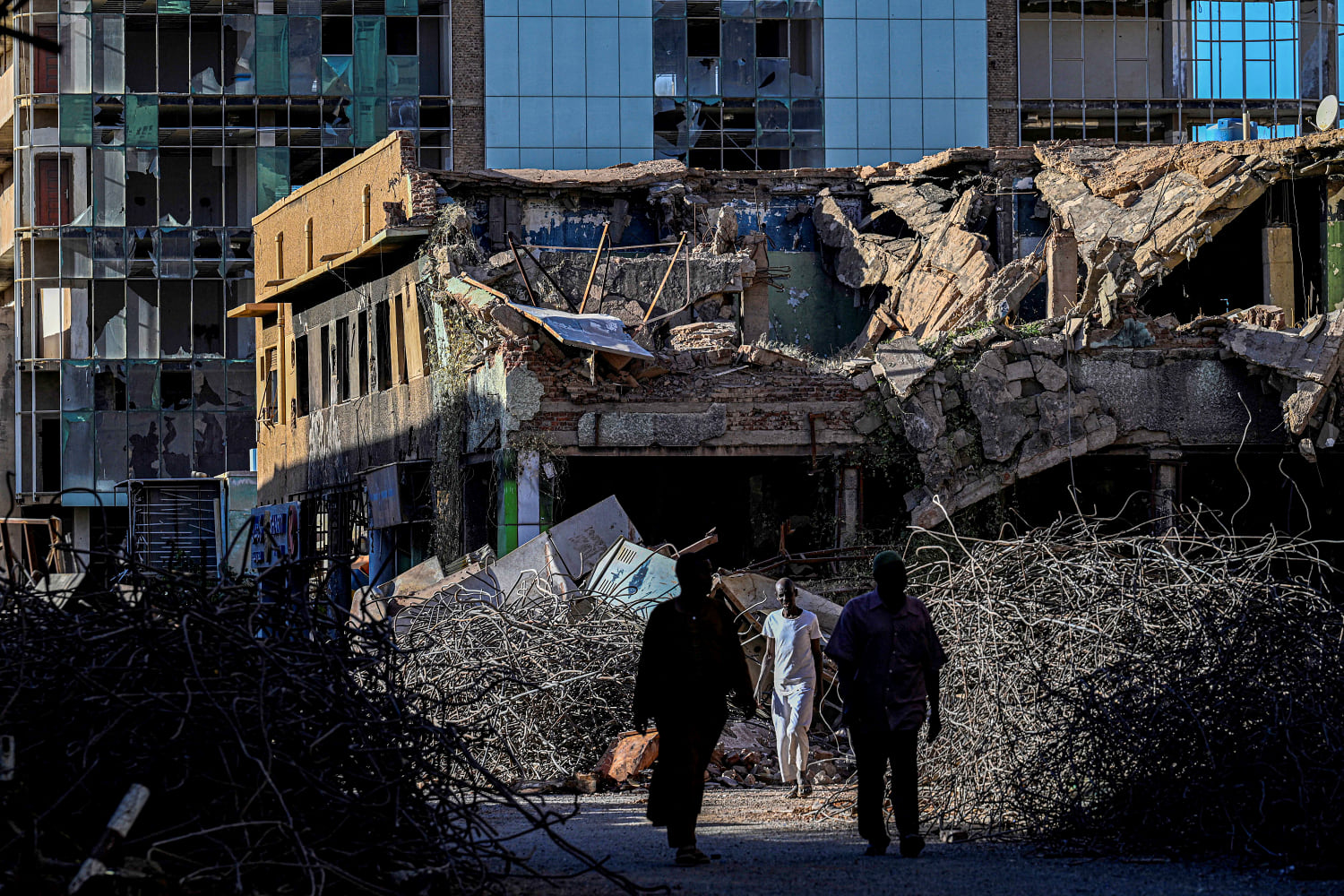
The "mercenary" label is often applied with a sneer, but the reality is more akin to a predatory loan. These firms allegedly lure former Colombian special forces with the promise of high-paying security jobs in the United Arab Emirates. It sounds safe. It sounds like guarding a mall or a high-rise in Dubai. But once the contracts are signed and the passports are handed over, the destination shifts. The mall becomes a front line in Khartoum. The "security" role becomes an active combat mission in a war the soldier doesn't understand and the world has largely forgotten.
The Invisible Infrastructure of Conflict
Wars are expensive, but they are also remarkably efficient at finding the cheapest available labor. The conflict in Sudan, primarily a power struggle between the Sudanese Armed Forces (SAF) and the Rapid Support Forces (RSF), has created a vacuum that sucks in resources from across the globe.
Black Shield-Sudan and Al-Fayhaa represent the connective tissue of this globalized violence. By sanctioning these firms, the U.S. government is attempting to sever the arteries that supply the RSF with professional muscle. The logic is simple: if you freeze the bank accounts and block the transactions, you make it harder for the middlemen to buy the men who do the killing.
But money is like water; it finds the cracks.
The sanctions reveal a sophisticated network of shell companies and international bank transfers designed to hide the true nature of the work. When a firm recruits five hundred Colombians under the guise of "protection services," they are leveraging a loophole in international labor laws. They are turning human beings into a commodity, shipped in cargo planes and deployed like hardware.
Why Colombia?
You might wonder why a recruiter would fly halfway around the world to find soldiers for a Sudanese desert. The answer lies in the grim excellence of the Colombian military. For over fifty years, the country was locked in a civil war that turned its armed forces into one of the most battle-hardened groups on the planet.
They are experts in asymmetric warfare. They are disciplined. And, crucially, they are available.
When the 2016 peace deal with the FARC was signed, thousands of professional soldiers found themselves without a mission. They became a surplus of violence. Private military companies (PMCs) saw this surplus not as a social challenge, but as a high-margin business opportunity. The Colombian soldier became a premium export, valued for his competence and his relatively low price tag compared to an American or British contractor.
The Human Toll of the Ledger
When we talk about sanctions and "recurrent recruitment patterns," the language is sterile. It obscures the terror of a man from Medellín realizing he is in a trench in Darfur.
The invisible stakes of these sanctions are found in the families left behind. In Colombia, mothers and wives wait for wires that never arrive, or worse, for news that cannot be verified. Because these men are not fighting for a recognized state, they have no status. They are not prisoners of war if captured; they are "unlawful combatants" or simply "disappeared." If they die, there is no flag-draped coffin. There is only a void where a person used to be.
The U.S. Treasury's move against Al-Fayhaa and Black Shield is an admission that the traditional tools of diplomacy are failing. In a world where war is privatized, the enemy isn't just a rogue general or a rebel group. The enemy is the ledger.
The sanctions are designed to create friction. By targeting the facilitators, the goal is to raise the "cost of doing business" to a point where it is no longer profitable to ship mercenaries across oceans. It is an attempt to de-incentivize the trade in human lives.
A Quiet Kind of Power
There is a certain irony in fighting a hot war with cold paperwork. While the streets of Omdurman are torn apart by shelling, a bureaucrat in Washington D.C. types a name into a database. A bank in London flags a suspicious transfer. A credit card in the pocket of a recruiter suddenly stops working.
This is the modern battlefield. It is less about the caliber of the bullet and more about the accessibility of the dollar.
Yet, for the men sitting in those Bogotá cafes, the sanctions feel distant. They see the headlines, but they also see their empty bank accounts. The lure of the "overseas contract" remains, fueled by the same desperation that these firms have spent years exploiting.
The sanctions against Black Shield and Al-Fayhaa are a necessary strike against the architects of this trade. They signal that the world is watching the supply chain of the Sudanese war. But as long as there are men with nothing to lose and companies with everything to gain, the shadow recruiters will keep calling.
The real victory won't be found in a frozen bank account. It will happen when a retired soldier looks at his phone, sees a message from an unknown number promising a fortune in a far-off land, and decides to stay home and finish his coffee.
Until then, the machinery of the mercenary trade will continue to grind, turning the ghosts of one war into the fodder for another. The ink on the sanctions list is still wet, but in the heat of the desert and the damp of the Andes, the stakes remain exactly what they have always been: a desperate man, a promised paycheck, and a war that doesn't care about either.
A soldier stands on the tarmac, looking at a plane he wasn't supposed to board, heading for a country he cannot find on a map.