If you're looking for a hero in the Purdue Pharma saga, you won't find one in the fine print of the $7.4 billion settlement. After years of legal gymnastics, the deal is finally moving money, but the numbers tell a story of corporate survival as much as they do victim restitution. We’re talking about a company that effectively engineered a national crisis, yet its owners are walking away with billions in the bank and no criminal records.
It's a bitter pill. On April 28, 2026, a federal judge finally sentenced the company to its criminal penalties, clearing the last hurdle for Purdue to dissolve. It’s becoming a "public benefit company" now, which sounds nice on a press release, but doesn't change the fact that for many families, the "justice" provided is little more than a rounding error on a Sackler family bank statement.
The Brutal Math of the $7.4 Billion Deal
When you see a headline with "billions," it feels like a massive victory. But once you start peeling back the layers, the math gets ugly. The settlement isn't a lump sum paid out tomorrow. It’s a 15-year payment plan.
- The Sackler Contribution: The Sackler family is putting up roughly $6 billion. They’re paying this over a decade and a half. Why the long timeline? They claim they need to sell off other international businesses to liquidize the cash. In reality, it lets them keep earning interest on their remaining billions while they slowly pay off their "debt" to society.
- The Federal Fine: There's an $8 billion "sentence" on the books, including a $3.5 billion criminal fine. Here’s the catch: the Department of Justice is only actually collecting $225 million. The rest is being "waived" as long as the company funnels its assets into the settlement for states and victims.
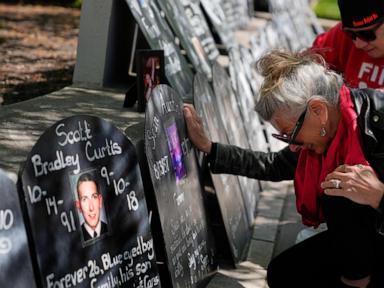
- Individual Payouts: This is the part that truly stings. Out of that $7.4 billion, only about $850 million is set aside for the actual people whose lives were ruined. With over 100,000 claimants, most victims will see checks between $8,000 and $16,000.
Think about that. If you lost a child, a career, or a decade of your life to an addiction sparked by a "non-addictive" marketing lie, you get the price of a used Kia. It’s insulting.
The Supreme Court's 2024 Curveball
We almost didn't get here. In June 2024, the Supreme Court threw a massive wrench into the works. The original deal included "non-consensual third-party releases." That's legal-speak for "the Sacklers get total immunity from all future civil lawsuits even though they didn't personally file for bankruptcy."
Justice Neil Gorsuch and the majority basically said, "No, you can't use someone else's bankruptcy to buy yourself a permanent 'get out of jail free' card for civil claims."
This forced everyone back to the table. The 2026 version of the deal we see now is the result of that scramble. The Sacklers had to pony up more cash—an extra billion or so—to get the states to agree to drop their individual lawsuits. They still aren't facing criminal charges, though. That's a different door that the DOJ has seemingly decided not to open.
Where the Money Actually Goes
Most of this cash isn't going to people. It’s going to "abatement."
The vast majority of the $7.4 billion is earmarked for state and local governments to fund addiction treatment, Narcan distribution, and recovery programs. California is slated to pull in over $440 million. New York is looking at around $250 million.
I’ve seen how these "abatement" funds have been handled in past settlements (like the big tobacco deal in the 90s). There’s always a risk that states use the money to plug budget holes instead of actually helping addicts. The 2026 settlement has stricter "restricted use" rules, but let’s be honest: government oversight is often a sieve.
The "Public Benefit" Rebrand
Purdue Pharma as we knew it is dead. It’s being resurrected as Knoa Pharmaceuticals.
Instead of being owned by billionaires, it's now a trust. The profits from selling OxyContin—yes, they’re still selling it—and new addiction-reversal drugs will go toward the settlement. It’s a bizarre irony. The company that fueled the fire is now the one being paid to hand out the fire extinguishers.
Some advocates hate this. They think the company should have been liquidated, its assets sold off, and the name erased from history. Instead, we have a "zombie" company that exists solely to pay off its own sins.
Why You Probably Won’t Get Paid
If you’re a victim or a family member trying to get a piece of that $850 million individual pool, I have bad news. The evidentiary requirements are a nightmare.
- Prescription Proof: You need documented proof of an OxyContin prescription. Not just "opioids," but specifically Purdue-made OxyContin.
- The Time Gap: Many of these prescriptions were written 15 or 20 years ago. Pharmacies close. Doctors retire. Medical records get shredded after 7-10 years.
- The Deadline: The window to file claims is narrow, and the bureaucracy is thick.
Judge Madeline Cox Arleo recently told Purdue’s lawyers to "be flexible" with victims who can’t find old records. But "flexible" isn't a legal standard. It’s a suggestion. In practice, thousands of people who were objectively harmed will get $0 because they can't produce a piece of paper from 2004.
Moving Forward Without Justice
If you’re waiting for the Sackler family to be led away in handcuffs, stop waiting. This settlement is the end of the road for the vast majority of legal avenues.
The best thing you can do now if you're affected is to ensure your local government isn't wasting the abatement funds. Look up your state’s "Opioid Settlement Lead." Find out how they’re spending that $440 million or $250 million. Demand that it goes to community clinics and needle exchanges, not new police cruisers or "administrative costs."
The legal battle is over. Purdue is "Knoa." The Sacklers are still billionaires. The only thing left is to make sure the money that did survive the lawyers actually saves a few lives.


