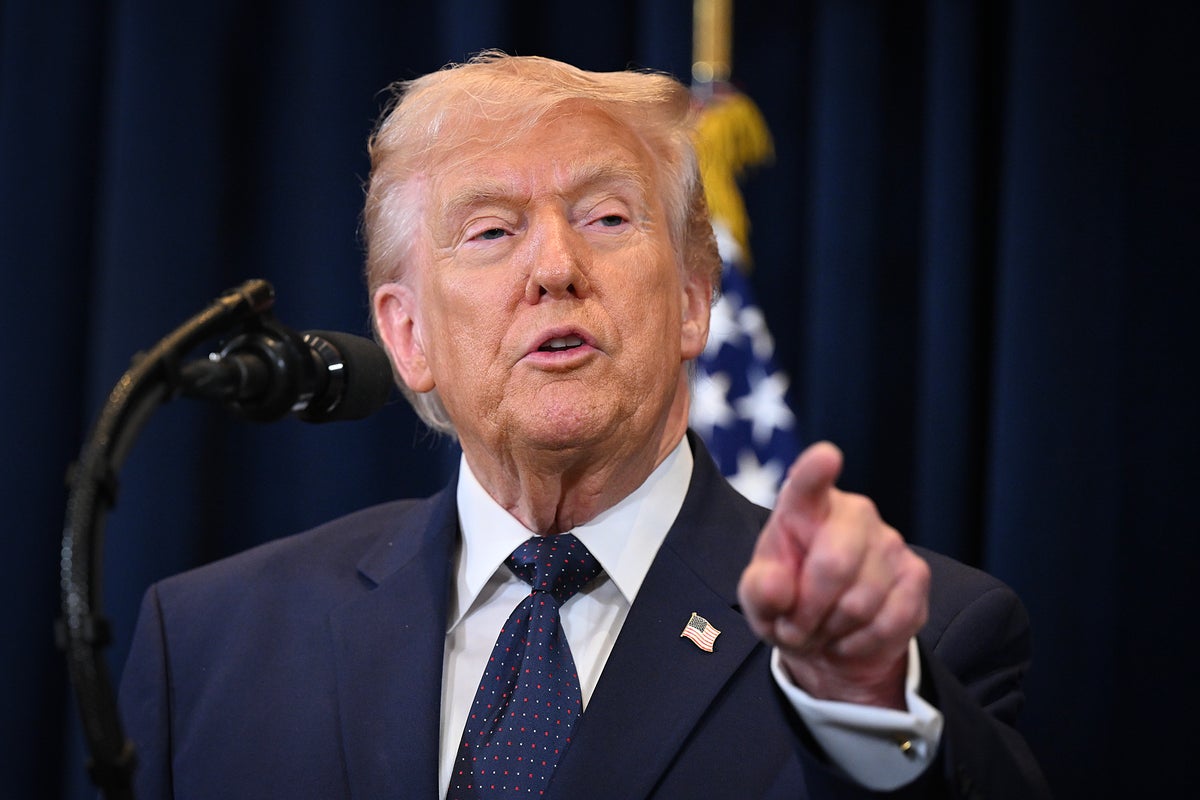
The smoke rising from Kharg Island is visible from space, a black smudge on the horizon of the Persian Gulf that signals the end of forty years of strategic patience. Two weeks into Operation Epic Fury, the White House has clarified its position on a ceasefire: there isn't one. On Saturday, Donald Trump told NBC News that while Tehran is "desperate" for a deal, he is not ready to sign. The terms, he claimed, simply are not good enough yet.
This refusal to come to the table isn't just a negotiating tactic. It is a fundamental shift in American foreign policy from containment to active dismantling. By rejecting Omani-mediated overtures and dismissing the claims of Iranian Foreign Minister Abbas Araghchi—who insists Tehran hasn't even asked for a truce—the administration is betting that the Islamic Republic is closer to a systemic collapse than a diplomatic breakthrough.
The Mirage of Negotiations
For months leading up to the February 28 strikes, the world watched a choreographed dance of "gunboat diplomacy." Meetings in Muscat and Geneva suggested a grand bargain was within reach. Omani mediators even confirmed that Iran had agreed to transfer its entire stockpile of 60% enriched uranium abroad. But as veteran analysts know, the White House was never looking for a signature. They were looking for a window.
While diplomats discussed centrifuges, the Pentagon was positioning a massive armada. The strikes that killed Supreme Leader Ali Khamenei and obliterated Iran's nuclear infrastructure were not a response to a failed meeting; they were the objective from the start. Trump’s current refusal to engage in peace talks reflects a conviction that the "Maximum Pressure" of his first term failed because it didn't go far enough. This time, the pressure is kinetic.
The Power Vacuum in Tehran
The most significant factor in the current stalemate is the confusion surrounding the Iranian succession. After the assassination of Ali Khamenei, his son Mojtaba was quickly elevated, yet his current status is a mystery. Trump openly questioned whether the new Supreme Leader is even alive, noting that "nobody's been able to show him."
Without a clear, authoritative figure to "cry uncle," as some administration officials have put it, the U.S. sees no reason to stop. Araghchi’s defiant rhetoric—his claim that Iran will fight "as long as it takes"—is viewed in Washington as the bluster of a regime that has lost its head. The U.S. calculation is simple: why negotiate with a transition team when you can wait for the collapse of the institution?
Economic Warfare at the Chokepoint
The Strait of Hormuz, where 20% of the world’s oil flows, is now a graveyard of shipping schedules and regional stability. Iran has responded to the destruction of its navy by mining the waterway and striking at U.S. allies like Saudi Arabia and the UAE. In Trump’s view, this is not a crisis to be managed, but an opportunity to force "burden-sharing."
By calling for a "team effort" to clear the Strait, Trump is testing the resolve of oil-dependent nations. He is effectively telling the world that if they want their energy security, they must join the American-Israeli coalition. It is a high-stakes gamble that ignores international law in favor of a "might makes right" reality.
The strategy is no longer about stopping a nuclear bomb. It is about:
- Total Neutralization: Destroying the ballistic missile program so it can never threaten the U.S. mainland.
- Proxy Decapitation: Cutting off the financial and military arteries to Hezbollah, the Houthis, and militias in Iraq.
- Regime Fracture: Using the strikes to embolden internal protesters who have been reeling from economic misery and rolling blackouts.
The Danger of the Unconditional Surrender
The administration’s demand for "unconditional surrender" is a ghost of 1945 that rarely fits the complexities of the 21st-century Middle East. While the U.S. and Israel control the skies, they have no boots on the ground. History suggests that airpower can destroy a government, but it cannot build a state.
By refusing to designate a credible interlocutor or open back-channel communications, the White House is leaving the Iranian military—specifically the IRGC—with no exit ramp. When a cornered power believes its existence is at stake, the result isn't usually a peaceful transition; it is a scorched-earth insurgency that could bleed the region for a decade.
The strikes on Kharg Island were described by the President as something his military might do again "just for fun." That level of unpredictability is the core of the Trump doctrine. It keeps enemies off-balance, but it also leaves allies in the dark. For now, the administration is content to let the bombs do the talking, convinced that the "Great Satan" is finally finishing the job it started decades ago.
The silence from the White House regarding a peace deal is the loudest signal of all. It tells Tehran that the time for talking ended when the first Tomahawk hit the Isfahan facilities. The only deal currently on the table is the one the Iranian regime cannot survive.


