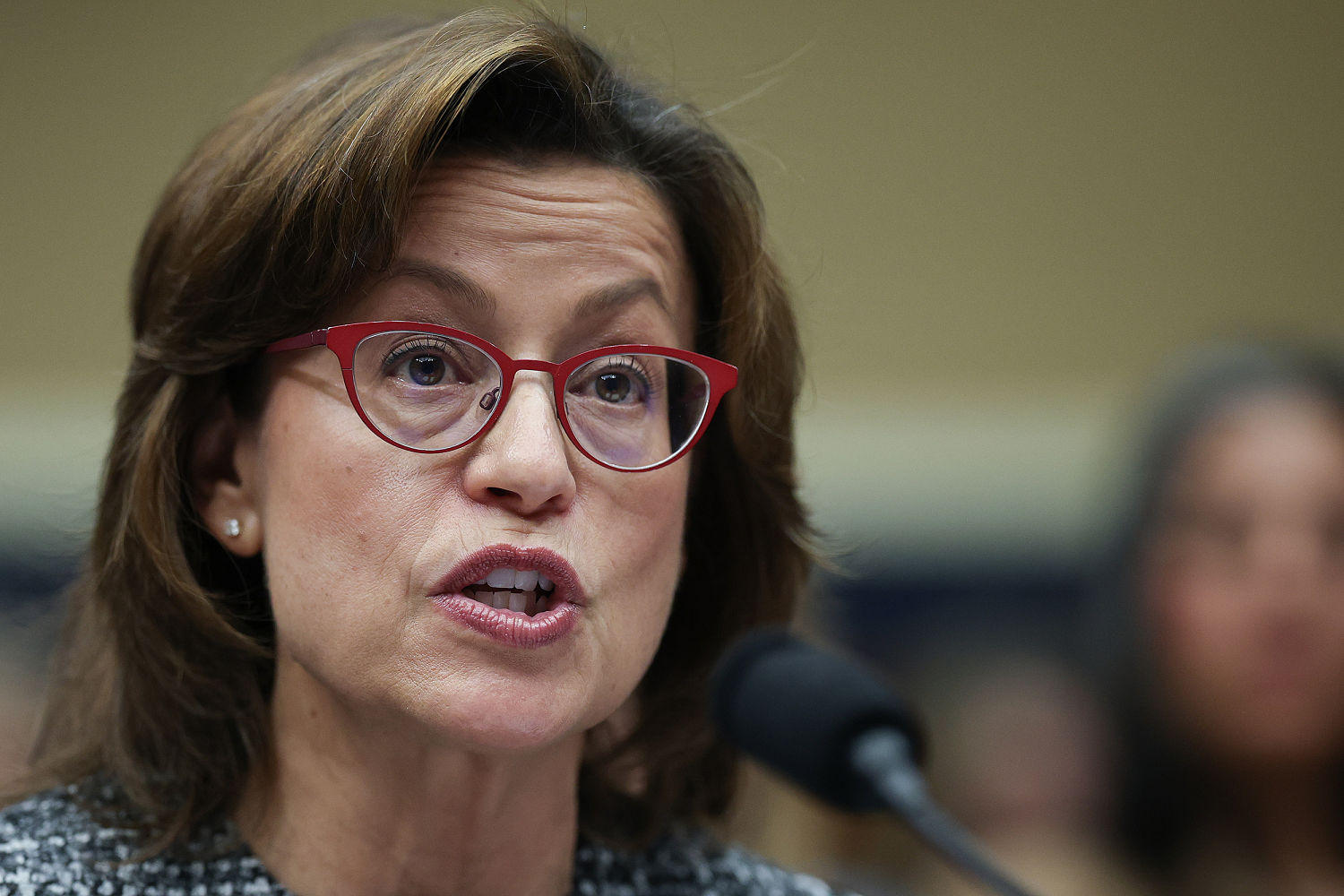
The intersection of federal regulatory power and private corporate speech creates a high-stakes friction point where the "public interest" standard often serves as a flexible instrument for political leverage. When a Democratic FCC commissioner publicly warns a conglomerate like Disney that it is the subject of a "censorship campaign," the statement functions less as a standard regulatory update and more as a signaling mechanism for a brewing jurisdictional conflict. At its core, this situation represents the tension between the First Amendment protections afforded to media entities and the statutory authority granted to the FCC under the Communications Act of 1934 to review broadcast licenses and merger applications.
The Tripartite Framework of Regulatory Pressure
The current pressure exerted on Disney by political actors—and the subsequent defense by regulatory officials—operates within three distinct operational pillars. Understanding these pillars is essential for mapping how a private entity’s content decisions can be converted into regulatory liabilities. Learn more on a related issue: this related article.
- The Licensing Chokepoint: Unlike cable or streaming services, broadcast television stations rely on FCC-issued licenses that must be renewed periodically. These licenses are contingent on the licensee operating in the "public interest, convenience, and necessity." This vague standard allows challengers to file petitions to deny renewals based on perceived failures in content neutrality or corporate conduct.
- The Merger Review Multiplier: When media companies engage in consolidation, the FCC must approve the transfer of licenses. This provides a window for political actors to demand concessions—often related to "viewpoint diversity"—that they could not legally mandate under standard speech protections.
- The Administrative Bully Pulpit: Individual commissioners use their platform to define the narrative of a dispute before it ever reaches a formal vote. By labeling opposition to Disney as a "censorship campaign," a commissioner preemptively categorizes political pressure as an illegitimate interference in the market of ideas, attempting to insulate the agency’s future decisions from populist volatility.
Structural Vulnerabilities in Media Conglomerates
Disney’s exposure to regulatory risk is not uniform across its business segments; it is concentrated in its linear broadcast assets. The logic of the "censorship" accusation stems from the claim that political actors are attempting to use the FCC’s administrative machinery to punish Disney for its editorial and corporate stances. This creates a specific cost function for the firm:
$$C_{reg} = P(r) \times L(a) + S(p)$$ Additional reporting by The Motley Fool highlights similar perspectives on the subject.
In this model:
- $P(r)$ represents the probability of a regulatory delay or denial.
- $L(a)$ represents the valuation of the assets under review (e.g., ABC’s broadcast stations).
- $S(p)$ represents the "Speech Premium"—the cost of changing content or corporate policy to appease regulators.
The "censorship" argument posits that political groups are artificially inflating $P(r)$ to force Disney to reduce $S(p)$ to zero. This is a classic example of using a regulatory bottleneck to achieve a social or political outcome that falls outside the agency's primary mandate of technical spectrum management.
The Mechanism of Content-Neutral vs. Content-Based Regulation
The legal defense against these campaigns relies on the distinction between content-neutral and content-based regulations. The Supreme Court has historically viewed content-based restrictions with "strict scrutiny," the highest level of judicial review.
When a political actor suggests that Disney’s broadcast licenses should be revoked because of "woke" content or specific news framing, they are advocating for a content-based penalty. The FCC is technically prohibited by Section 326 of the Communications Act from censoring broadcast material. However, the "public interest" standard creates a loophole. Challengers argue that "character qualifications" or "lack of candor" serve as grounds for license denial. This transforms a disagreement over speech into a debate over the licensee's fitness to hold a public trust.
The second limitation of this regulatory defense is the "chilling effect." Even if a challenge is unlikely to succeed on the merits, the mere existence of a protracted legal battle at the FCC can depress a company’s stock price and create uncertainty for shareholders. This uncertainty functions as a de facto tax on controversial speech.
The Operational Logic of Petitions to Deny
The process for challenging a license is highly structured, yet it is being increasingly used for tactical political gain. A formal "Petition to Deny" must satisfy specific criteria:
- Standing: The petitioner must show they are a "party in interest," usually a resident in the station’s service area.
- Substantial and Material Questions of Fact: The petition cannot be based on mere conjecture; it must provide evidence that the license renewal would not serve the public interest.
- The Prima Facie Case: If the petitioner meets the initial burden, the FCC must hold a hearing.
The bottleneck occurs at the hearing stage. A hearing before an Administrative Law Judge (ALJ) is a multi-year process. For a company like Disney, which may be looking to divest assets or restructure, a pending hearing acts as a "poison pill" for any potential transaction. This is the precise mechanism of the "censorship campaign" referenced by the commissioner: using the procedural duration of the FCC’s review process as a weapon to force corporate compliance.
Market Distortions and the Erosion of Spectrum Value
The long-term impact of weaponized oversight extends beyond a single company. It introduces a "Political Risk Premium" into the valuation of all broadcast assets. If license renewals become dependent on the prevailing political winds in Washington, the underlying value of the spectrum decreases because the asset’s tenure is no longer predictable.
Investors typically price assets based on projected cash flows and risk profiles. When the risk profile includes the potential for arbitrary administrative interference based on editorial decisions, capital migrates toward platforms with lower regulatory overhead, such as pure-play digital streaming or international markets. This creates a feedback loop where traditional broadcast—the very medium intended to serve the "public interest"—is starved of investment, further degrading its quality and relevance.
The Doctrine of Corporate Personhood and Free Speech
The defense of Disney by a Democratic commissioner highlights an irony in contemporary legal discourse. Traditionally, liberal-leaning regulators have been skeptical of broad First Amendment protections for corporations (Citizens United). However, in the context of media censorship, they find themselves defending the corporate right to editorial autonomy to prevent the agency from being utilized by the opposing party.
This reflects a shift toward "defensive institutionalism." The goal is to preserve the independence of the agency by refusing to let it be used as an enforcement arm for culture-war grievances. The logic is as follows: if the FCC sets a precedent of revoking licenses based on content complaints today, that same mechanism will be used against different targets when the administration changes.
Strategic Trajectory for Media Entities Under Scrutiny
For Disney and its peers, the path forward requires a transition from reactive crisis management to proactive structural insulation. The strategy involves three specific maneuvers:
Asset De-Risking through Diversification
The firm must continue to migrate its highest-value content and revenue streams away from regulated broadcast platforms and toward unregulated DTC (Direct-to-Consumer) ecosystems. By reducing the percentage of EBITDA derived from FCC-licensed assets, the company reduces the leverage any single regulator or political movement holds over the enterprise.
Legal Preemption through Character Qualification Audits
To neutralize "character" challenges, companies should perform internal audits that mirror FCC compliance checks, ensuring that every station’s Public Inspection File is beyond reproach. This eliminates the "technicality" route that petitioners use when they cannot win on the merits of a speech-based argument.
Aggressive Jurisdictional Defense
When faced with a "censorship campaign," the corporate strategy must involve immediate litigation to move the dispute out of the administrative realm and into the federal court system. Article III judges are life-tenured and insulated from the political pressures that influence the three-to-two partisan split of the FCC commission. Establishing a judicial record early in a dispute provides a "check" on administrative overreach.
The battle over Disney's licenses is not a debate about broadcast quality; it is a stress test of the administrative state's ability to remain neutral in a bifurcated political environment. The strategic imperative for the FCC is to maintain the "Public Interest" standard as a shield for consumers rather than a sword for partisans. Failure to do so will result in the permanent politicization of spectrum management, effectively ending the era of the independent media regulator.