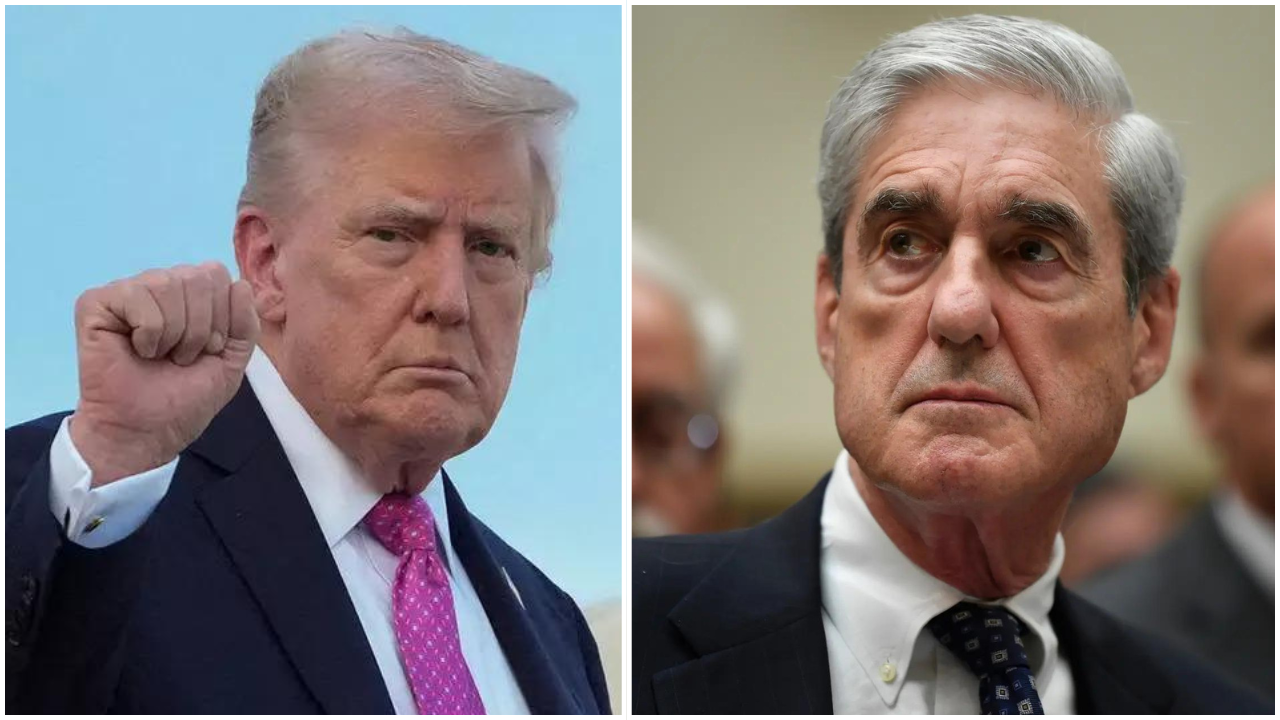
Robert Mueller didn't just pass away. He exited a stage that had become increasingly hostile toward the very institutions he spent fifty years defending. On March 20, 2026, the man who steered the FBI through the wreckage of 9/11 and later became the face of the Trump-Russia probe died at 81. His family confirmed he'd been battling Parkinson's since 2021. But while most of Washington offered the standard somber tributes, Donald Trump took a different route. "Good, I'm glad he's dead," the president posted on Truth Social.
That single post captures the fractured reality of American politics today. To some, Mueller was the "straight arrow" Marine who embodied integrity. To others, specifically those in the MAGA camp, he was the architect of a partisan "witch hunt" that never should've happened. Whether you loved him or hated him, you can't deny he was one of the most consequential figures in modern U.S. history. For another look, consider: this related article.
The polarized legacy of a lifelong prosecutor
Mueller's career wasn't always a partisan lightning rod. He was confirmed as FBI Director in 2001 with a 98-0 vote. Think about that for a second. In today's climate, you couldn't get a 98-0 vote on what time of day it is. He took over the Bureau just one week before the Twin Towers fell. He spent the next twelve years turning a domestic crime-fighting agency into a global counterterrorism machine.
But then came 2017. When he was appointed special counsel to look into Russian interference in the 2016 election, the honeymoon ended. The investigation lasted 22 months. It resulted in 34 indictments, including high-profile convictions of people like Paul Manafort and Michael Flynn. Yet, the final report didn't deliver the "smoking gun" many Democrats wanted, and it didn't offer the total "exoneration" Trump claimed. Related coverage on this trend has been shared by Al Jazeera.
The tragedy of Mueller's final act was that his commitment to "the rules" made him a villain to both sides. Democrats were frustrated he didn't recommend an indictment for obstruction of justice. Republicans were furious he hadn't shut the whole thing down on day one. By the time he testified before Congress in 2019, the sharp, relentless prosecutor the world knew seemed to be fading. We now know that was likely the early stages of the Parkinson's disease that eventually took his life.
What the critics get wrong about the Mueller Report
If you actually read the 448-page document, it’s not a story of "no collusion." It’s a story of a campaign that "expected it would benefit" from Russian interference but didn't technically cross the line into a criminal conspiracy. It also laid out ten specific instances where Trump tried to interfere with the investigation.
Mueller's refusal to make a "prosecutorial judgment" on obstruction wasn't because he lacked evidence. It was because he followed Justice Department policy that says you can't indict a sitting president. He believed it was Congress's job, not his, to hold a president accountable. He played by the book in a world that had already tossed the book out the window.
Trump’s reaction and the death of decorum
The president's "glad he's dead" comment shouldn't surprise anyone who's been paying attention. Trump has a long history of speaking ill of the dead, from John McCain to any other figure he perceives as an enemy. But this feels different. It marks the total abandonment of the "maximum of respect" usually shown to veterans and long-serving public officials.
Mueller was a decorated Marine who earned a Bronze Star and a Purple Heart in Vietnam. He didn't have to go; he volunteered. Critics like Representative Seth Moulton were quick to point this out, calling the president's remarks "disgusting." On the flip side, supporters like Laura Loomer argued that Trump was just saying "what everyone is thinking." This divide isn't going away. If anything, Mueller's death has just reopened the old wounds of 2016 and 2019.
Moving past the Mueller era
So, where does this leave us? The institutions Mueller spent his life building—the FBI, the Justice Department—are under more pressure than ever. Since his retirement in 2021, we've seen a massive shift in how these agencies are perceived. The "straight arrow" approach Mueller lived by is now seen by many as a relic of a bygone era.
If you're trying to make sense of his impact, don't look at the social media noise. Look at the indictments. Look at the way he changed the FBI after 9/11. He was a man of a different time, one where the law was supposed to be above the person holding the office.
If you want to understand the full weight of the evidence Mueller gathered, go back and read the Executive Summaries of both volumes of the 2019 report. It's a sobering look at how vulnerable our systems really are. You don't have to agree with his final decisions to respect the decades of service he put in. The next step is watching how the current Justice Department handles the precedent he left behind. The era of the "unimpeachable" public servant might be over, but the questions Mueller raised about presidential power are more relevant in 2026 than they were seven years ago.


